
Former Female Detainee Recalls Years of Imprisonment and Struggle Against the Iraqi Ba'ath Regime
Bahra Othman, a former political prisoner, recalls decades of struggle against Iraq's Ba'ath regime, detailing detention, interrogation, restrictions, and harsh prison conditions for women and children.
DIREN RAHIM
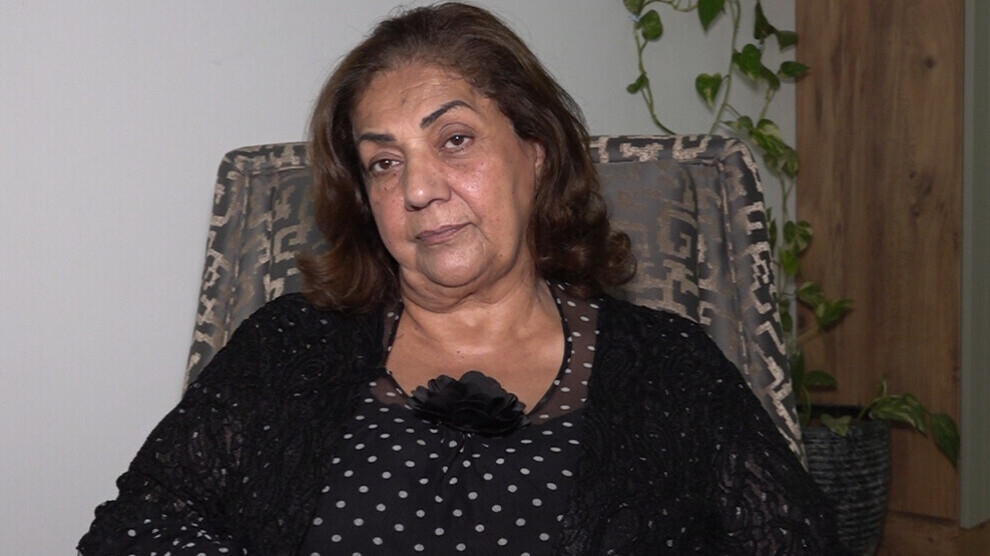
Sulaymaniyah — In the Kurdistan Region, from the 1970s until the early 1990s, women struggled against the Iraqi Ba'ath regime. Among these women is Bahra Othman, a former political prisoner who endured years of struggle. She affirms that the freedom Kurds enjoy today did not come without a price, but was achieved through sacrifices and resistance. She calls on younger generations to preserve these gains and continue the path her generation began.
Bahra Othman spoke about important stages of her life and struggle, recalling memories of imprisonment and resistance. She said that the Ba'ath regime was a repressive system that constantly stood against Kurds, particularly in the city of Sulaymaniyah, because, as she describes it, it is a "living" city, a city of "movement, resistance, and protests," and was also a center for preparing cadres who worked both within the cities and in the mountains.
She said that the Ba'ath regime gathered all its strength, capabilities, and repressive tools in this city to stop those who resisted the regime, and therefore arrest was the fate of anyone who opposed it. Her family was among them, and it was extremely harsh for her, especially since she was married at the time and her home was in Kirkuk.
She recounts: "In 1986, I went out on a mission, and I was then part of the underground organizations. On the way, we fought an intense battle with the 'Jahosh' (pro-government Kurdish militias), who had attacked the Peshmerga forces. In the Qara Dagh area, the battle lasted from seven in the morning until five in the evening."
The term "Jahosh" or "Fursan" (Horsemen) and "National Defense" brigades is a popular term used by Kurds to refer to the Kurdish armed groups that allied with the central government in Baghdad and Saddam Hussein's regime.
She explains: "The Jahosh used us as human shields so the Peshmerga forces could not attack them. One way or another, we managed to escape from them. After the Peshmerga attacked them from behind, we went to my village, and from there I walked back to Sulaymaniyah."
When she returned to her father's house, it was not long before they came to arrest her. "After eating, special forces, security, and informants stormed the house. We did not know where they entered from—through the door or from the roof. They gathered us in one room and searched the entire house, but found nothing. Then they arrested my two brothers."
She and her family members were placed under house arrest in their home for three months, with no telephone and no contact with the outside world. They were also forced to prepare tea and food for them. Bahra Othman says that one of the reasons they survived was her ability to speak Arabic, as it was unusual for them that a Kurdish woman could speak Arabic.
She adds that the family members were constantly active in organizational work, and she and her sister continued their work. On one occasion, news reached them of an arrest campaign, and she was in Ranya at the time, so her sister sent her an urgent message saying: "All your friends have been arrested. Save yourself and do not return."
"The Prison Was Overcrowded with Women and Children Who Were Tortured Mercilessly"
Eventually, Bahra Othman was arrested and interrogated. "I was arrested in early March 1987, and they took me to the Red Security, where I remained until July of that year. Because I could speak Arabic and answer the investigators' questions, they suspected whether I was well-versed in politics or not, and that was the reason for easing the measures against me and saving me from the Ba'ath security."
What she witnessed in the detention center, she described as: "It was a place where people were so terrified that they did not dare to raise their heads. They interrogated all members of our family, even our youngest children. Since I was a young woman, I thought they would sentence me to death under torture."
She describes prison conditions: "The prison was overcrowded with women and children, and the executioners tortured us and waged psychological warfare against us mercilessly and indiscriminately. Even the smallest argument or discussion with the executioners would result in being sent to solitary confinement."
She explains that arrest warrants had been issued for her and her comrades Sorkel and Jinar, who had been sentenced to death, but they were released in 1984 through a prisoner exchange.
She said that her friend Sorkel told her that before their release, the executioners would place ropes around their necks and leave them in a state of fear and terror of death. As for not knowing her brother's fate for two years, she describes it as a "painful memory."
She adds: "In the last interrogation session at the Red Security, they summoned us again and asked us questions, but I remained completely composed and showed no confusion, so they would not suspect anything." After their release, a decision was issued requiring them to leave Kirkuk within 24 hours, and they were also forced to transfer their restrictions and official documents to Sulaymaniyah.
"Thanks to Our Resistance, Freedom Was Achieved"
Bahra Othman affirms that she spent about 40 years in uninterrupted party work. "I have never regretted the struggle I waged, because we were raised on the basis of national belonging. It is very important for every individual in this society to have this feeling, whether they work within the party or outside it."
She added: "Unfortunately, what I see today is that national belonging has become very weak. Our youth are far from that struggle, the uprisings, the sacrifices, and the suffering that brought this society to the phase it lives in today, where they can live freely, without much supervision or restrictions, and move freely. The days we lived were very hard. At some stages, we reached a point where we put our lives on the line so as not to harm ourselves and not to fall into the hands of the Ba'ath."
She expressed hope that young people would regain that sense of national belonging they were raised on and continue the path her generation followed. "I hope our youth adopt the approach we followed, carry the national sentiment we had, and continue the process of self-education we practiced. They should not think that the freedom we enjoy today came to us on a silver platter. It was achieved through sacrifices, efforts, suffering, and resistance."
Bahra Othman concluded her remarks by affirming that her generation was ready to be martyred for their cause. "I hope this freedom and these gains are not lost, and that these young people are the ones who complete the path we began."