
First Returnee Convoy to Serê Kaniyê Attacked,Displaced Families Forced Back to Hassakeh Amid Security Fears
Displaced from Serê Kaniyê for seven years,families returned only to face armed attack. Khalsa Omar demands security guarantees,removal of armed groups, and protection before any safe return.
RONEIDA HAJI
Al-Hasakah_After seven years of displacement, the return of 410 families from Serê Kaniyê/Ras al-Ayn to their city turned into a journey of fear that remained incomplete, after the convoy was subjected to an armed attack that forced the families to return to Al-Hasakah, raising questions again about the availability of conditions for safe return and protection of returnees.
The first convoy for the return of displaced persons from Serê Kaniyê/Ras al-Ayn set off toward their city on August 10, carrying great hopes of returning to their homes.
But upon arrival in Serê Kaniyê, the families encountered a security reality different from what they had hoped for. The convoy was attacked by armed groups—an incident that was not merely a shock for the returning families but became a wake-up call, raising the most urgent question once again: Are the necessary conditions for a safe and stable return for the displaced of Serê Kaniyê actually in place?
The issue of returning the displaced of Serê Kaniyê to their areas was among the files given importance in the January 29 agreement between the Syrian Democratic Forces and the interim Syrian government. However, the targeting of the first returning convoy revealed that political agreements, however important, are not sufficient alone to guarantee a safe return unless accompanied by clear security arrangements and mechanisms that protect returnees and prevent the recurrence of violations.
Following the attack, the Serê Kaniyê Displaced Committee demanded real and safe guarantees for return, calling for an independent and transparent investigation to uncover the circumstances of the convoy's targeting and determine responsibilities, along with demanding that the interim government, the presidency team, and security authorities clarify their role in protecting returnees. The committee also called for serious steps to stop attacks and practices aimed at changing the demographic composition of the region, and to guarantee the right of the original inhabitants to return to their homes, properties, and to live safely in their city.
An Incomplete Return
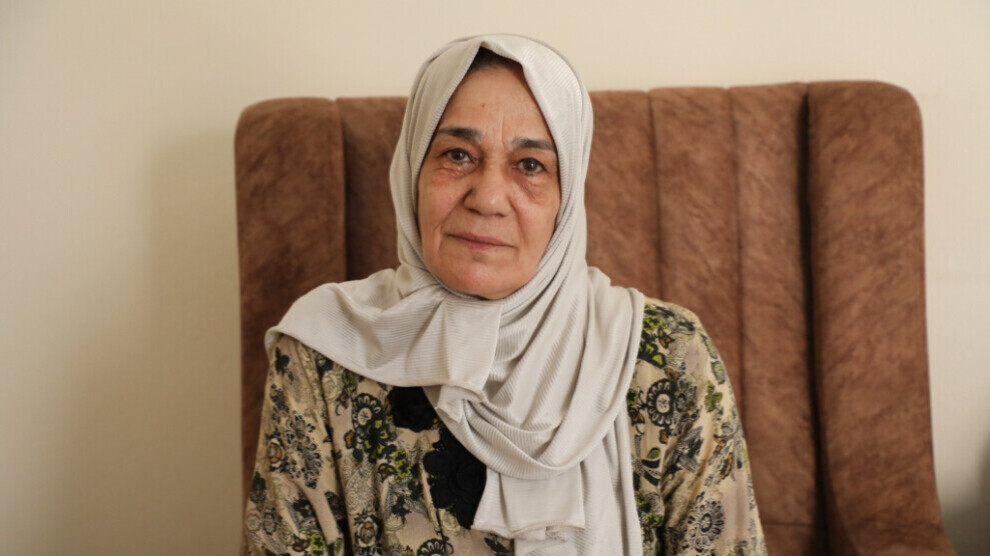
Khalsa Omar, one of the original inhabitants of Serê Kaniyê, has carried since 2019 the pain of displacement and an unbroken longing for her city. After seven years of absence, she finally found herself on the road to return, heading toward her home with great hopes of reclaiming the place she had been deprived of all these years.
Khalsa Omar says she is Kurdish by origin, but grew up and lived in an Arab community, which made her Kurdish language weak, noting that her connection to Serê Kaniyê remained present despite the harsh years of displacement. For her and other families, the opportunity to return was not merely a move from one place to another, but a long-awaited moment in which joy mixed with hope of reclaiming the life that had been interrupted for years.
Khalsa Omar joined the first convoy heading to Serê Kaniyê with her family, carrying the dream of returning to her home after years of waiting. But the journey that began with hope did not go as she had wished; as the security situation deteriorated, she and her family were forced to return again to Al-Hasakah, finding themselves once again facing the reality of displacement, after thinking they were only steps away from their home.
"We Entered Our City with Joy"
Khalsa Omar recounts that the moment the convoy arrived in Serê Kaniyê initially seemed like the fulfillment of a long-awaited dream. The families entered the city with great joy, seeing for the first time in seven years the streets of the place where they had lived most of their lives. "We entered our city with joy. The city where we spent our entire lives, and after all these years we saw it again. But this joy did not last long."
As soon as the convoy arrived in the city, that joy dissipated after an armed group intercepted it, stopped the vehicles, and surrounded them. According to Khalsa Omar's account, the gunmen began attacking the convoy with sticks, knives, and other tools, before the assault escalated to shooting at the tires of one of the vehicles and smashing it.
"The Gunmen Appeared to Be ISIS Elements"
She recalled the scene, saying that the group members were carrying knives, sticks, and weapons, and that they pulled several young men from the vehicle and beat them. She noted that the gunmen spoke in two dialects—Iraqi and the Deir ez-Zor dialect—adding that they appeared to be ISIS elements, based on what she described as their features and the manner of their assault.
Amid the chaos and fear, Khalsa Omar, her husband, and children were in the back of the vehicle, trying to take cover from the attack. "The situation was difficult and very frightening." In those moments, two residents of Serê Kaniyê intervened, managing to open the vehicle door and help the family escape.
She and her family fled to the home of a Serê Kaniyê family, who quickly received them and provided shelter. But the fear did not end there; after about ten minutes, security forces arrived and transported the family to a safe location, ending the first return journey with Khalsa Omar and her children leaving the city rather than settling in it.
The return experience, with its accompanying fear, attack, and forced departure, left Khalsa Omar and her family with larger questions about the availability of safety conditions for displaced persons wishing to return. She believes that protecting civilians cannot remain mere promises; it requires clear measures to ensure their safety at every stage of return—from the moment the convoy departs until arrival and settlement in the city.
She says what happened made her feel that security control is still incomplete. "After this incident, it became clear that the interim government cannot fully control the security situation."
"We Will Not Go to Serê Kaniyê Unless Internal Security Forces Enter the City"
Khalsa Omar believes that any discussion of the return of displaced persons to Serê Kaniyê must begin with guaranteeing their security, affirming that the security problem remains the most prominent obstacle to families returning to their city.
She says that before returning families, the relevant authorities must work to remove armed groups from the city, address the file of homes seized by others, and provide genuine protection for returning residents. "We want to return to our city. Armed groups must be removed from the city, and those who have taken over our homes must be removed."
According to Khalsa Omar, the presence of Internal Security Forces alongside General Security forces in the city would give families a greater sense of safety and limit any party's ability to threaten them. "Internal Security Forces must enter the city before us," she added, "We trust our internal forces and want them to be with us."
"We Want Our Right to Return"
Despite the pain and waiting that years of displacement have brought, Khalsa Omar affirms that this has not diminished her and her family's determination to claim their right to return to Serê Kaniyê. She says they only want the necessary protection to return to their city, homes, and properties.
She concluded her remarks by saying: "We want our right to return. We want security to be provided in our city and for us to return to it. We will not leave our homes and properties to anyone." She believes that continued attacks and threats only push the displaced toward abandoning their right to return—something she and the families of Serê Kaniyê refuse, as they remain attached to their city and their right to reclaim their lives there.