
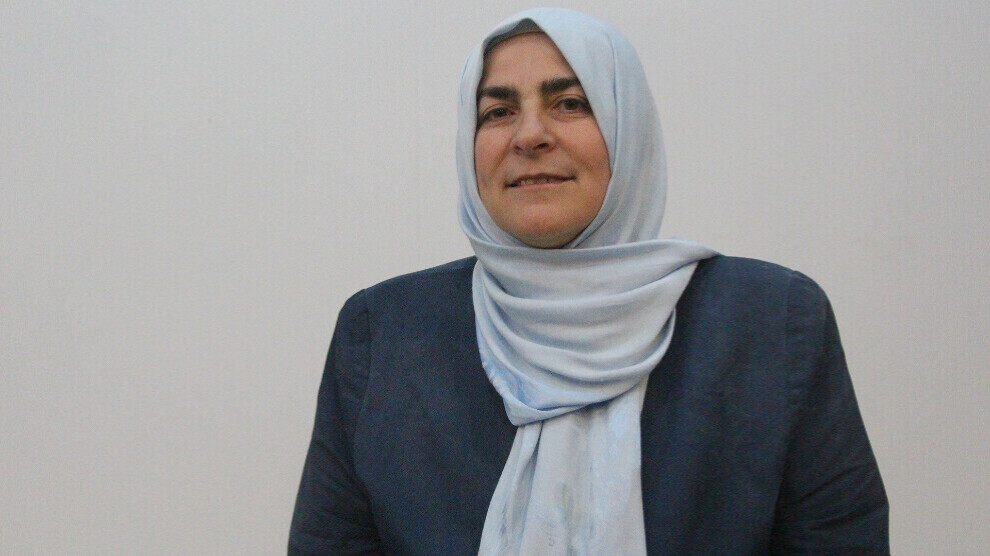
Fatma Bostan Ünsal: Turkey at a Critical Juncture in the Peace Process
Fatma Bostan Ünsal said Turkey’s peace process has shown no real progress after a year, as the core crisis remains undiagnosed and public discourse continues to repeat itself .
Sariya Deniz
Istanbul –After many long years of conflict and persistent violence, Turkey today stands at a critical juncture with the launch of a peace process. This process, with its political, social, and economic dimensions, constitutes one of the most sensitive and impactful files on the country’s agenda. The steps taken by the state, the positions of the opposition, the aspirations of civil society, and the role of international actors are all key elements that will determine the direction of the process and its chances of success.
The sustainability of the peace process cannot be achieved except through a comprehensive approach that goes beyond the parties to the conflict and embraces all components of society. The success of this path could strengthen Turkey’s progress toward democracy and, at the same time, offer a positive model that contributes to regional stability. This underscores the necessity of moving away from the sterile traditional methods that characterized previous attempts at resolution. The process comes at a historic moment in which the Middle East is being reshaped, giving it added significance and a unique opportunity for success.
Within this complex and sensitive context, the attacks targeting Kurdish neighborhoods in Aleppo, along with the support provided by the Turkish state to armed groups, have reignited debate over the seriousness of the peace process and the steps required to ensure its success.
In her remarks on the ongoing process in Turkey, Fatma Bostan Ünsal, President of the Right Initiative Association, explained that nearly a year has passed since its launch without any tangible progress, emphasizing that the country still suffers from a weak capacity to resolve its problems.
She noted that the essence of the crisis has not been accurately identified, nor has there been a rational and calm discussion that reveals the opportunities a solution could offer Turkey. Meanwhile, public discourse remains captive to repetition and regurgitation. “The arena has not yet witnessed a climate of public debate befitting a peace process,” she stressed, adding that the continuation of the process—without its complete collapse—represents a valuable opportunity that should be seized.
Ünsal believes that certain entrenched mental frameworks have yet to be dismantled, as was the case in previous attempts at resolution, and that there is an absence of a comprehensive and persuasive discourse capable of explaining the process to society and convincing it of its merits.
In her remarks, she addressed the War of Independence and the Treaty of Lausanne, reviewing Turkey’s historical trajectory and highlighting the critical turning points in peace efforts from the past to the present. “An approach was adopted based on the idea that Turks and Kurds are one people and one nation. Under this conception, the two lived together within the geography of the Ottoman state. This matter was also discussed at length during the Lausanne negotiations, but the major powers rejected it, and in the early years of the Republic, Turkey abandoned this discourse.”
Fatma Bostan Ünsal stressed that the Kurdish issue in Turkey moved beyond the legal framework long ago, pointing to the heavy losses borne by all sides. “We have lost more than fifty thousand people and suffered economic losses amounting to billions of dollars. We all lost—Turks and Kurds alike.”
She added that the country is now entering a new phase, which requires revisiting and reflecting on past mistakes, emphasizing the need for a rational and serious dialogue environment based on mutual recognition. “This process has not yet begun, as the discourses that prevailed during periods of lawlessness are still considered valid and are sometimes even granted legitimacy. This makes it imperative to organize public debates in a more systematic and constructive manner.”
She also highlighted the cooperation that brought Kurds and Turks together during the founding of the Turkish Republic, stressing the need to reconsider regional relations on the basis of deep historical ties. She pointed to Kurds living in northern Syria, who are relatives of Turkish citizens, as well as Kurds in Mosul and Kirkuk.
Ünsal explained that political transformations over the decades have produced new and diverse mechanisms of cooperation. “Many years have passed, and today we are witnessing different forms of cooperation as a result of political developments. It is not necessary for us to be within the same borders,” she said, stressing that building positive relations is indispensable. “The sound relations that Turkey establishes with Turks and Kurds, and with forces that today hold influence in the region, can lay the foundation for a system that achieves mutual benefit for all.”
She drew attention to the attacks that targeted Kurdish neighborhoods in Aleppo, describing what happened there as an extremely painful tragedy and deeply distressing for Turkey as well. “Even at the height of the civil war, the city had maintained a degree of relative order and was one of the most stable educational centers,” she explained. “We have come to know Aleppo’s neighborhoods as we know Istanbul. Any intervention in a neighborhood like Ashrafieh, for example, can affect around 300,000 people, most of them civilians.”
Ünsal emphasized that Turkey should demonstrate stronger will and exert its weight to ensure the continuation of the peaceful path that existed before these interventions, noting that that period carried an atmosphere of peace. She criticized statements by Trump in which he described Turks and Kurds as “natural enemies,” stressing that Turkish politicians must firmly reject such remarks. “Why should we be enemies? Our citizens in Turkey have kinship ties with Kurds living in Aleppo. It is our duty to be more inclusive toward them and to ensure—before anyone else—that they are in a good situation.”
She further stated that amid the ongoing brutal attacks on Palestine, particularly Gaza, Turkey should pay greater attention to the relatives of its citizens, stressing the need to exert its full weight to ensure the continuation of a peaceful approach for these people and their balanced stances. “The priority should be to establish an internal consensus based on peace with local forces,” she said, considering Turkey’s focus on the Syrian Democratic Forces to be misplaced, and arguing that it would be more appropriate to focus on Israel’s presence and policies in the region.
In conclusion, Fatma Bostan Ünsal stressed the need for Turkey to reconsider its position on the issue of Aleppo, explaining that “the events taking place in Syria should not negatively affect the internal peace negotiations. The sooner we correct the mistakes made in Aleppo, the better. For people to live in conditions of peace, Turkey must assume an active and decisive role.