
"Even Homes Are No Longer Safe" – Women of Parwan's Countryside Face Assaults and Taliban Violations
Poverty, illness, unemployment, and fears of theft and intruders have made rural women's lives in Parwan's Sayed Khel district extremely difficult; two women recount night raids and Taliban treatment of protesters.
BAHARAN LAHIB
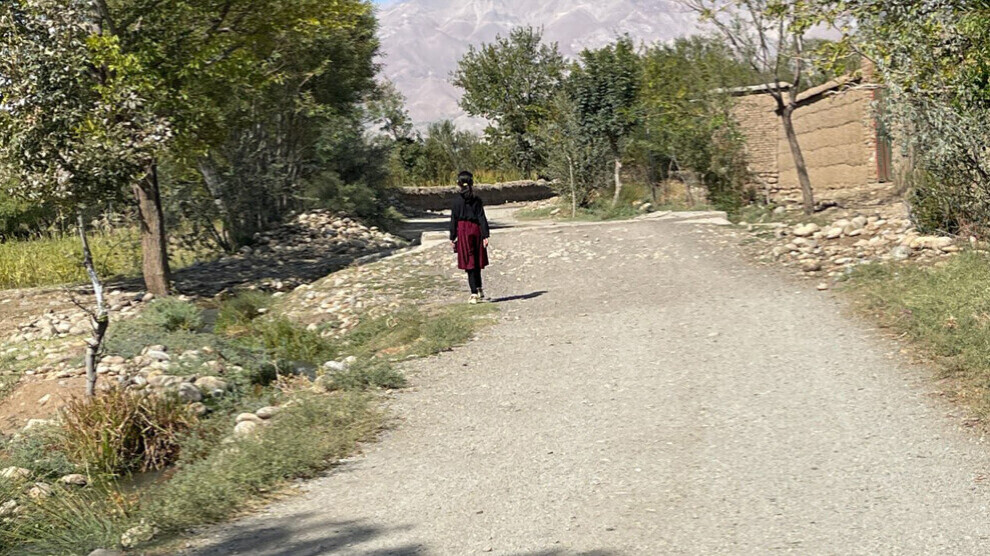
PARWAN_ In one of the villages of the “Sayed Khel” district in Parwan province, green spaces still cover the village, while the echoes of children’s voices who have just come out of their schools resonate in the agricultural fields. As for the women in the fields, they were wearing brightly colored clothes, gathering corn stalk remnants to store them for the winter. Despite this calm rural scene, poverty and unemployment were marking the lives of the villagers.
After walking long distances and passing many rural houses, we stopped at the house of “Nabila Aziz,” with whom one of her sons’ wives and three children’s lives. She has many stories to tell about the difficulties facing the residents of her village; according to her, there are families who do not even find enough dry bread to eat, and securing the necessities of life has become a tremendous challenge for many.
Nabila Aziz's living situation is no different from that of others; due to economic hardship, she is sometimes unable, for consecutive months, to afford the price of the medicines she needs to control her blood sugar level. Illness and poverty have made her daily life extremely difficult.
"Theft Incidents Are Increasing, and Those Involved Belong to the Taliban Movement"
Alongside these problems, she points to an increase in theft incidents within the village. She claims that some of the people involved in these incidents belong to the Taliban movement.
One of her sons works as a fuel seller in Kabul, and his wife was living with their four children in a separate house. Describing an incident that occurred, according to her, a month ago in her daughter-in-law's house, she recounts: "About a month ago, I invited my son to spend the night there. When they left the house, my daughter-in-law locked the door, but she noticed a person on the roof. She asked about his identity, but received no answer. When she approached him, the person placed a flashlight directly on her eyes to hide his face. At that moment, my daughter-in-law and her daughter, who is about 13 years old, entered into a struggle with him. Upon hearing their screams, the neighbors gathered, and I also arrived at the place. In the end, we handed that person over to Taliban elements who had also arrived at the site. When they removed the mask from his face, one of the Taliban elements, who knew him, laughed and asked him what he was doing there."
According to Nabila Aziz, this incident caused greater panic in her family; after this incident, her daughter-in-law left the house and the area, taking her children with her to Kabul.
Attacks on Civilians
After listening to Nabila Aziz's account, we accompanied her to meet Anisgul Karim, a woman in her fifties who recounted what happened to her, saying: "A few nights ago, my husband and son went out to irrigate our land due to water scarcity. At that time, I noticed a man standing in the courtyard of our house. When I called out to ask him about his identity, he attacked me; he placed his hand forcefully over my mouth and threw me to the ground, then pinned me down with his legs until I was unable to get up. My daughter-in-law and my daughter woke up to the sound of my fall, and they were able to free me from his grip."
She added: "Upon hearing the screams, the neighbors came out to help; they removed the mask from his face and recognized him, as it turned out he was the same person whom the Taliban had previously detained several times on charges of theft."
Both Nabila Aziz and Anisgul Karim say that the suspect in the theft belongs to the Taliban movement. They also mentioned that following popular protests, the Taliban movement detained two young men from the area who had gone out late at night to irrigate their fields and beat them severely to the extent that they are still bedridden days after the incident. They confirm that “these practices aim to silence popular protests.”