
Electricity Cuts Weary Kobani Residents Amid Rising Temperatures
Women from Kobani have expressed their dissatisfaction with the deteriorating electricity situation, affirming that current supply hours don’t meet residents' needs, and continued power cuts amid rising temperatures have compounded their daily suffering.
NORSHAN ABDI
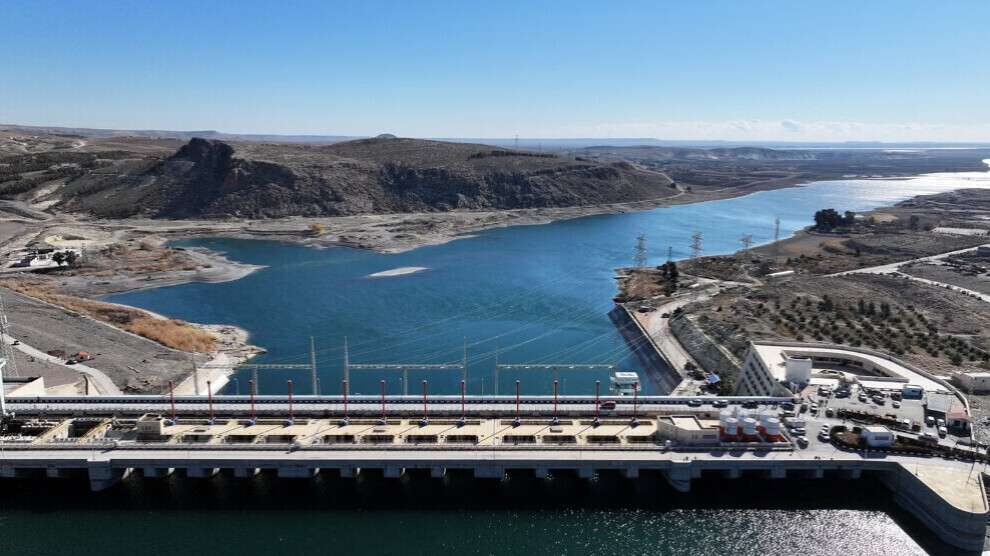
Kobani — On January 29 of this year, an agreement was signed between the Syrian Democratic Forces (SDF) and the interim Syrian government, followed by the beginning of a new path of discussions on the democratic integration process. Within the framework of this process, a number of public service institutions were integrated in a rapid and organized manner, including dams, making the government responsible for managing the water and electricity systems in the region.
Since then, the city of Kobani and its countryside have witnessed a noticeable decline in electricity supply hours, failing to meet residents' needs, with the crisis worsening in conjunction with rising water levels in the Euphrates River. According to local sources, the ongoing crisis is linked to the mechanism of dam management and the distribution of electricity hours, amid accusations against those responsible for their management of negligence and inequity in distribution.
"Electricity Is Given to Us as Though It Were a Favor"
Naime Aqil expressed her extreme dissatisfaction with the electricity situation, saying: "The electricity situation in Kobani is very bad, and the current supply hours do not meet our needs. Even when electricity comes, it is very weak, making it difficult for us to use it. We feel as though the few hours of electricity given to Kobani are used as a favor to us. There are many families who do not rely on public electricity and have provided their own alternatives, but the economic situation does not allow hundreds of families to bear those costs. What is this lack of humanity? How can an entire city be left without electricity in these high temperatures?"
"There Is Inequality in Electricity Distribution"
She noted that the people of the region are the owners of the water and dams, questioning why they are being deprived of their rights. She said that her people made great sacrifices and paid a heavy price to protect the water and electricity at the Tishrin Dam, yet the people of Kobani today face the same difficulties.
She added: "We thought we had liberated ourselves from the authority of the Ba'ath regime, but today we see the same approach being repeated—through discrimination between regions and inequality in the distribution of electricity hours. If the Euphrates River and the Tishrin Dam belong to this people and this homeland, why are the people of the region being deprived of water and electricity?"
"We Are Very Angry Because of the Electricity Cuts"
For her part, Mona Suleiman highlighted the difficulties faced by the people of Kobani, noting that they have been living in harsh conditions since the beginning of summer, amid electricity cuts and irregular supply.
She said that residents are forced to leave their homes and sit in the shade of trees and walls to escape the heat, noting that electricity is constantly cut off, increasing their suffering and depriving them of the most basic needs, such as cold water and washing clothes.
She affirmed that anger is growing among residents due to what she described as "different practices toward Kobani," adding that the sacrifices of the city's residents, especially the young men and women who lost their lives defending it, make this reality even more painful. She said the city is today being deprived of its most basic rights. "When they want, they give us electricity, and when they don't want, our situation becomes as it is now."
"Is It Reasonable for a Person to Spend Their Day in Front of Doors Because of the Heat?"
Amine Ebo explained that residents spend the summer in front of their doors because of the electricity cuts. "There are no words to describe the electricity situation. All we can say is, unfortunately, Kobani has reached this state. I have a small part of a solar power system, and we can only run a fan through it. This solution is also insufficient in the summer heat. Our days and nights have become the same, and all we do is pray for this summer to end quickly. Everything can be endured except the lack of electricity. As soon as I open my eyes in the morning, I go out and sit in front of my door. Is it reasonable to live this way? Such deliberate policies only increase residents' anger."