
Eco-Friendly Exhibition: Gaza’s Women Transform Rubble into Creativity
The “Green Impact – Gaza Creates” exhibition highlights Gaza’s resilience, showcasing how women and youth turn destruction into creative, hope-driven projects despite ongoing hardship.
Rafif Aslim
Gaza_Despite the rubble,deprivation,and ongoing conflict,residents of Gaza insist on making life a space for creativity and hope. Under the slogan “Green Impact – Gaza Creates,” the first eco-friendly exhibition was launched, opening a new window onto the ability of women and young people in Gaza to transform recycled materials into innovative products that carry messages of resilience and economic empowerment.
Organized by the Youth Future Rescue Association in partnership with Save the Children International and the European Union, the exhibition marks the first environmentally friendly event of its kind held after two years of attacks on Gaza. Launched on Monday, January 12, the three-day exhibition features dozens of women and young participants presenting recycled, eco-friendly products, demonstrating how environmental action can become a platform for creativity and community engagement.
Empowerment Through the Green Economy
Ibtihal Sharab, coordinator of the Youth for a Green Future project, confirmed that the initiative aims to achieve economic empowerment for young men and women, particularly female entrepreneurs who lost their projects during the attacks. The project focuses on green economy practices and finding alternative solutions to the crises Gaza continues to face.
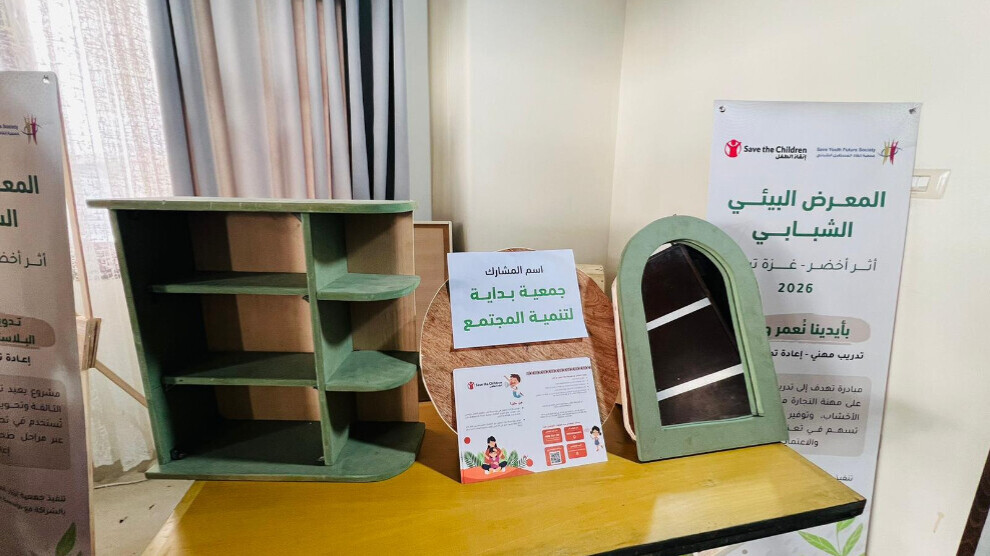
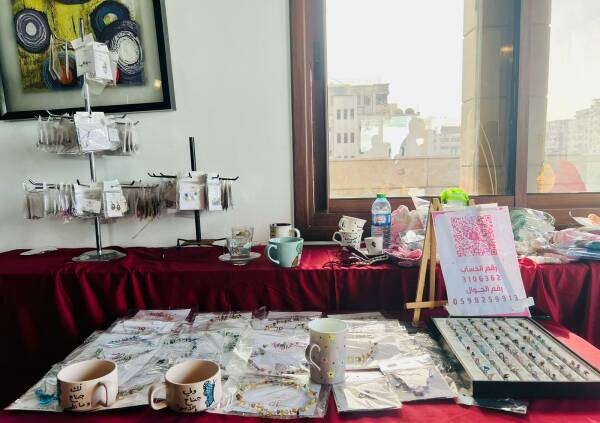
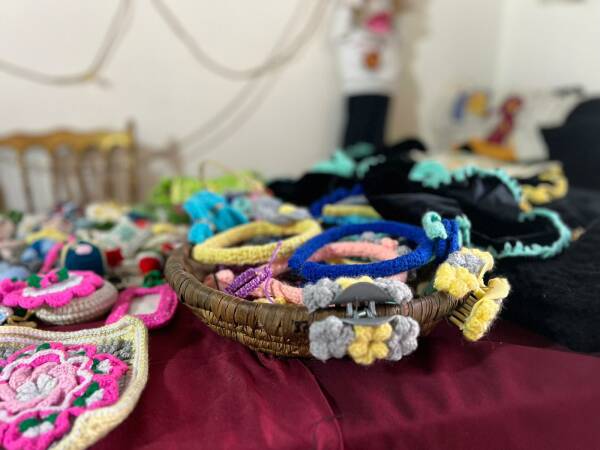
She explained that the exhibition includes 22 sections, ranging from mobile kitchens designed for women during displacement or those living permanently in tents, to sections dedicated to producing detergents and soap amid severe shortages. Other sections focus on organic farming, clothing upcycling, embroidery, glass painting, and various environmentally friendly crafts.
Sharab noted that Gaza is filled with creative individuals who challenge all circumstances to produce solutions from nothing, proving to themselves and the world their right to life. She emphasized that empowerment is the key to reviving these projects and enabling them to continue, whether they focus on heritage crafts, dolls and toys, food and healthy meals, or recycled wooden products.
The lack of raw materials, she added, was the main driver behind organizing the exhibition. All displayed products were made from recycled materials sourced locally by women and youth, despite repeated displacement, security risks, and soaring prices. She stressed that developing projects from the operational stage to full production was far from easy.
According to Sharab, public turnout exceeded expectations, as Gazans long for aspects of the life they once knew before the attacks. She described the exhibition as a rare and uplifting event that offers diverse products meeting many community needs, sending a message to the world that Gaza and its people deserve real opportunities to prove their ability to produce and innovate together.
An Eco-Friendly Mobile Kitchen
At one corner of the exhibition, engineer Manar Al-Farra presents her project on recycling wood to create smart, mobile kitchens. She explained that the idea emerged from the severe needs of women amid forced displacement and the harsh reality imposed on Palestinian women. The kitchen, designed as a wheeled box, can be opened from both sides and used for washing dishes, as a work surface, or for basic storage.
Al-Farra noted that sourcing raw materials was extremely difficult. She searched across Gaza City, the central area, and the south to find suitable components such as sinks, faucets, and accessories available in local markets. Ultimately, she relied on recycled materials, including wooden pallets and wheels extracted from beneath the rubble of destroyed and bombed homes.
She added that before the war, she had never considered such projects, as she worked as an architectural engineer overseeing major developments and commercial centers. The attacks transformed her into a displaced woman, moving from place to place with survival as her primary concern.
Recycled Clothing Through Embroidery and Painting
In another corner, Aida Hamid participates with her project “Nafs,” which specializes in recycling clothing and incorporating Palestinian embroidery to give garments a renewed spirit. She explained that old or damaged clothes—often recovered from under rubble or carrying sentimental value—are restored and redesigned rather than discarded.
Hamid noted that this approach is not limited to specific cases, as many women and girls possess torn clothing and cannot afford replacements due to extreme price inflation, closed crossings, and the blockade. She emphasized that adding Palestinian embroidery does more than conceal damage; it restores women’s national identity, which has been eroded over two years of displacement.
By blending modern and traditional styles, she has produced embroidered dresses and loose jackets popular among young women today. However, she highlighted major challenges, including shortages of raw materials and specific colors, prolonged electricity outages, and the lack of wood needed to complete many heritage pieces. Rising costs, she added, reduce consumer demand, though she hopes to one day register “Nafs” as an internationally recognized brand.

Eco-Friendly Fabric Dolls
In the dolls section, Maha Awad explained that she turned to doll-making after the war due to the absence of imported goods and mothers’ constant need to provide simple toys for their children—one of the most basic rights stripped from Gaza’s children. She produces dolls that are completely safe, made without metal or plastic, relying instead on fabric and recycled materials such as old buttons, cotton from discarded pillows, and surplus factory textiles.
Awad crafts dolls in various shapes and colors and can even create custom dolls based on a child’s photo or name. She said participating in the exhibition is essential for marketing herself and her products, especially given the positive reactions from mothers. Although her income is modest, it helps meet basic needs.
A Young Woman’s Dream Realized Through Cooking
At another corner titled “Our Dishes Are Different,” Sally Al-Barbari shared how preparing homemade meals has helped her achieve economic empowerment and cover basic necessities. She explained that her participation is especially meaningful, as she was often told that girls cannot run projects independently or become professional cooks at a young age.
Al-Barbari expressed surprise at the visitors’ positive feedback, noting that many requested contact details to order more dishes later. She said this response filled her with pride, as her passion may now evolve into a personal business. Like many women in Gaza, she sees such initiatives as a glimmer of hope for the city’s recovery—one driven by the hands of women who continue to persevere with extremely limited resources.