
Eastern Kurdistan's New Era: Party Unity, Women's Role in Struggle
As Eastern Kurdistan faces escalating struggle against Iranian repression, party unification and the goal of a democratic nation emerge as a strategic coalition reflecting aspirations for freedom.
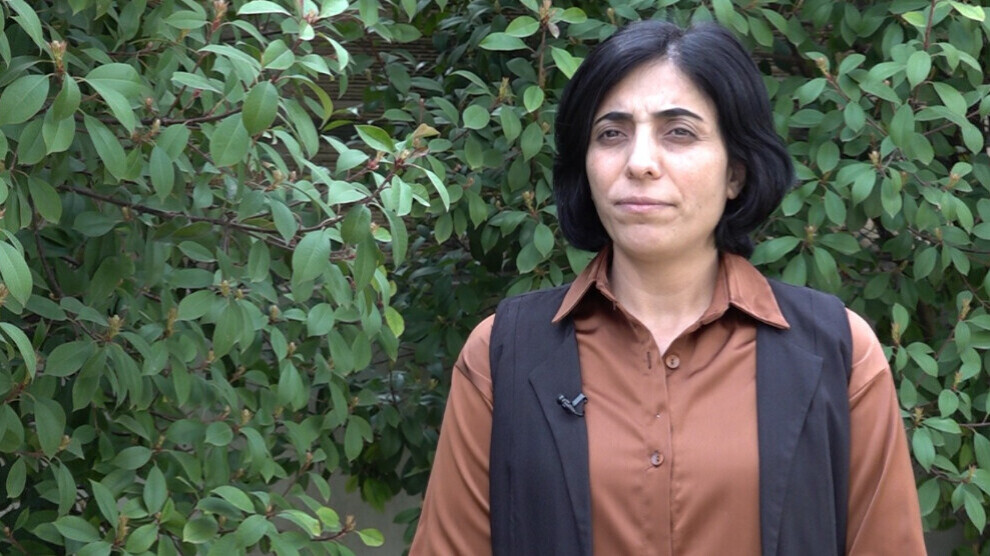
Helen Ahmed
Sulaymaniyah — Biman Fyan, the co-chair of the Kurdistan Free Life Party (PJAK), affirmed the rise of national spirit among all segments of society in this new phase, considering it to be of utmost importance for Eastern Kurdistan, because the Iranian regime "has been executing people for many years and seeks to consolidate its authority through repression."
Since the 1979 revolution and the Islamic Republic's rise to power, Eastern Kurdistan has become the main battlefield and the center of struggle and resistance against the repressive regime. Dozens of political leaders, both men and women, as well as thousands of political activists have been executed and assassinated in Iranian prisons. Eastern Kurdistan has become an occupied, militarized region, ruled by the regime with a policy of repression and plunder.
In response to these policies, five Kurdish parties announced on February 22 their alliance and unification of ranks—a project for which the people of Eastern Kurdistan have made thousands of sacrifices. This day marks a historic milestone in the Kurdish march, as they come together for the first time at this level of unity and solidarity in the history of political action in the region.
The coalition includes five parties: the Democratic Party of Iranian Kurdistan (PDKI), the Kurdistan Free Life Party (PJAK), the Khabat Organization of Iranian Kurdistan, the Kurdistan Freedom Party (PAK), and the Kurdistan Laborers' Association, under the name "Coalition of Political Forces of Iranian Kurdistan" .
"With the Philosophy of Jin Jiyan Azadî, Women Struggle in Eastern Kurdistan"
Biman Fyan, co-chair of PJAK, stated that alliance and unity have always been a fundamental task for the Kurdish people in Eastern Kurdistan. "In 1999, dozens of martyrs were given for the sake of unity. But on February 3rd, the people chose unity and consensus to struggle for Kurdish achievements in Eastern Kurdistan."
She added, "The residents of the region have always called for the unification of Kurdish parties. They have been subjected to genocide for years, particularly by the Iranian regime, which is committing genocide against Kurds in Eastern Kurdistan. They face torture and execution daily. The Kurdish people's demand is based on the unity of political parties in the region, and this strategic alliance has gained the trust of the Kurdish people in the region and throughout all parts of Kurdistan."
She explained that the Kurdish people "have realized that they can achieve their rights through the unity of Kurds and political parties," affirming that this unity will remain firmly rooted in the history of Eastern Kurdistan.
"There is Both Threat and Opportunity for the Kurds"
The coalition formed on February 22 is the fruit of eight months of struggle, according to Biman Fyan. "From now on, each party will begin working and struggling together. As PJAK, we have worked and struggled for many years. From now on, we will work side by side with the Kurdish parties in Eastern Kurdistan for Kurdish causes. By implementing the terms of the coalition, we declare to the enemies of the Kurds in Eastern Kurdistan that the Kurds will implement these points on the ground in the best possible way through unity and solidarity."
She pointed out that Eastern Kurdistan and Iran are witnessing rapid changes, where Kurds face threats while opportunities are emerging on the horizon for them and their political parties. "The danger lies in the massacres being committed against the peoples of the region. The Iranian regime seeks to implement its policy of exterminating the people, but the peoples of the region will continue to confront the Iranian regime with their unity and strong determination. Now, through this coalition, we are all united around one goal and standing against the regime."
"The Role of Women in the Political Sphere and Parties Should Be Further Developed"
Biman Fyan affirmed that despite the weak participation of women in the political sphere and political decision-making, the women of Eastern Kurdistan are waging a revolution under the banner of Jin Jiyan Azadî in the social sphere and strategic decision-making. "There is limited presence, but in PJAK we believe in the principle of women's freedom and the 'Woman, Life, Freedom' revolution, and we will continue our struggle in the region, for without women's freedom, a democratic system cannot be established."
She added, "We pay attention to the status of women in the political, social, and defensive spheres. As representatives of our movement, our duty and responsibility there are more difficult," emphasizing that "we pay attention to the identity of women and Kurds there. We also appreciate the role of women in the political sphere, and we will strive diligently to ensure women's rights in political decision-making. We believe that the people of Eastern Kurdistan demand that we pay attention to women's issues in all areas."
The Kurdish people are convinced that the revolution against the occupiers will succeed under women's leadership. "Women's leadership will guarantee freedom and democracy in Eastern Kurdistan and Iran. It is the duty of political parties, and our duty, to pay attention to women's struggle. There has been limited participation of women in the platform, but we have previously sought to involve more of them."
"The Revolution that Erupted in Rojava United All Kurds in All Parts of Kurdistan"
Biman Fyan referred to the common struggle of the Kurdish people in all parts of Kurdistan, considering that many forces seek to "exterminate the Kurdish people" and strip them of everything in the Middle East over a hundred years. "The Kurdish people and Kurdish forces were not properly united, so they always sought to divide the Kurdish people. They imposed their policies and projects on the Kurds, but the Kurds reject that."
She considered that the policies of extermination "united the Kurdish people through this national spirit. The revolution that erupted in Rojava united all Kurds in all parts of Kurdistan," pointing out that Kurds "took to the streets with a national spirit and remained united. Thanks to this national spirit, they were able to cross the borders of the Kurdistan Region and North Kurdistan. Despite the political situation in Eastern Kurdistan, youth from Ilam and surrounding areas joined the Rojava movement. In 2026, the Kurdish people throughout Kurdistan left their mark for the entire world through their unity, affirming that the occupation forces can no longer impose their authority on the Kurds."
Biman Fyan affirmed that "the Kurdish people in Eastern Kurdistan need solidarity, so we struggle for their rights and unity." She described women as the "eyes of the revolution," leading it in the prisons of Eastern Kurdistan. "The Kurdistan Regional Government has announced the results of women's resistance and the blood of martyrs in Eastern Kurdistan."
She believes that women, unlike what happens in the traditional political arena, possess the ability to bring parties together and unify them through solidarity and joint action, affirming that the women of Eastern Kurdistan have succeeded in breaking the restrictions imposed based on gender and ethnicity—an achievement that is a direct fruit of women's struggle. Women there continue their resistance and stand firmly in the face of the patriarchal mentality upon which the Iranian regime is built.
The women of Eastern Kurdistan struggle for women's identity and freedom in all aspects of life, as she explains: "If women unite strongly, the Kurdish parties in the region can form an alliance to unite the Kurdish people. The role of women in the coalition has been emphasized. We must work and struggle side by side with women through alliances. The women's platform must be managed through women's unity. Wherever there is women's struggle, there is no nationalism and patriarchy, and wherever there is no patriarchy and nationalism, there is no democratic nation, but rather coexistence."
"This is the Era of Women's Freedom and the Freedom of the Kurdish People in Eastern Kurdistan"
Biman Fyan stressed, "We are fighting in Eastern Kurdistan on the basis of unity. We need a comprehensive struggle, and we will try to embody our solidarity on this shared idea. Let us organize ourselves and prepare for a situation where the people will not allow the occupier to interfere in the affairs of the Kurdish parties."
At the conclusion of her remarks, Biman Fyan, co-chair of PJAK, affirmed: "We will not allow any party to interfere in our will, our existence, and our identity. We will not allow the occupying states to control the new era. If the Kurdish people ignite the fuse of a new resistance and face the invaders, then this era will be the era of women's freedom and the freedom of the Kurdish people in Eastern Kurdistan. We will all triumph together, and therefore we will wage a strong struggle.