
Dust Storm Affects Life in Sestan and Baluchistan
A dust storm in Sestan and Baluchistan cuts visibility, shuts offices and banks in Hirmand, Zahak, Hamun, and is set to last all week.
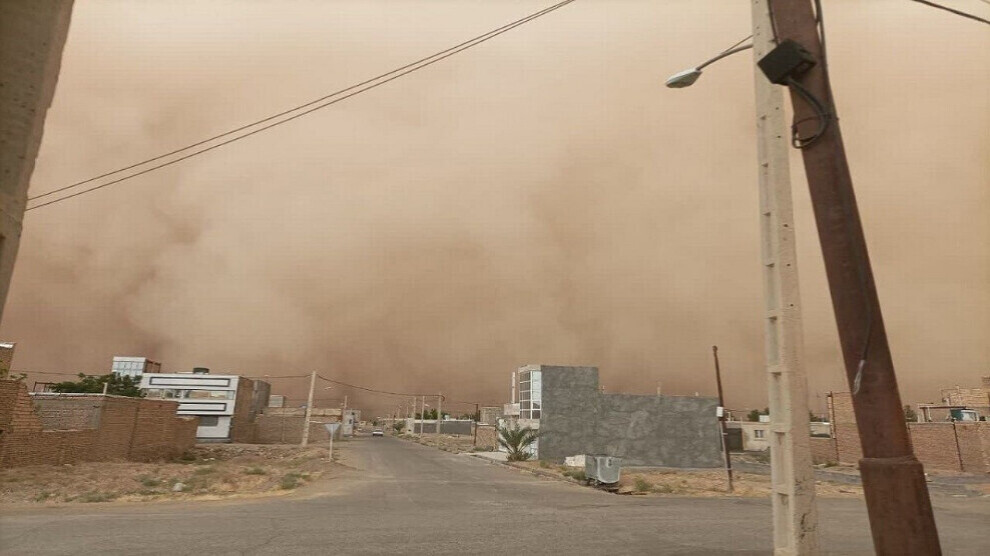
News Center_The duat storm that struck Sestan and Baluchistan has caused a sharp deterioration in air quality and affected residents’ lives by disrupting movement, increasing respiratiory cases, and reducing daily activites, amid ongoing health warnings from local authorities.
Iranian media reported today, Monday, June 29, that the dust storm continues to hit Sestan and Baluchistan province, causing a sharp decline in horizontal visibility and a significant rise in fine dust concentration in several cities of the province, including Hirmand, Zahak, Hamun, and Zabol.
Due to the worsening weather conditions, public relations offices in Hirmand, Zahak, and Hamun announced that all government offices, executive agencies, and banks would be closed today, based on recommendations from the Crisis Management Headquarters and the ongoing storm and reduced visibility. Relief centers, medical facilities, and essential service centers are exempt from this decision and will continue operations to ensure the provision of necessary services to residents.
Executive offices, public and non-governmental institutions, as well as banks, insurance companies, and municipalities in Zabol province, ended their working day at 11:00 a.m. _ two hours before the official closing time_ based on a decision by the city’s Crisis Manafement Headquarters due to the intensifying storm and increasing fine dust in the atmosphere. The Regional Meteorological Authority reported that the storm and deteriorating weather conditions would continue until the weekend.
The fine dust in Sestan and Baluchistan province has worsened significantly, especially in resent years. The winds that blow every 120 days are among the most important natural factors causing this phenomenon, disrupting residents’ lives every summer. However, meteorological and climate experts believe that human factors also play a role in the spread of this crisis. Among the most important reasons for the increase in fine dust in this region are poor management, land drying, and declining vegetation cover.
Environmental reports in Zabol province show that the drying of the Hamun and Jazmurian lands is among the most prominent factors that have exacerbated the spread of fine dust in the region. The Hamun International Wetland has turned into one of the largest sources of dust due to the sharp decline in water flow, the discontinuation of water rights, and the continuation of successive droughts.
Data also confirmed that the Jazmurian wetlands, located between Baluchistan and Kerman provinces, have completely dried up due to dam construction and declining rainfall rates. With every gust of wind, large quantities of dust are transported to cover vast areas, further worsening environmental conditions in the region.