
Dreams: A Key Motif in the Arabic Noval and a Space for Liberation from constraints
The writers at the Tunis Forum for the Arabic Novel affirmed that dreams act as a form of liberation, enabling individuals to break free from constraints and offering novelists a key to deeper insight into the events they portray.
Naziha bussaidi
Tunis — The Tunis Forum for the Arabic Novel adopted “the dream” as the central theme of its third edition, not as a passing narrative technique, but as a rich symbolic horizon that opens the way for a deeper reading of the modern Arabic novel.
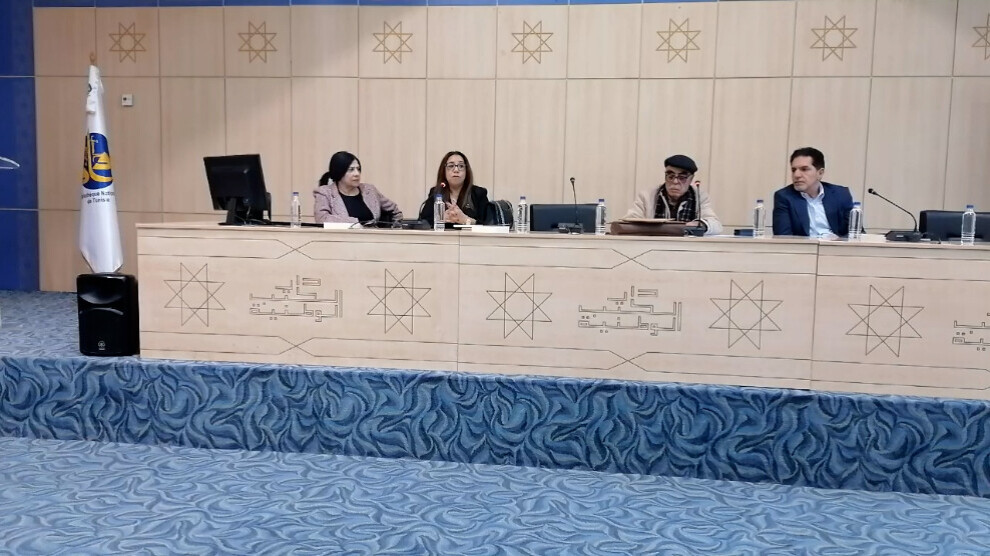
The third edition of the forum kicked off on Thursday, December 11, at the National Library in the Tunisian capital, under the slogan “Dreams in the Arabic Novel.” Writers from Tunisia and several other countries took part in discussions exploring depth and meaning in contemporary Arabic narrative.
Dreams the Key to the Noval
Our correspondent followed the forum on its opening day and spoke with several women writers, including author Najah Abdulaziz, who emphasized that writing is, at its core, a dream — a manifestation of inner visions. Anyone who writes poetry, a story, or a novel is ultimately seeking to affirm their existence. Writing, she explained, resembles dreaming: it is a space of liberation and release from constraints, and can even serve as a form of healing, for no human can live without dreams. A writer, she added, is capable of opening doors that help others realize their own.
She also noted that women possess a deeper ability than men to express their issues, yet for a long time they allowed men to write on their behalf — whether out of modesty or due to the dominance of patriarchal structures that controlled the literary sphere. Today, however, she believes women are gradually freeing themselves from that dominance and taking ownership of their narratives. She affirmed with confidence that their journey in writing will not cease.
Lebanese novelist and media figure Najwa Barakat expressed her delight at participating in the event in Tunis, where she is scheduled to present a talk titled “At the Edge of Conscious and Unconscious.” She noted that the novel often begins with a dream, as dreaming offers writers a space to express what they may be unable to articulate openly in reality. She views the dream as a highly significant narrative tool that deserves to be valued within the literary text, for it provides readers with keys that help them delve more deeply into understanding events, dialogue, and characters.
Barakat added that the dream serves as a framework that grants a kind of freedom rarely available to the Arab individual. It becomes a means of expressing hidden desires and suppressed emotions, while also offering hope for a future in which circumstances may evolve toward liberating the human being from constriction, marginalization, and the burden of moralistic, repressive questions so often imposed upon them.
Patience and the Woman’s Dream of Liberation
The Egyptian novelist and scholar Soheir Al-Mosadfa said that dreams have long held a mythical and highly distinctive presence in the Arabic novel. Dreams may be the essential and core material for Arab writers, alongside expansive imagination, especially as many women novelists face constrained boundaries due to the colonial conditions experienced by some societies—conditions that push them toward dreams, myths, and the yearning for justice and truth in the world.
She pointed out that what most distinguishes her writing is the Arab woman’s dream of liberation—whether the dream in its technical sense within the creative imagination, or the dream as a symbol of what women in the Arab world and the Middle East aspire to.
She added: “Sometimes young women writers become frustrated during my seminars and lectures, saying that current conditions are not favorable for female authors. I tell them: Be patient. We have achieved a great deal during a time when men dominated the field. Be patient; our names have become far more present on the global literary scene, in translations into many languages, and in awards—both as short story writers and novelists.