
"Death Trucks” in Tunisia… The Blood of Women Workers Between Their Livelihood and Paralysed Protection
The Mazouna accident reignited debate on Tunisian agricultural women workers still transported in “death trucks” despite laws, seven years after Law No.51 of 2019, with no actual protection.
ZOHOUR MASHRIQE
Tunis — The roads of the Tunisian countryside are bleeding once again, revealing another face of the tragedy of women working in agriculture, as shocking statistics indicate the recording of about 88 traffic accidents from 2015 until today, resulting in the deaths of more than 60 female agricultural workers and injuries to over 900 others with varying degrees of wounds and permanent disabilities.
The tragedy of yesterday, Friday, June 12, in the "Mazouna" area of the Sidi Bouzid governorate, was merely another episode in this bloody series, following the overturning of a light truck that killed two female agricultural workers who were among the most prominent activists defending their rights, and injured 13 other female workers with varying degrees of severity.
This heartbreaking reality continues amid a flagrant obstruction of the implementation mechanisms of Law No. 51 of 2019 and Decree No. 3 of 2021, which were legislated to ensure safe transport and comprehensive social coverage. The laws remain ink on paper, and the makers of food security remain hostages to "death trucks" that pile up women without oversight, in the complete absence of deterrent punitive sanctions that would end this tragedy and bring them from the margins of the state's concerns to its centre.
Thousands of agricultural workers in the Tunisian countryside wake up not only to face the harshness of nature and the hardship of working the land, but also to undertake a daily perilous journey aboard what has become locally known as "death trucks."
These trucks, originally intended for transporting goods and livestock, are piled with toiling women in humiliating conditions that lack basic safety standards, turning Tunisia's roads into scenes of recurring tragedies and traffic massacres in which the makers of the country's food security are killed with impunity.
"How Long Will Such Tragic Accidents Continue?"
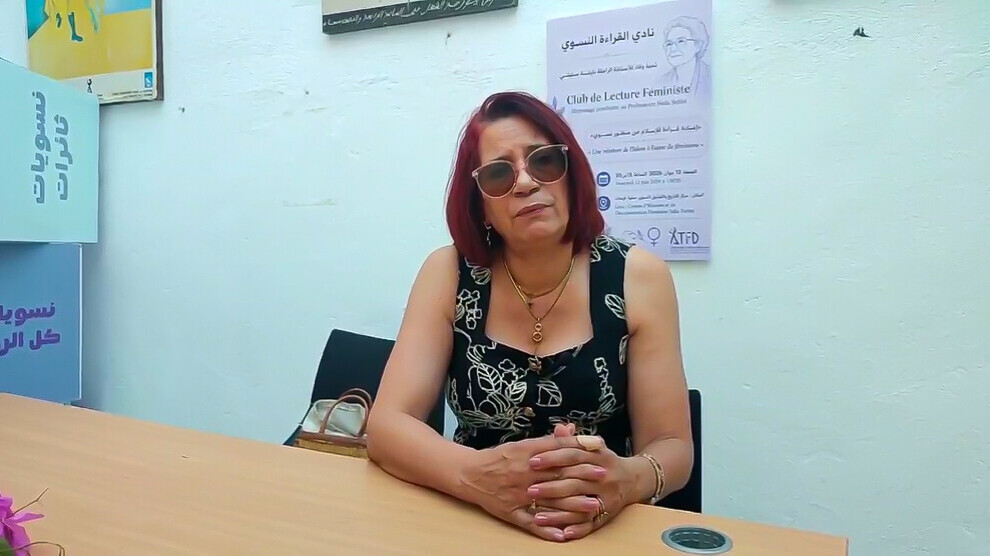
Researcher and human rights activist Fathiyeh Al‑Saidi expressed her deep sorrow following the recent tragedy that claimed the lives of two female agricultural workers in the painful traffic accident in the "Mazouna" area, affirming that the two workers who died in this horrific accident were among the most prominent activists and defenders of their economic and social rights, and among those who fought loudly for the provision of safe transport that guarantees the dignity of women workers in the agricultural sector.
In a related context, the researcher asked with indignation: "How long will such tragic accidents continue?" affirming that drafting laws remains worthless unless accompanied by real implementation mechanisms on the ground. "There is a law on safe transport that was drafted and ratified in parliament," she said, questioning the reasons behind its non‑activation thus far, and why deaths among women due to unsafe transport continue to be recorded.
She stressed that the Tunisian Association of Democratic Women had previously prepared an in‑depth study on the conditions of female agricultural workers and was behind the push to issue this legislation, calling for the immediate issuance of legal procedures to activate it as a protective and deterrent duty.
She affirmed that the current reality proves that "we are still at the starting point," as female agricultural workers are still demanding their most basic wasted rights, foremost among them safe transport, equal pay, the prevention of gender‑based discrimination, as well as the right to healthcare and social coverage. "This wide category of women today lives on the margins of the state and outside the depth of its political and developmental concerns."
Fathiyeh Al‑Saidi condemned the momentary and temporary response to the tragedies that befall female agricultural workers in Tunisia, criticising the transformation of these human tragedies into mere "transient events" that fade from memory as soon as societal interaction recedes, only for the scene to repeat itself again in the absence of radical treatment, affirming that the recurrence of unsafe transport tragedies has become "absolutely unacceptable."
She called upon the authorities and relevant bodies to declare a decisive and firm stance to end this continuous bleeding, and to activate immediately and seriously the laws and legislation that guarantee the physical and social protection of this category of women.
She stressed the need to impose strict penalties on anyone who deliberately piles up women's groups in trucks and vehicles that are not equipped and lack the minimum safety conditions, calling for the establishment of clear standards and determinants regulating the numbers of passengers permitted to be transported, as a transitional step towards providing buses and public or dedicated transport means that guarantee their safe daily transport from their places of residence to their farms.
At the conclusion of her speech, Fathiyeh Al‑Saidi mourned the two victims with profound sorrow, expressing her extreme shock at the tragic scene of the accident and the blood that was shed, considering this day a sad day overflowing with pain and bitterness over the reality of Tunisia's toiling women.