
Dar Association for Victims of Forced Displacement: Return Requires Security and Legal Guarantees
The attack on the first convoy of displaced persons from Serê Kaniyê/Ris al-Ain during their initial return to the city has raised widespread concerns regarding the availability of the necessary security,legal conditions for the return of the displaced.
SORKEL SHEIKHO
Qamishlo — Prior to the departure of the first convoy of displaced persons from Ris al-Ain/Serê Kaniyê toward their city on August 10, the Dar Association for Victims of Forced Displacement had issued a statement demanding guarantees to protect the displaced after their return. However, the displaced persons who arrived in their city were attacked by a group of unidentified gunmen, resulting in several injuries.
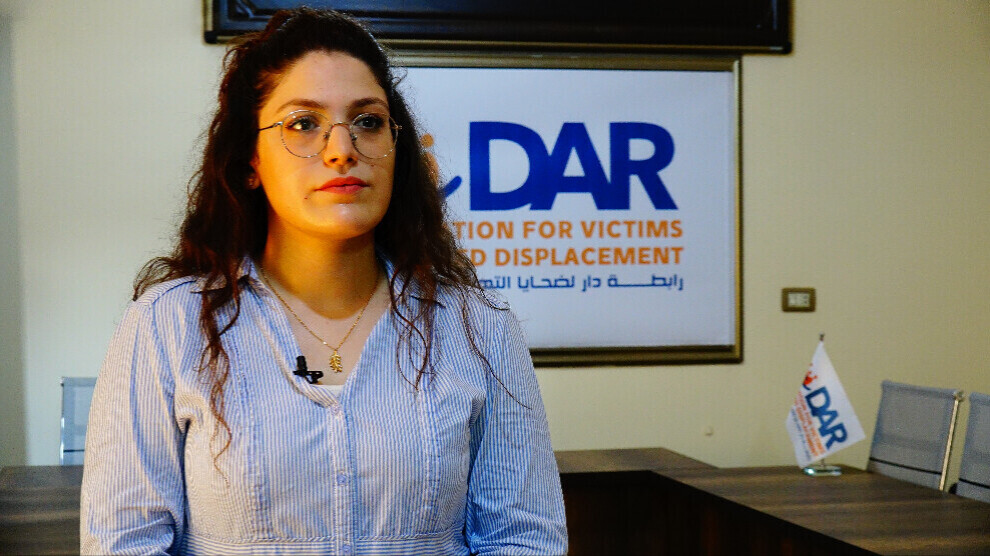
Amid ongoing concerns regarding security, property, and the rights of returnees, the Dar Association for Victims of Forced Displacement affirms that safe and dignified return requires clear guarantees, legal mechanisms to protect property and compensate the affected, in addition to the participation of the displaced in decisions concerning the future of their city. In this interview, association member Eva Ibrahim discusses the repercussions of the attack, the obstacles facing the residents' return, and the association's demands to ensure voluntary, safe, and sustainable return.
Following the attack on the displaced persons of Serê Kaniyê after their return to their city, what measures and guarantees does the Dar Association for Victims of Forced Displacement demand to ensure a safe and legal return for the displaced, protect their rights and property, and enhance civil peace among all?
What the people of Serê Kaniyê experienced during their first return journey, which was supposed to be safe, has aroused our concern and sorrow due to the violations they suffered upon entering the city. For this reason, the Dar Association for Victims of Forced Displacement accompanied the first return convoy, which included approximately 400 families. What happened constitutes a crime against humanity, as it hinders the return of former displaced persons and prevents them from returning to their homes.
From this standpoint, the association has demanded, alongside organizing a collective and coordinated return under joint supervision of civil society and the local community, the provision of guarantees for the residents' safe and legal return.
We have also called for the formation of legal committees to document property ownership, address existing disputes, and establish the necessary protection conditions and guarantees for return, while preventing any retaliatory or discriminatory practices against residents.
We also emphasize the importance of strengthening civil peace and coexistence among all residents of the city, particularly the residents of Serê Kaniyê. We call on the interim Syrian government and relevant authorities to take necessary measures to prepare a safe environment that allows the displaced to return, including guaranteeing freedom of movement and protection.
Are the current conditions suitable for a safe and voluntary return of the residents? What are the most prominent obstacles preventing their return?
Based on testimonies and continuous monitoring of the displaced persons' conditions, the Dar Association for Victims of Forced Displacement believes that current conditions remain insufficient to guarantee a safe, voluntary, and dignified return for the residents of Serê Kaniyê. Return does not only mean reaching the city or entering a home; it means feeling safe, and that one's life, family, property, and future are secure.
To this day, significant difficulties and obstacles still prevent the full provision of these conditions. For this reason, the majority of displaced persons do not feel sufficient confidence and believe that current conditions do not provide them with the guarantees they need to make the decision to return.
The obstacles are numerous and interconnected. First is the absence of security. The second obstacle concerns the issue of property, which is a major concern for the displaced, as thousands of families left behind their homes, lands, businesses, and belongings. Moreover, there are still no clear and effective mechanisms to ensure the restoration of rights or compensation for damages suffered by the displaced during the years of displacement.
There is also the factor of fear; reports indicate that some persons wishing to return have faced harassment or threats.
When we evaluate all these factors, we conclude that the return of a large portion of the displaced remains fraught with risks.
Since the issue of Serê Kaniyê is fundamentally a humanitarian issue, how can the rights and interests of the displaced be ensured as the basis for any political or administrative solution concerning the city's future? And how do you view the path of understanding between the SDF and the interim government?
Because this file is, at its core, a human rights file before it is a political one. We are talking about thousands of civilians who lost their homes, lands, and property as a result of forced displacement.
Therefore, their issue should not be handled exclusively on the negotiation table between various parties; rather, any political or administrative agreement must be based on the rights and interests of the victims, not the opposite.
It is unacceptable for decisions regarding the city's future to be made without the participation of the displaced themselves, or without guaranteeing their rights to return and receive compensation.
We also view any step that would strengthen stability and end the state of division as a step that could positively contribute to preparing appropriate conditions for a solution. However, our position is also clear: the rights of the displaced must not become a victim of any political agreement or understanding.
For us, the success of any political path is measured by its ability to protect civilians, restore rights to their rightful owners, and guarantee a safe and sustainable return for the displaced.
What are the most prominent guarantees and mechanisms you demand to ensure the voluntary and safe return of the residents of Serê Kaniyê?
Our demands are clear and specific: to guarantee the rights of all displaced persons to voluntary, safe, and dignified return. We also demand the return of property, homes, and lands to their rightful owners, and that no action or measure taken regarding the property of persons subjected to forced displacement be granted any legitimacy or legal effect.
We also demand the establishment of an independent and transparent mechanism to document damages and violations, assess the scale of losses, and ensure the provision of fair compensation.
We also demand serious investigations into all violations related to forced displacement, property seizure, and threats directed against civilians, and the accountability of those responsible in accordance with justice standards and the rule of law.
At the same time, we demand that representatives of victims, the displaced, and civil society organizations participate in all discussions and agreements concerning the city's future and the return process.
We emphasize the importance of legal and judicial oversight linked to state institutions to ensure the implementation of these commitments on the ground, and that they do not remain mere promises.
We also stress the importance of international and human rights oversight over the return process, because the issue of the displaced is not merely a local issue but a human rights issue that requires attention, follow-up, and oversight from relevant international institutions.
We affirm that the passage of time does not invalidate the rights of the displaced. The right to return is an inherent right, and it must not be subject to bargaining or delay.
Our fundamental message is that the people of Serê Kaniyê are not demanding special privileges; they are demanding their basic rights: security, justice, restoration of their property, fair compensation, and a dignified return to their homes.
Only when these conditions are met can we speak of a genuine and sustainable return, opening the way for the consolidation of stability and civil peace in the region.