
Conflict Zones... An Open Health Front Threatening Millions of Lives and Warning of Epidemic Outbreaks
Behind explosions and destroyed cities, a quieter, deadlier battle worsens: collapsing hospitals, scarce clean water, and declining health services push millions toward infectious diseases and epidemics.
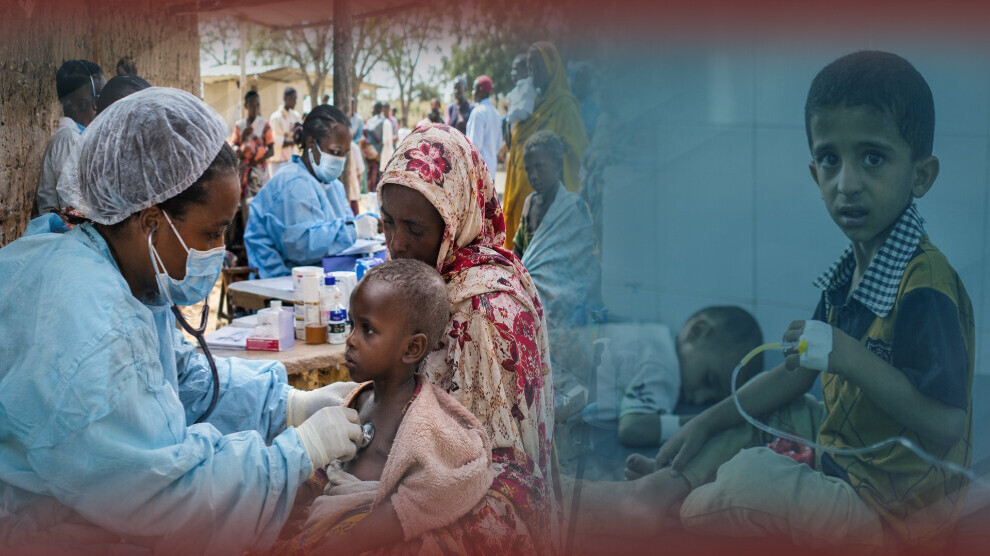
NEWS CENTER — Wars no longer harvest lives through bombardment and bullets alone; their health and humanitarian repercussions are harvesting more victims, amid the collapse of health systems, worsening hunger, and the decline of basic services.
During 2026, the scope of health risks expanded in conflict and humanitarian crisis areas, from Sudan and Congo to Yemen, Somalia, South Sudan, and the Palestinian territories. With the destruction of medical facilities, the interruption of clean water, and forced displacement, the chances of infectious disease spread increase, turning health crises into an additional threat that burdens residents and doubles their suffering.
At least 36 humanitarian crises around the world
The repercussions of wars are no longer limited to the fall of victims and the destruction of cities, but have gone beyond that to open another more dangerous front, represented in the collapse of health systems and the outbreak of infectious diseases. With the destruction of medical infrastructure, the disruption of health services, the worsening clean water crisis, and the crowding of displaced persons and refugees in camps lacking the minimum conditions for healthy living, the circle of risk expands, and humanitarian crises turn into a direct threat to the lives of millions of people.
According to the World Health Organization (WHO), the world during 2026 is witnessing about 36 humanitarian crises requiring urgent health response, amid the deterioration of living and health conditions and the escalation of risks of disease and epidemic spread.
These crises include a number of the areas most affected by conflicts and humanitarian disasters, including Sudan, the Democratic Republic of the Congo, Yemen, Somalia, Syria, Myanmar, Haiti, South Sudan, Afghanistan, Ukraine, and the Palestinian territories.
Iran... War exacerbates the health crisis and warns of disease spread
The war and airstrikes in Iran caused widespread damage to the health sector, as the World Health Organization reported damage to 229 health centers, 49 hospitals, 78 medicine production facilities, laboratories, and a medical warehouse since February 28, 2026. Also, 56 emergency services bases were targeted, 9 hospitals were evacuated, and 47 ambulances were destroyed.
In the southern and southeastern governorates, especially Sistan and Baluchestan, Hormozgan, Kerman, and Khuzestan, the lack of clean water, floods, and the accumulation of stagnant water led to the escalation of risks of water- and insect-borne diseases, foremost among them cholera, acute diarrhea, malaria, and dengue fever.
The repercussions were not limited to damage to health facilities but extended to supply chains and medicine production centers, causing a shortage of a number of essential drugs. According to the United Nations report on Iran, a shortage was recorded in 32 types of essential medicines until September 30, 2026.
Experts and health institutions warn that the continuation of the war, the decline of medical services, and the shortage of clean water and medicines are factors that may accelerate the spread of infectious diseases and exacerbate the health and humanitarian crisis in the country.
Displacement and the collapse of health infrastructure in Lebanon
The war and waves of forced displacement exacerbated the health crisis in Lebanon, where more than one million people have been displaced from their homes since the outbreak of the war on March 2, 2026, according to UN and WHO data. Many of them live in overcrowded schools and shelter centers lacking adequate health conditions.
The World Health Organization warned that overcrowding, lack of clean water, and the deterioration of hygiene and sanitation conditions increase the risks of spreading measles, hepatitis A, respiratory diseases, and diarrhea. According to its report issued on June 2, 2026, the number of acute diarrhea cases reached 2,777, while infections rose from 504 to 803 cases between the seventeenth and twentieth weeks.
In parallel, the health sector was subjected to more than 191 attacks from March 2 until the beginning of June, resulting in the killing of 128 health workers and the injury of 357 others.
With the closure of medical facilities, the shortage of medicines, and the difficulty of accessing treatment, the risks threatening women, children, patients, and the elderly increase, amid warnings of the worsening spread of infectious diseases in the absence of clean water, sanitation services, vaccination, and medical care.
Africa... Cholera harvests hundreds of lives and threatens public health
Cholera has returned to top the list of health threats in Africa, amid the escalation of infections and deaths in a number of countries, in conjunction with the decline of health services and the worsening of humanitarian crises.
According to WHO data, the Democratic Republic of the Congo recorded between January 1 and May 31, 2026, about 28,567 cholera infections and 815 deaths. South Sudan recorded 7,712 infections and 84 deaths, Mozambique recorded 7,500 infections and 66 deaths, while infections in Nigeria reached 6,860 cases, resulting in 80 deaths.
In Sudan, the war and the collapse of parts of the health system increase the seriousness of the situation, with the continued threat of cholera, malaria, dengue fever, and measles to the lives of residents, amid the decline in the ability to contain epidemics and provide medical care.
Yemen and Palestine... Warnings of epidemic outbreaks
In Yemen, years of war and the economic crisis left an exhausted health system incapable of meeting the needs of the population, making cholera and vaccine-preventable diseases an increasing threat to public health.
In the Gaza Strip, the destruction of hospitals, the shortage of medicines, the interruption of clean water, alongside the harsh living conditions in displacement camps, exacerbated the risks of spreading infectious diseases.
The World Health Organization warns of the repercussions of food shortages and the deterioration of health services, with the increasing possibility of epidemic outbreaks, calling for urgent measures to protect residents and ensure the continuation of health services and the provision of basic needs.
Afghanistan and Myanmar... Worsening spread of cholera and infectious diseases
In Afghanistan, the weakness of the health system and the increasing numbers of returnees from abroad exacerbate pressure on hospitals and medical centers, where 43,292 cholera infections were recorded between January 1 and May 31, 2026. In Myanmar, war and political unrest hinder the work of health institutions, while the lack of vaccinations and attacks on medical facilities increase the risks of disease outbreaks.
Somalia, Syria, and Haiti... Interlocking crises threatening public health
In Somalia, war, drought, and the worsening humanitarian crisis contributed to increasing the risks of spreading cholera, measles, and other diseases. In Syria, years of conflict, the deterioration of health infrastructure, and the lack of water created favorable conditions for the spread of diarrhea and measles.
In Haiti, the escalation of armed gang violence caused the closure of a number of health centers, making cholera and the lack of medical services among the most prominent challenges facing residents.
Health concerns transcending borders
The risks of spreading infectious diseases are no longer confined to conflict areas but have become a threat that crosses borders. According to the European Centre for Disease Prevention and Control (ECDC), globally 212,857 cholera infections and 1,943 deaths were recorded between the beginning of 2026 and August 26, in Africa, Asia, the Middle East, and the Americas.
Experts believe that the collapse of health systems, the disruption of medicine supplies and vaccination programs, alongside forced displacement and food shortages, are factors that increase the spread of diseases and double the risks, especially for children, pregnant women, and patients.
Faced with these challenges, the World Health Organization calls on the international community to act urgently to protect health facilities, secure clean water, and ensure the continuation of vaccination campaigns and the access of humanitarian aid to affected areas.