
Collapse of Services and Expansion of Arrests…Mahabad Faced Its Worst Crisis Since the Start of Attacks.
As the joint US-Israeli war on Iran enters its fourth week, the city of Mahabad is experiencing a state of insecurity, a severe shortage of resources, and widespresd disruption in the details of daily life.
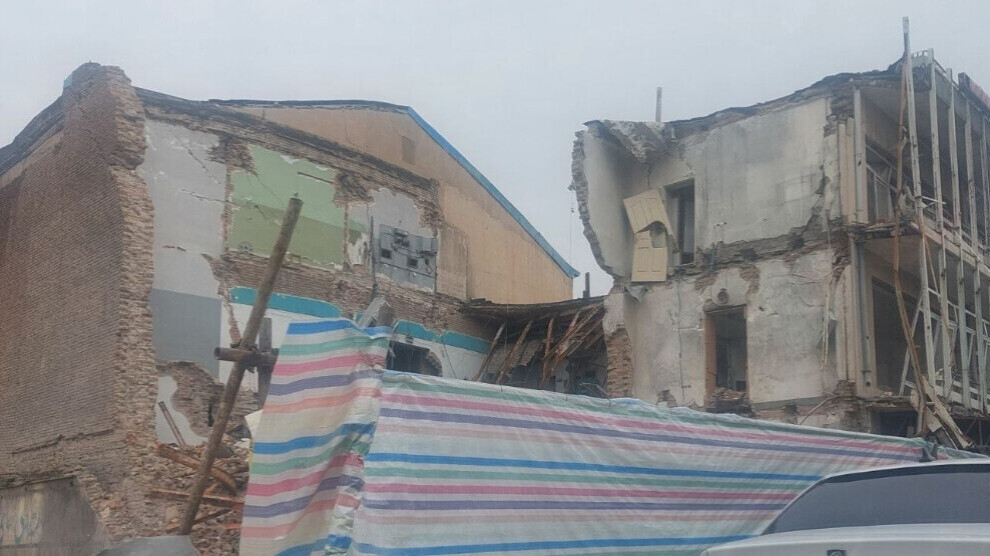
Mahabad_Cities in East Kurdistan, including Mahabad, are undergoing a major transformation as the war enters its fourth week following the start of US-Israeli attacks on Iran and the region.
Fighter jets continue to fly overhead, arrest campaigns persist, government buildings are being targeted, prison conditions deteriorate with shortages of food and medicine and internet blackouts, and civilian casualties mount amid a general state of insecurity.
Since the start of the attacks, numerous military areas have been completely destroyed, including a small part of the Islamic Revolutionary Guard Corps (IRGC) building, a section of the army building, buildings of Police Centers 11 and 13, the Basij base located in the municipality square, and the intelligence building. The dilapidated Red Crescent building adjacent to the police station was also damaged. The Kuseh Kariz garrison and many other sites in surrounding villages have also been attacked.
Although the majority of those killed and wounded in these attacks were soldiers, an elderly man was among the dead, and several children were among the injured. Some prisoners in the city, such as those detained for financial crimes, have been released on bail of no less than two billion tomans. Most prisoners, especially political prisoners, have been transferred to the cities of Miandoab and Urmia. It is worth noting that the situation of female prisoners has not changed much compared to men; their detention facility was fully transferred to Urmia some time ago. According to an informed source, detention conditions are unfavorable, overcrowding is severe, and attacks on military sites in these two cities continue.
Authorities are using residents and public spaces in the city as human shields. Large military forces have been deployed inside public places, including offices, schools, mosques, libraries, and others, and extensive military equipment has been placed in residential and sensitive areas of the city, which could cause environmental and human damage in the event of an attack. Some residents living near these areas have been forced to leave their homes, while a number of residents from Tehran and other cities have settled in Mahabad.
The intelligence arm of the IRGC is active in the city; they have arrested a number of residents. Military patrols operate around the clock, and checkpoints leading into the city continue to carry out searches and surveillance. After the targeting of the Asalouyeh region, a decrease in domestic gas supplies in the villages of Mahabad has been observed to some extent. Food supplies are available but limited, while daily supplies of basic materials are decreasing. Prices of food and services have risen significantly, leading to an increase in taxi fares in the city from 30,000 to 50,000 tomans.
Previously, each vehicle was allowed to receive between 10 and 20 liters of gasoline; afterward, refueling is only permitted up to 30 liters using a personal fuel card, with no freely available gasoline. Patients with special conditions are referred to the provincial capital to obtain their medications. Under wartime conditions, each pharmacy is allocated a quota for distributing expensive medicines such as serums, and pharmacies can only sell medications. Regarding banking and communications: with the start of the attacks, educational centers and many offices closed, and markets partially shut down. Internet outages have caused severe damage to many businesses, and communication has become nearly nonexistent for businessmen and their families outside Iran. Sending text messages to some subscribers of Irancell and Hamrahe Aval has been difficult, especially in the first days of the war, and phone calls are interrupted on some days and hours. A few days after the attacks began, Melli and Sepah banks went offline, and cash distribution at other banks reached its lowest levels, to the point that some banks refuse to dispense cash.
The continuation of this situation has exposed Mahabad and other cities in East Kurdistan to a multifaceted crisis—a crisis whose security, economic, and humanitarian dimensions expand daily and require immediate attention.