
Challenges of School Integration and Societal Embrace for Children with Autism
Families of children with autism and special needs in Sulaymaniyah face heavy burdens from shortages of specialized centers and cadres and absent societal acceptance, demanding advanced integration mechanisms and government support.
DARIN RAHIM
SULAYMANIYAH_The future of children with autism is linked to the quality of special education and educational services provided to them to develop their capabilities and independence. However, the scarcity of specialized centers, the shortage of trained cadres, and social obstacles weaken their access to their educational rights, leaving families to face this heavy responsibility alone and threatening their future despite their firm right to learn and grow.
Special education is considered one of the most important steps for building a suitable future for children with autism, because each child has their own capabilities, needs, and learning style, and needs a suitable educational environment to be able to develop their skills and progress through the different stages of life. The presence of specialized teachers, appropriate educational programs, and continuous cooperation between the family and the school can play an important role in enhancing the capabilities of these children. However, the shortage of special educational centers, the absence of trained cadres, the lack of societal understanding, and the financial burden placed on families remain among the challenges facing many children with autism and their families.
Therefore, educational institutions and concerned authorities must give greater importance to providing special services and making learning and growth opportunities available to all these children without discrimination. Children with autism need opportunities, understanding, and support, not the restriction of their dreams and capabilities. Special education should not be viewed as merely a secondary service, but must be considered a fundamental right and a crucial step for the future of these children, because their future depends to a large extent on the opportunities available to them today to learn, achieve independence, and participate in society.
"Every Child Has the Right to Education"
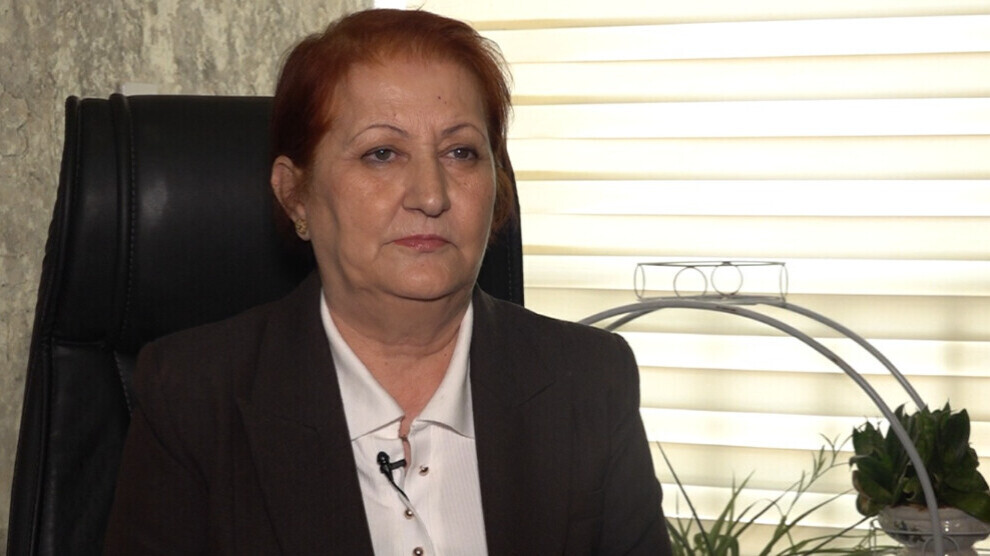
Media Omar, a specialist supervisor in special education, explained that every child with special needs needs a different system and cannot be taught like a normal child. Sometimes, even though the child has special needs, their intelligence level may be higher than that of a normal child, so they must be taught differently.
She added that special education means that this child does not learn according to the traditional school system, or that they learn better — meaning they are intelligent and their intelligence level is very high and they must be provided with more information so that they do not fall behind intellectually, or that they need more clarification and reasons. This is what is called special education, meaning a system different from the general school system.
The mechanism of integrating persons with special needs in the schools of the Kurdistan Region is based on developing the educational system and adapting the school environment and student culture to suit everyone. This transformation requires preparing the infrastructure by providing ramps for wheelchair users, and allocating independent rooms to accommodate hyperactive children during episodes before reintegrating them into classes. Alongside physical equipment, the system focuses on educating and training normal children through the "child to child" program to entrench acceptance of difference, and ensure all children enjoy equal opportunities and full rights in education, play, and healthy life.
"The Lack of Societal Awareness Is the Biggest Obstacle"
Media Omar confirms that the lack of societal awareness is the biggest obstacle facing children with special needs and their families, which requires a comprehensive change in the general mentality to accept difference without blaming the parents, stressing the necessity of raising the level of awareness among everyone and understanding the suffering, while activating the role of the media in directing society toward respecting the rights of these children in education, life, and presence in public places as active and accepted members as they are.
Media Omar demands that the government increase the salaries of children with special needs from 150 thousand to 400 thousand as a minimum, given the high costs of their basic necessities, explaining that these amounts are necessary to secure specialized food, diapers, and medical creams, in addition to maintaining and purchasing expensive prosthetic devices such as wheelchairs, hearing aids, and crutches — a responsibility incumbent on the state to alleviate the burdens on families.
Supporting persons with special needs requires societal and governmental integration through providing mutual assistance to families, and focusing officials on supporting and expanding government institutions instead of promoting private institutions. The urgent need also stands out to appoint special education graduates as lecturers to confront the continuous increase in the numbers of children, with the necessity of activating their participation in public activities to compensate for their weak current involvement resulting from difference.
Media Omar concludes by noting that the absence of societal acceptance pushes families of persons with special needs into complete isolation, as a result of the instability of the child's psychological state and their spontaneous behaviors such as screaming or agitation. She confirms that this isolation is exacerbated by the distancing of relatives and in-laws and their cessation of visiting the family, which requires raising the level of collective awareness to accept and embrace these families, instead of meeting them with mockery or aversion.