
Barometer of Women’s Representation Reveals Disparity Between Moroccan Parties in Legislative Elections
The 2026 Barometer study revealed disparities among Moroccan parties regarding women’s electoral presence, from candidacy experience accumulation to empowerment within party policies and candidate selection transparency.
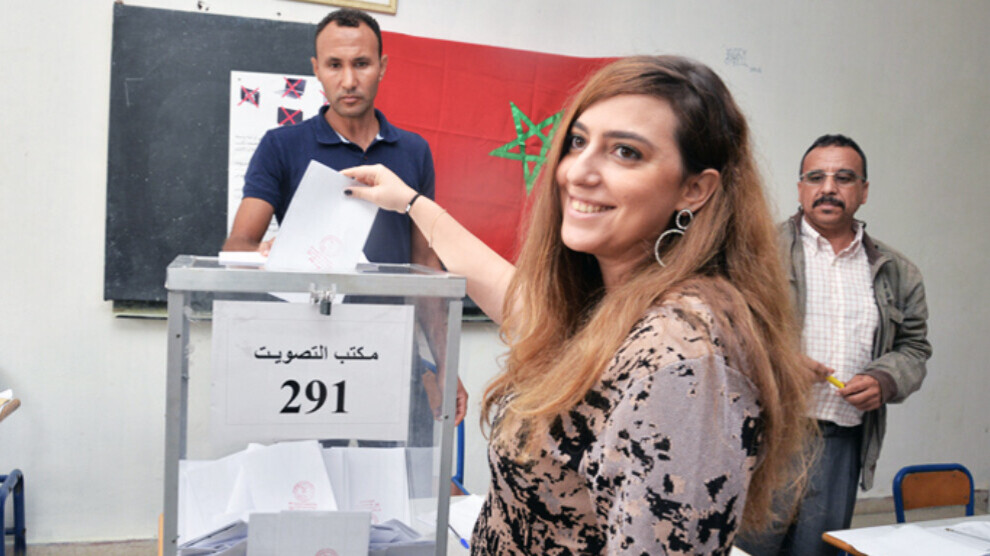
Morocco – The Kingdom of Morocco witnessed a prominent political transformation following the legislative elections in which the Authenticity and Modernity Party came first. These results open the door to negotiations on forming the government, amid a strategic bet on enhancing women's participation and empowering women within the dome of the new House of Representatives.
The Democratic Association of Moroccan Women announced yesterday, Monday, 28 September, the results of the study "Barometer of Women's Political Representation in the 2026 Legislative Elections," within the framework of continuing public debate on the reality of women's political representation, following the legislative elections held on the twenty-third of this month.
Electoral Presence That Does Not Turn into a Political Path
The barometer showed that 58.3 percent of the parties covered by the monitoring recorded a weak level regarding the accumulation of experience in women's candidacies, compared to 25 percent at the good level, while the Socialist Union of Popular Forces Party came at the medium level.
The good level included the Progress and Socialism Party, the Left Alliance, and the Authenticity and Modernity Party, while the study classified the National Rally of Independents, Istiqlal, the Popular Movement, the Constitutional Union, Justice and Development, the Democratic Social Movement, and the Front of Democratic Forces within the weak level.
The Association believes that the importance of the continuity of women's candidacies is not only linked to including their names in electoral lists, but to the parties' ability to build sustainable political paths for them, allowing the transition from presence in electoral competition to positions of responsibility and decision-making.
From Discourse to Party Practice
In the indicator of integrating women's political empowerment into party policies, the barometer placed half of the monitored parties, i.e., 50 percent, at the weak level, considering that these data reveal a disparity in the position of women's political empowerment within parties. It also raises a question about the extent to which the commitment to equality moves from the level of political discourse to clear, sustainable, traceable, and accountable party policies. The good level in this indicator was limited to the Progress and Socialism Party and the Left Alliance, while another group of parties came at the medium level.
Electoral Reform... Another Test for Equality
The barometer also recorded a disparity in parties' positions on electoral reform and its relationship to equality and parity. 41.7 percent of parties came at the weak level, compared to 25 percent at the medium level and 16.7 percent at the good level, while sufficient data were not available to evaluate 16.7 percent.
The good level was limited to Progress and Socialism and the Left Alliance, while Authenticity and Modernity, Istiqlal, and the Socialist Union of Popular Forces recorded a medium level. For the Association, the matter is not merely parties declaring support for women's participation, but the extent to which this is reflected in their proposals regarding the rules of competition, representation, and access to elected institutions.
Whom Do Parties Choose and How?
Among the most prominent indicators raised by the barometer is also the issue of the governance of candidacies and access to responsibility. It was not possible to evaluate the transparency of the criteria for selecting female candidates in the regional districts for 41.7 percent of parties due to the lack of sufficient data, while the same percentage recorded a good level in this indicator.
The Association believes that the absence of data on how female candidates are selected is of particular importance, because the transparency of candidacies is not only linked to the criteria adopted, but also to their clarity, availability, traceability, and the possibility of holding parties accountable for them. The monitoring also recorded observations regarding financial considerations in some cases of endorsement, data that opens a discussion about equal opportunities for women in accessing candidacy.
Local Districts... The Number of Female Candidates Is Not Everything
At the level of local legislative districts, 16.7 percent of parties recorded a good level in women's presence, namely Progress and Socialism with nine female candidates and Authenticity and Modernity with seven female candidates. 33.3 percent of parties recorded a medium level, while the same percentage came at the weak level, including the Democratic Social Movement, Istiqlal, the Front of Democratic Forces, and the Popular Movement.
The Association noted that the number of female candidates, despite its importance, is not alone sufficient to measure women's chances of reaching parliament, as other factors intervene, including the nature of the district, the position of the female candidate within the list, her leadership of it, and the competitiveness of the district.
Representation Begins with Candidacy... But It Does Not End There
The preliminary results of the barometer place the discussion on women's political representation before more than just a question related to the number of women who entered electoral competition. The path to elected institutions begins with candidacy, but it also passes through the method of selecting female candidates, their position within lists, the availability of competition conditions, the continuity of their presence within party life, and then their opportunities to move to positions of responsibility and decision-making.
Thus, the study opens a discussion about the nature of party mechanisms that determine women's presence in politics, and the extent of these mechanisms' ability to transform women's electoral participation into sustainable political representation.