
Asenath Barzani…A Pioneer of Knowledge and the First Woman Rabbi in the Seventeenth Century
By virtue of her knowledge and intellectual standing, Asenath Barzani became one of the most prominent female figures of 17century, her name associated with the role of rabbi, religious education, and cultural leadership.
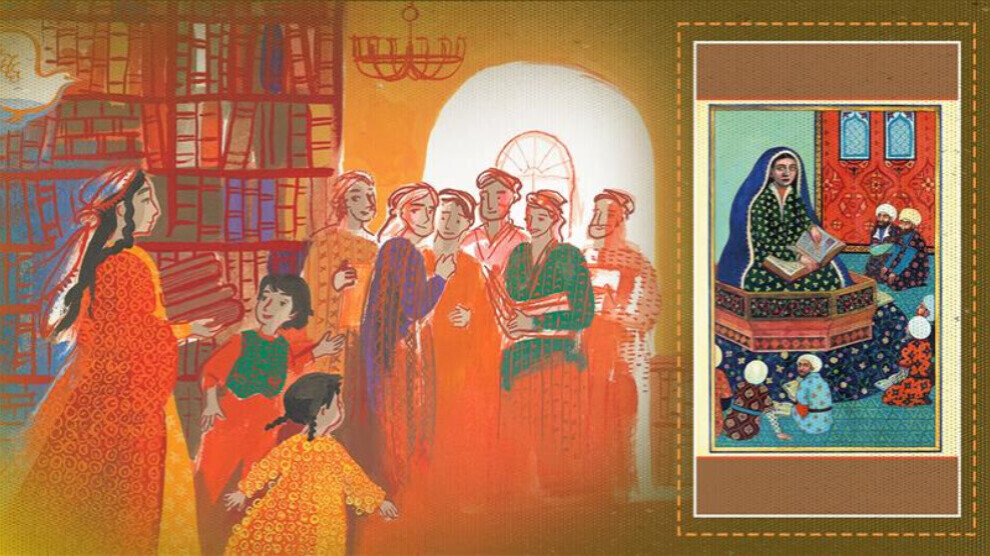
News Center_Asenath Barzani is considered one of the most prominent females in Jewish history, with many scholars regarding her as one of the earliest women to assume the role of rabbi in history.
She was born in the Iraqi city of Mosul in the late sixteenth or early seventeenth century and grew up in a scholarly and religious environment that afforded her an exceptional status at a time when educational and religious leadership opportunities for women were extremely limited.
Asenath Barzani was the daughter of Rabbi Samuel Barzani, one of the most prominent religious scholars of his time and the founder of the yeshiva (religious school) that constituted an important educational center for the region’s Jewish community. Since he had no male children, he devoted special attention to his daughter’s education,providing her with advanced religious and intellectual knowledge, paving the way for her to become a prominent her with advanced religious and intellectual knowledge, paving the way for her to become a prominent scholarly figure. From an early age, she received in-depth education in the Torah, the Talmud, and Kabbalah, in addition to acquiring skills in interpreting and teaching religious texts.
Asenath Barzani did not limit herself to the role of learner; she also emerged as a teacher and interpreter of religious texts. After her marriage to Rabbi Jacob Mizrahi, who managed the yeshiva. She continued her active participation in the educational process, contributing to the preparation and guidance of students.
Her husband's death marked a significant turning point in her life, as she took over the management of the religious school herself—an unusual step at the time. She continued teaching, responding to religious questions, and providing spiritual guidance to community members—tasks traditionally associated with rabbis. For this reason, many historians consider that she effectively practiced the role of rabbi, despite the social restrictions imposed on women in that period.
In addition to her religious standing, Asenath Barzani was known for her literary and cultural output. She wrote poems in Hebrew addressing religious and spiritual themes, reflecting her intellectual reflections and personal experiences. Her works reveal a broad culture and deep faith, earning her a distinguished position not only as a religious scholar but also as a literary and cultural figure.
From a social perspective, Asenath Barzani's life story represents a prominent model of a woman's ability to transcend the restrictions imposed on her and prove her presence in the fields of knowledge and leadership. In a male-dominated society within religious and academic institutions, she was able to earn respect and appreciation through her knowledge and competence, and to assume an influential leadership position.
Although centuries have passed since her death, Asenath Barzani remains present in historical and cultural memory, both in Jewish history generally and in the heritage of Kurdish Jews specifically. Her story is also evoked in contemporary discussions concerning the role of women in religious institutions and leadership positions.
Asenath Barzani remains an example of a woman who transcended the limits of her era and contributed to consolidating women's presence in the fields of knowledge, education, and leadership, becoming a symbol of will, knowledge, and pioneering.