
As Humanitarian Aid Declines… Yemen’s Displaced Face Hunger and Cold
After over a decade of conflict, nearly 80% of Yemenis rely on aid, as the UN calls it worst crisis, marked by hunger and homelessness.
RAHMA SHANTHOUR
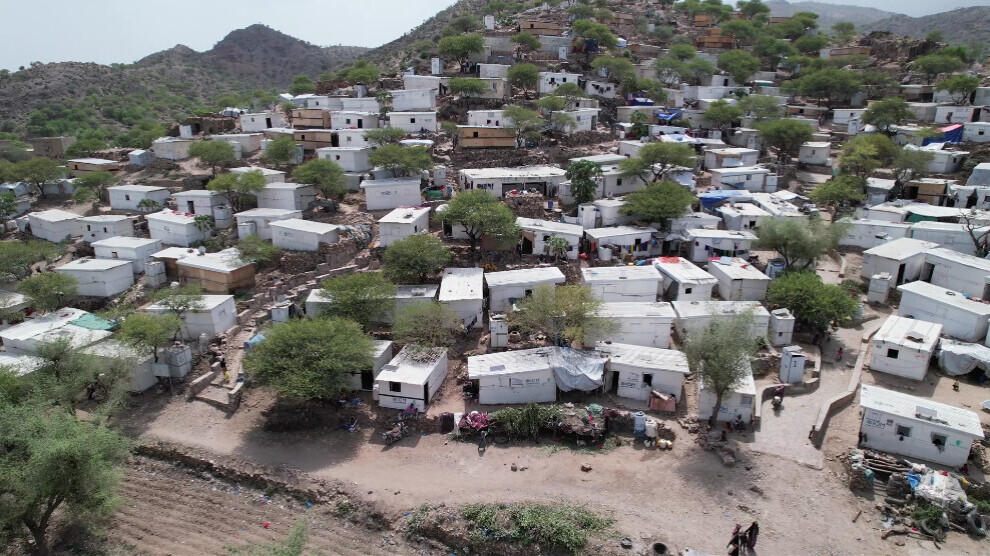
Yemen — In tattered tents that provide no protection from the scorching summer heat or the bitter winter cold, millions of displaced Yemenis endure harsh living conditions, as conflict converges with hunger and disease amid a sharp decline in humanitarian funding and the international community’s inability to keep pace with growing needs.
For more than a decade, the conflict has forced Yemenis into displacement, leaving behind their homes, land, and sources of livelihood. As 2026 begins, the humanitarian crisis appears increasingly bleak, with the United Nations describing Yemen as home to the world’s worst humanitarian emergency.
Fatima Ahmed (56), one of millions of women forced into displacement, says from Al-Kadah Camp that the conflict did not only expel them from their homes, but also stripped them of their land, livestock, and means of survival, leaving them without any form of stability.
She notes that humanitarian aid reaching the camp is scarce and fails to meet even minimum needs, stressing that displaced families lack basic food items such as flour and cooking oil, in addition to the absence of blankets and mattresses, and even a severe shortage of safe drinking water.
A Health Crisis Threatening Lives
The tragedy does not stop at hunger and shelter, but extends to the near-collapse of the health sector in displacement camps. Loul Mohammed (48), a displaced woman in Al-Kadah Camp, describes the situation of pregnant women, noting the absence of nearby pharmacies or medical units.
“We walk for two or three hours to reach health facilities. A pregnant woman arrives exhausted and may die before reaching them.”
She adds that the suffering of displaced people goes beyond the lack of healthcare to a severe water crisis, forcing families to walk distances of up to three hours to fetch water from nearby valleys.
Deadly Cold and Inadequate Tents
In Yemen’s displacement camps, worn-out tents offer no protection from the harsh winter cold, turning survival into a daily struggle. Fragile shelters, the lack of blankets, and the absence of heating expose displaced families to illness, while access to treatment becomes dependent on financial ability—further increasing the vulnerability of children, pregnant women, and the sick.
Loul Ali, a displaced woman in Al-Kadah Camp, recounts repeated displacement while fleeing shelling:
“We were displaced because of war and missiles… we fled to Al-Barh and then to Al-Bireen, carrying nothing with us.”
In a voice heavy with exhaustion, she lists her family’s basic needs, which have become distant dreams:
“We have no oil, no sugar. We want our necessities and warmth.”
She explains that access to medical treatment in the camps is tied to financial means, forcing families to go without healthcare when they cannot afford it, while they face winter cold with old, worn-out blankets that provide little warmth.
She also points to the deteriorating conditions of shelters, emphasizing that the tents housing them are torn and unfit for use, and calls for the provision of new tents, bedding, and urgent relief supplies. Her family was unable to treat her daughter-in-law, who fell ill due to the extreme cold.
“My son’s wife is sick from the cold and we couldn’t treat her. The least that can be provided to us are tents—our tents are worn out.”
Such suffering is echoed by many displaced men and women who have lived for years in torn tents that have never been replaced despite the passage of time and changing seasons. These testimonies show that the crisis in the camps is not limited to food or shelter shortages, but represents a complete humanitarian failure to provide even the most basic protection for displaced families.
Growing Shortages and Rising Needs
According to a recent report by the UN Office for the Coordination of Humanitarian Affairs (OCHA), Yemen’s 2025 Humanitarian Needs and Response Plan received only 27.8% of the required funding of USD 2.48 billion, directly affecting organizations’ ability to provide food, shelter, and healthcare to millions in need.
The United Nations estimates that around 4.8 million people are displaced across Yemen, many of whom live in temporary shelters offering minimal protection from harsh weather, with limited access to basic services.
In a recent briefing to the UN Security Council, the Head of Humanitarian Coordination in Yemen warned of the worsening humanitarian crisis at the beginning of 2026, pointing to rising needs and shrinking access to affected populations due to insufficient funding. He noted that millions of Yemenis are not receiving the assistance they need to survive.
Displacement Numbers Continue to Rise
A recent report by the International Organization for Migration (IOM) documented the displacement of more than 13,000 people in Yemen during the last quarter of 2025, across 2,262 households comprising 13,572 individuals—marking a significant increase compared to previous quarters of the same year.
The organization indicated that displacement was concentrated in the governorates of Marib, Taiz, Al Hudaydah, Shabwah, and Hadramout, with armed conflict accounting for 85% of displacement cases, while the remainder were attributed to economic reasons.