
Aphrodisias: The City of Sculpture and Marble That Crafted the Glory of Art in the Ancient World
Aphrodisias, with is rich history, architecture, and sculpute school, is a top cultural heritage site, ditinguishted by its well-preserved ancient structures.
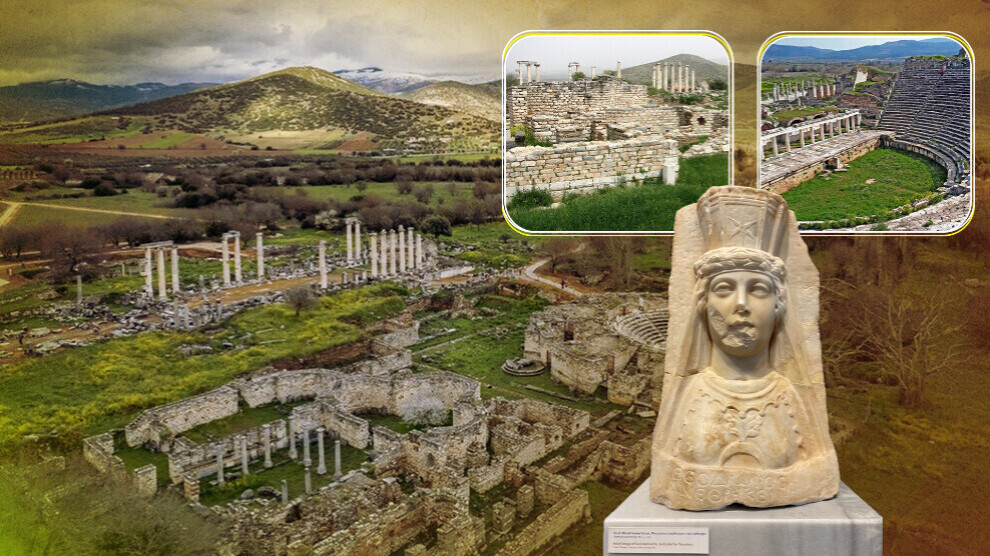
News Center — The city that excelled in the fields of art, architecture, and sculpture, particularly during the Roman era, still retains exceptional significance today thanks to its well-preserved structures. Its inscription on the UNESCO World Heritage List in 2017 affirmed the universal value of the Aphrodisias site.
Aphrodisias is located on a fertile plateau rising approximately 600 meters above sea level in western Turkey. In ancient times, the city stood in a rich plain fed by the waters of the Morsynos River (known today as Dandalaz).
This agricultural setting facilitated the flourishing of agricultural production and supported the continuity of artistic workshops. Likewise, the abundant marble quarries surrounding the city played a crucial role in its economic and artistic development.
Historical Development
The history of settlement in Aphrodisias dates back to approximately 5000 BCE. However, the city reached its primary peak of development beginning in the second century BCE. During the Roman era, Aphrodisias experienced significant prosperity, particularly with the support of Emperor Augustus, who granted it numerous privileges. During this period, the city became an important center for the arts and education, in addition to being a prominent religious center.
Aphrodisias is considered one of the best-preserved examples of ancient urban planning. Its structures combine artistic beauty with practical function.
- Temple of Aphrodite: The most important religious building in the city, located at its center. It was later converted into a church in subsequent periods but retained its architectural role.
- Stadium: One of the best-preserved ancient stadiums in the world, with a capacity of approximately 30,000 spectators. It hosted the most important sporting events.
- Theatre: Expanded during the Roman era and became a center for social events.
- Agora: The center of commercial and social life, distinguished by its vast area and colonnades.
- Sebasteion: A complex dedicated to the imperial cult, considered one of the finest examples of sculpture and architecture in Aphrodisias.
The city also includes massive gates, streets, and public facilities that remain excellently preserved, providing a clear picture of life in Roman cities.
Aphrodisias was renowned in the ancient world, particularly in the field of sculpture. Its sculpture school was among the most important artistic centers of its time, and the high-quality marble extracted from nearby quarries was used to produce works of art that were sent to various regions of the Roman Empire.
The sculptors of Aphrodisias were distinguished by their technical skill and aesthetic precision. Today, a large collection of these works is displayed in the Aphrodisias Museum.
Aphrodisias was not only an artistic center but also an important religious center. The worship of the goddess Aphrodite played a pivotal role in shaping the city's social and cultural life. With the rise of the imperial cult in the Roman era, the city became a multi-layered religious center.
The ancient city of Aphrodisias, with its rich history, architecture, and artistic heritage, is one of the most important cultural heritage sites in the world. Its well-preserved structures and renowned sculpture school are among its most distinctive features compared to other ancient cities. Today, it serves as an important destination for academic research and tourism, and its open-air museum connects the past to the present in a unique way.