
Afin Jumaa: Systematic Violations Threaten the Future of Women and Children in Syria
Violations against women, children, and refugees in Syria continue to escalate, making the exposure of these abuses and support for victims essential to building a state based on justice and dignity.
Nagham Jajan
Qamishlo — The year 2025, marked by escalating violations and mounting challenges, saw the Human Rights Organization in Syria emerge as a first line of defense in protecting human dignity. No violation went undocumented, and no case was left without follow-up or attention.
Throughout 2025, the Human Rights Organization in Syria engaged in legal pathways, advocacy activities, and awareness campaigns to protect rights. It documented crimes, collected testimonies, and provided support to victims amid a complex reality shaped by ongoing political and humanitarian crises.
Through its periodic reports, legal files, and media activities, the organization worked to uncover facts and convey them to public opinion and relevant authorities, reaffirming its commitment to confronting violations and defending human rights under the most difficult circumstances.
The organization emphasized that silence in the face of violations is a form of complicity. Despite shrinking civic space and the absence of accountability in many contexts, its field teams continued their work with determination, prioritizing the rights to life, freedom, and justice.
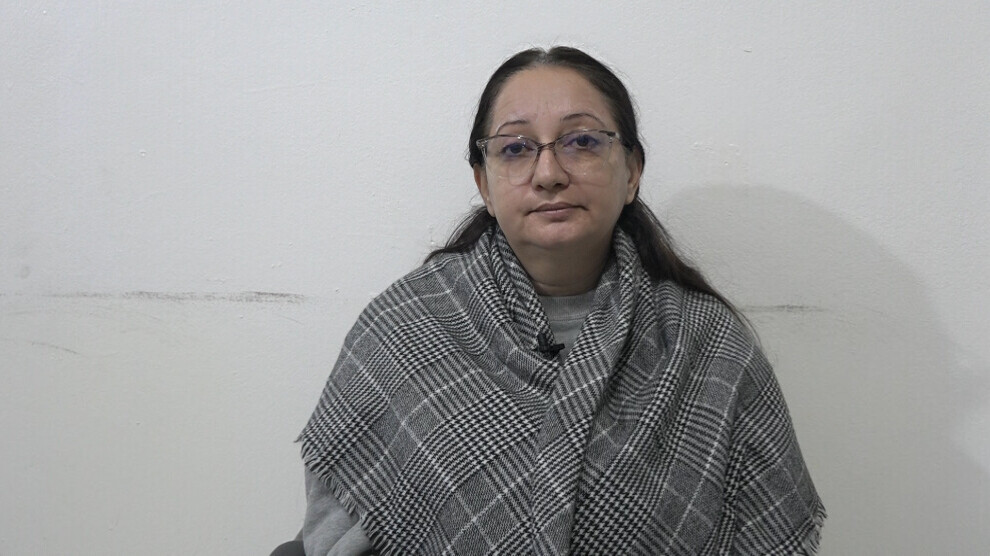
The organization’s annual report was not merely a presentation of numbers and statistics, but a documented testimony to a human rights reality that demands constant protection. It conveyed a clear message that defending rights is not a temporary task, but an ongoing moral and legal commitment. Afin Jumaa, an administrator at the Human Rights Organization in Syria, stated that the organization’s activities in 2025 embodied its determination to confront violations and reveal the truth, affirming that human rights work remains an unwavering duty regardless of challenges.
She noted that ongoing human rights violations—spanning more than fourteen years due to escalating military operations—continue to be systematically documented, highlighting the severity of social conditions and violence experienced by the population.
“The repercussions of the conflict in Syria have affected all aspects of life, and monitoring the conditions of women and children subjected to grave violations because of the war has been one of the most difficult tasks,” she said.
Jumaa added that the period following the fall of the former Syrian regime posed a major challenge, as Syria witnessed a wave of attacks against civilians, alongside the issuance of new laws that often contradicted women’s rights and status. She explained that investigative committees monitoring attacks in Daraa, Sweida, and Homs uncovered significant facts about the scale of violations.
She noted that issues such as the standards of the Autonomous Administration in legislation—what has been achieved and what remains incomplete—were discussed through seminars and dialogues and continuously presented to relevant authorities in an effort to advance legal and rights-based reform.
According to Afin Jumaa, the scale of violations in 2025 reached alarming levels. The organization documented the killing of 174 people, including 20 in the occupied Afrin region. Violent acts and clashes also resulted in 156 people suffering serious injuries, many of whom remain at risk of death.
She stated that the organization recorded 175 cases of arrest and detention, including 11 women and two children, in addition to 168 other incidents related to violations in Afrin.
“Approximately 600 detainees were transferred from jihadist group prisons to the al-Ra’i and Hawar Kilis prisons under harsh conditions that reflect the extent of human rights deterioration in the region,” she said.
Addressing violations against refugees, Jumaa explained that they remain ongoing. Camps such as Roj and al-Hol house large numbers of ISIS families, exacerbating the suffering of residents and limiting the aid available to them.
“The Autonomous Administration has provided shelter, while some local and international organizations seek to meet basic needs,” she said, noting that children in these camps are subjected to serious violations by some families.
“They are forcibly indoctrinated with extremist ideology, while concerned states refuse to repatriate them, further complicating their humanitarian situation.”
She added that detainees’ conditions remain under monitoring and documentation.
“When complaints are received, they are raised and shared with relevant prison administrations to ensure they are addressed in accordance with legal and human rights frameworks,” she said.
Jumaa emphasized that the Human Rights Organization has given special attention to women’s conditions, noting that monitoring continues intensively.
“Women are subjected to increasing social violence, and the organization has worked in cooperation with women’s rights institutions to document these violations, alongside launching broad awareness campaigns and providing psychological support to several women’s organizations,” she explained.
She revealed that numerous cases of women ending their lives due to harsh conditions were documented, as well as legal violations affecting women’s rights and contradicting agreements signed between Syria and the United Nations.
“Hate speech against women circulating on social media has also been a key focus of the organization’s work,” she added.
Jumaa stressed that empowering women and children to defend their rights requires cooperation with the Autonomous Administration and relevant authorities. These efforts resulted in the adoption of the Cybercrime Law by the Autonomous Administration as an important step toward combating digital violations and protecting rights.
She explained that the organization closely followed up on documented cases, working according to international standards adopted by the United Nations, and organized specialized trainings that enhanced the expertise of its teams.
She clarified that testimonies used in documentation came from direct victims or eyewitnesses. In hard-to-reach areas, the organization relied on testimonies from those who had left those regions.
“For each investigated incident, a dedicated file is prepared, and documentation is only approved with at least two witnesses to ensure credibility,” she said, adding that the organization continues to monitor developments and publish news and reports regularly as part of its commitment to uncovering facts and systematically documenting violations.
Jumaa stated that the scale of violations in 2025 was greater than in previous years and continues to increase annually.
“After the fall of the former regime, new patterns of violations emerged. While there was hope of uncovering the fate of the missing, prisons were opened in an unorganized manner, raising many doubts and leading to the continued disappearance of many individuals. The loss of much documentation evidence posed a major obstacle to justice efforts,” she said.
She added that the period following the fall of the former regime represented a new but temporary beginning, highlighting the urgent need to establish independent courts capable of addressing existing cases.
“Attempts to open these files faced major obstacles, as access to the judiciary was blocked, and legal cases still suffer from ambiguity and lack of clarity,” she said.
Jumaa believes that while the Autonomous Administration has provided tangible support to the Human Rights Organization, serious challenges persist due to laws issued by the Syrian Interim Government and continued interference in judicial independence.
“According to the constitution, the judiciary is supposed to be independent, but appointing judges by the interim president has cast doubt on that independence,” she explained.
She affirmed that the Autonomous Administration is a key partner in supporting the organization’s efforts, but obstacles remain within Syria due to weak recognition of the importance of documenting violations.
“Documentation is a fundamental pillar, especially after fourteen years of war that squandered many rights,” she stressed.
She added that violations targeting women and children are documented with particular focus and that it is essential to work to stop them while ensuring full support for victims and standing by them in confronting the harsh conditions they endure.
Jumaa emphasized the pivotal role of media in defending rights, describing it as the true voice of the people.
“The media is the second shield protecting society, and it is the people’s voice that must remain free and unaltered,” she said.
In conclusion, Afin Jumaa called on everyone not to lose their voice, to break the silence, and to expose committed violations.
“It is essential to prepare a joint annual report as a first step toward building a democratic Syria founded on rights,” she concluded