
“Afghan and Iranian Women: Intertwined Struggles, Shared Suffering”
The Iranian people’s ongoing struggle and resistance has once again reached a peak, especially for women who have lost their lives and endured immense oppression, determined to overthrow the religious regime.
Baharan Lahib
Baghlan – In recent months, Iran has witnessed a new wave of popular protests in various cities. These protests stem from deep economic, social, and political discontent, indicating a continuing crisis of confidence between the people and the government. Although these protests initially began with demands for improved living conditions, they quickly transformed into a platform for expressing broader social and civic demands.
The sharp rise in food prices, the soaring cost of living, widespread unemployment, particularly among young people, and the decline in individual purchasing power have burdened various segments of Iranian society, prompting many to take to the streets to protest the deteriorating situation. Protesters stated that they can no longer meet their basic needs and see no bright future for themselves or their children.
In addition to economic problems, social and cultural restrictions, strict control over lifestyles, and the lack of civil liberties are considered key factors that ignited the protests. Many demonstrators believe that their voices have been ignored for years and that they have no other way to express their demands except by taking to the streets.
Women played a prominent role in the recent protests in Iran. Having long suffered under discriminatory and restrictive laws, women were at the forefront of these demonstrations, demanding human dignity, the right to choose, and fundamental freedoms. Their active participation lent a distinct and meaningful character to the protests.
The security forces' crackdown on protesters, including mass arrests, the use of violence, and severe restrictions on the internet and media, raised serious concerns about the human rights situation in Iran. However, these measures failed to completely quell the protests, and discontent persists across various segments of society.
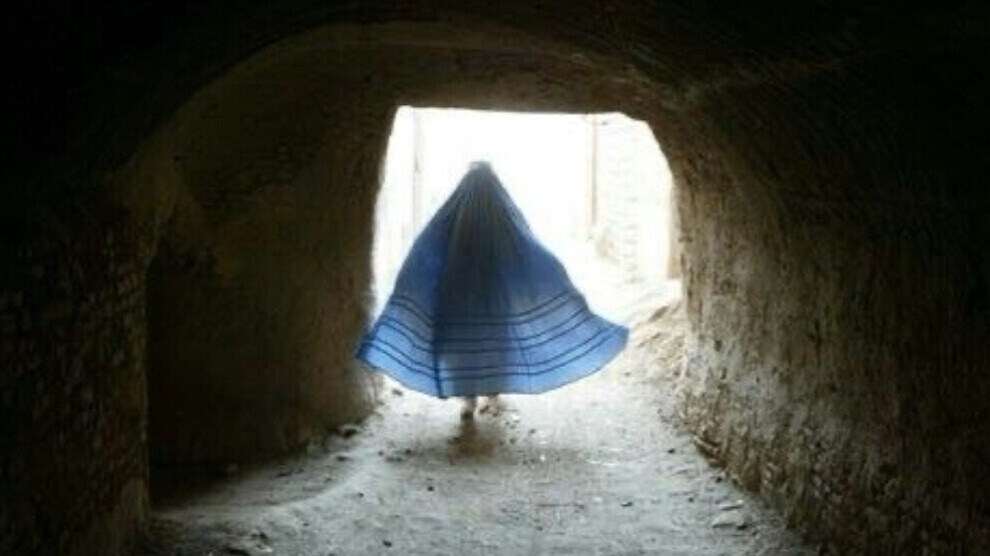
The recent protests in Iran are not merely a local event; they represent a massive uprising that transcends borders. People throughout the region are following the events with sensitivity and empathy, particularly Afghan women, who have faced deprivation, discrimination, and systematic oppression for years.
"Not Just a Passing Event"
In this context, Shukriya Nawabi, an Afghan protestor, expressed her solidarity with the protesters in Iran: "Although I am not in the streets of Iran, I deeply share the pain of the Iranian people. We Afghan women have been suffering the same hardships for many years."
She explained, "The popular protests taking place in Iran are not just a passing event for me, but a reflection of the shared suffering of women in the region, who have been deprived of the right to vote, freedom of choice, and active participation in society. I believe that the roots of many of the crises in Iran and Afghanistan are the same: systems that have excluded people, especially women, from decision-making positions and marginalized them."
She emphasized that the stance of Iranian women gives hope to Afghan women, a hope they struggle to breathe under severe oppression. Every cry raised in the streets of Iran resonates in the hearts of Afghan women. "When Iranian women protest bravely, we feel that we are not alone, and that we still believe in change, even if the road is long and arduous."
Shukrieh Nawabi believes the protests in Iran reveal a fundamental truth: "Repression may succeed in silencing voices for a time, but it cannot extinguish anger or eradicate collective consciousness, which will find its way out sooner or later." She also criticized the hesitant stance of the international community, noting that the suffering of the region's people, especially women, is often reduced to official reports and statements without being translated into concrete action.
The recent protests have once again shown the Iranian people that their demands are not limited to improving economic conditions, but also include fundamental changes in governance, respect for civil rights, and an end to oppression. Under these circumstances, solidarity between Iranian and Afghan women takes on particular importance—a solidarity based on a shared experience of pain, discrimination, and resistance. Shukrieh Nawabi concluded, "We, the women of Afghanistan and Iran, although separated by borders, are close to one another in suffering and struggle, and we hear each other's voices."