
Activists: What is Happening to Aleppo’s Kurds Amounts to Genocide
Armed attacks on neighborhoods in Syria’s Aleppo have caused a severe humanitarian crisis. Child and women’s rights activists say the violence amounts to genocide, urging international pressure and UN action to stop the massacres and protect children.
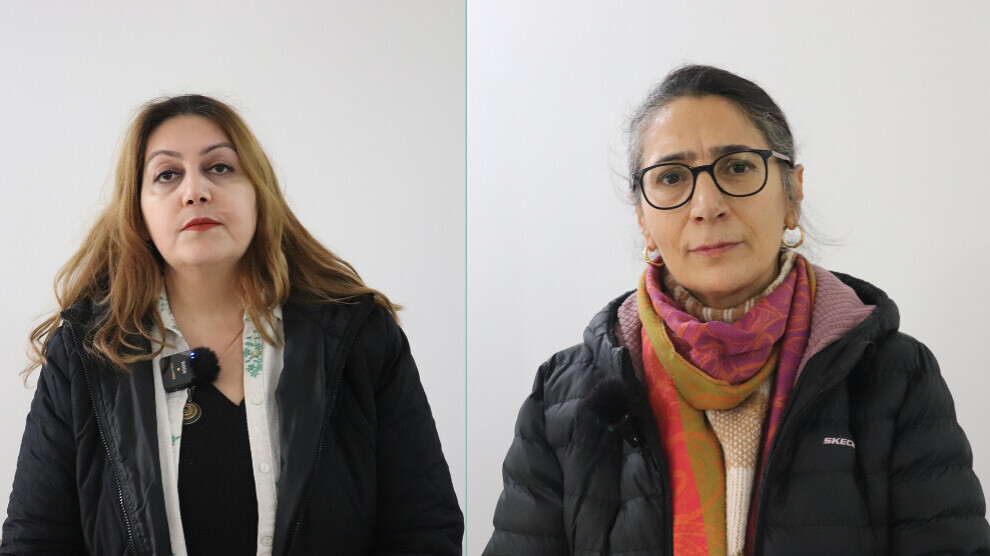
Arjin Dilek Öngel
Amed – The attacks on the Ashrafieh, Sheikh Maqsoud, and Bani Zeid neighborhoods of Aleppo, Syria, have exacerbated a serious humanitarian crisis, with many civilians falling victim, particularly children and women. This clearly exposes the war crimes committed by Hayat Tahrir al-Sham (HTS) jihadists and Turkish-backed mercenaries.
According to the Kurdish Red Crescent, at least 110 wounded people were evacuated from the Sheikh Maqsoud and Ashrafieh neighborhoods and transferred to Deir Hafer. Two of them succumbed to their injuries. Approximately 700 displaced civilians are currently under the organization's care.
Since January 6th, women's and children's organizations in northern Kurdistan have continued to express their condemnation of the ongoing attacks. In this context, the Child Rights Network in Amed emphasized that "children, who bear the brunt of the war in Aleppo, have once again become direct targets," calling on the public to condemn what is happening in the region.
The network explained in its statement that the attacks on the three neighborhoods left children living in the shadow of war, noting that the Convention on the Rights of the Child and other international conventions require the provision of special protection for children in conflict zones.
Activist Gulizar Ayildiz of the Children's Rights Network in Amed confirmed that attacks against Kurds in the region are not new, but rather have only decreased in intensity during the peace negotiations in Turkey. She emphasized the dangers facing women and children: "We have seen how residents were forced to flee their homes in order to dismantle the demographic structure, and the extent of the suffering caused by these coercive policies. We are fully aware of the humanitarian and social disasters caused by waves of displacement."
She believes that what the Kurds are experiencing in Aleppo amounts to genocide. "We must deal with the reality more seriously, and our statements must be more impactful and produce tangible results. I believe it is essential to take real and serious steps, without hesitation or delay, especially to protect women and children, in order to effectively mobilize international public opinion."
She emphasized that the lives of children and women are now at stake, and that what is needed is not merely the opening of a humanitarian corridor, but rather serious and direct pressure on Turkey and the Syrian Interim Government to immediately halt the attacks. She also criticized the silence of public opinion: "When it comes to the Kurds in the Middle East, the same scenario repeats itself; a silent, deafening, and mute stance, as if the suffering of this people is unseen and unheard."
She stressed that the problem is not limited to Turkish public opinion alone, but also includes Kurds residing in the country: "It is true that a woman remains a woman, a people remains a people, and a child remains a child, but when we add to that our national identity, we do not find the same level of sensitivity. It is not only Turkish society that ignores this, but even a segment of Kurdish society here does not show the necessary concern. Perhaps behind this stance lie deep social reasons, from forced assimilation to the paths of change and transformation, as well as the fears that accompany them."
She explained that ISIS had posed a serious threat to the peoples of the world in years past, especially in the region of North and East Syria, noting that the women of the region fought fierce battles against ISIS and achieved a historic victory. “We are all witnesses to that victory; the women who confronted ISIS embodied a saving force for everyone, and the international community recognized their heroic role, and it is our humanitarian duty to repay them by working hard to stop these attacks.”
For her part, child rights activist and childhood development expert Aynur Ozbay called on the United Nations to take urgent action to stop the massacres against women and children, stressing that continuing to talk about the peace process in Turkey while Kurds are being killed is unacceptable. “At a time when peace and freedom for the Kurds were being talked about, we thought we would be able to live in our language and culture, but we are receiving news about Kurds being killed. We categorically reject this,” she said, stressing the need to act to stop crimes against humanity. “Everyone is silent, while the world should have been turned upside down to save the children there.”