
Activists in Garmmian launch a campaign against masculine violence
Amid escalating femicide, suicide and burning cases in Garmian, Kurdistan Region, activists and organizations launched a campaign against these phenomena to raise women’s rights awareness and confront patriarchal mentality.
HELEN AHMED
KALAR — The phenomenon of killing women and inciting them to suicide in the Garmian region and its surrounding areas has become a growing social concern, amid warnings from women's rights activists about the continuation of violence, as a result of the dominance of masculine thought, the spread of some customs and traditions that restrict women's rights, in addition to the weakness of protection mechanisms and shortcomings in the application of laws.
In the face of this phenomenon, activists and concerned organizations launched a campaign titled "The Campaign Against the Suicide and Burning of Women," aiming to raise women's awareness of their rights, confront masculine thought, and transform femicide cases from individual cases into a general societal issue.
14 women killed
According to statistics obtained by our agency, more than 14 women were killed, or died under mysterious circumstances, in the Garmian region and the surrounding border areas, during the period extending from the beginning of 2026 until November 16 of the current month.
The available statistics indicate that the killings began in January, when two sisters were exposed to a gas leak inside a house in the Kalar district, leading to the death of one of them.
In February, the body of a woman was found in the waters of the Great Zab River in the Khabat district, under mysterious circumstances. The same district also witnessed a woman falling from the old bridge and dying under circumstances whose details were not clarified. During April, the body of a woman was found in the Great Zab River, amid mysterious circumstances surrounding her death.
During May and June, media reports did not include any recorded killings in the Kalar district, but July witnessed a murder in the village of Tazadi belonging to the district, where a woman was killed by stabbing with a knife.
August witnessed a series of tragic incidents; on the 11th of it, the body of a 32-year-old woman was found inside her home in the Bibaz sub-district of the Kalar district. The following day, a dispute broke out between two families in the village of Ma'danakan in the Khanqin district within the borders of Diyala governorate, resulting in the killing of two people and the injury of another, including a 15-year-old girl.
On August 13, the body of a woman named Amina Ahmed, 93 years old, was transferred to the Martyr Hajjar Emergency Hospital in the Kalar district, after her death as a result of suffocation, amid reports that she was found hanged inside her home. Also on August 14, a woman named Sivan Marwan, 22 years old, died inside her home under mysterious circumstances.
Incidents continued during September, as a woman was killed by gunfire in the Kifri district on the first of the month. The Kalar district witnessed, on September 9, the killing of a woman known by her initials (B. M. Kh.), born in 1970, after being subjected to gunfire. On the 14th of the same month, the death of a woman named Sivan Marwan, 22 years old, was recorded inside her home in the Kalar district, under mysterious circumstances. On the same day, a 29-year-old woman was killed in the Khanqin district, after being subjected to gunfire by her former husband.
On November 7, an 18-year-old girl was found hanged inside her home in the Kalar district.
"Femicide cases are being obliterated through tribal reconciliations"
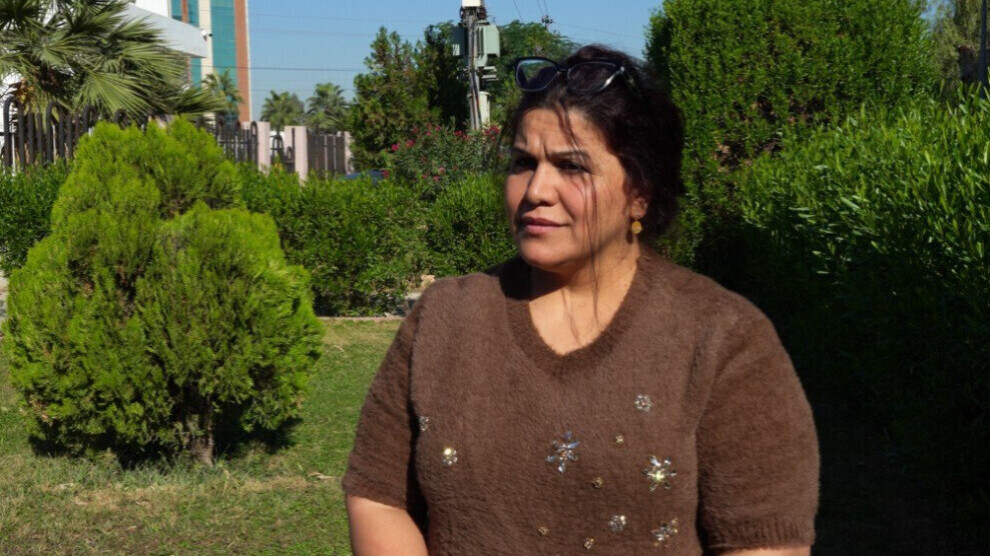
Regarding the situation of women in the Garmian region, Viyan Saber, an activist and official responsible for work and activities at the (P.D.O) organization in the city of Kalar, said that "the situation in Garmian has reached a dangerous level, as the impact of the disparity between different cultures, customs, and traditions has made violence practiced against women reach alarming levels. The region's proximity to Arab areas, and the cultures, customs, and traditions they carry, has increased the impact of these factors on femicide in Garmian."
She added: "Iraqi laws and legal articles are among the main causes of violence in Garmian and its surrounding areas. The rates of killing women and their suicide cases have risen in the region, and we have come to hear daily news of a woman being killed. The entry of some outdated cultures and Arab tribal laws and their influence on the region has also contributed to the increase in femicide."
She pointed out that the killings are no longer limited to the family sphere, but have extended to neighborhoods and streets. "Killing women is not an individual issue; it leaves effects on the individual and society, and leaves repercussions on culture, customs, and social traditions."
"For every woman killed, another woman is subjected to violence"
Viyan Saber explained that femicide cases in Garmian and its surrounding areas are often obliterated through tribal reconciliations, pointing out that the dominance of masculine mentality pushes many to resolve these cases away from the law, and before they reach the courts, which serves men's interests and deprives victims' families of their rights.
She added that some tribal settlements include presenting a woman from the accused's family to the victim's family, under the pretext of extinguishing the fire of revenge, which leads to replacing violence with another violence, and violating the rights of a new woman, affirming the need for judicial intervention and accountability of perpetrators according to the law.
"We want to find an effective mechanism to protect women"
Speaking about the campaign against the suicide and burning of women, Viyan Saber affirmed that the weakness of protection mechanisms, the spread of masculine and tribal mentality, alongside the absence of support and women's weak awareness of their rights, are among the factors that contribute to the exacerbation of this phenomenon.
She pointed out that the campaign, in which activists, lawyers, and media professionals participate, aims to raise women's awareness of their rights and transform femicide cases from individual cases into a general societal issue, while working to find effective mechanisms to protect them from violence and killing.
"The media should play a fundamental role in raising women's awareness"
Viyan Saber called on activists, relevant authorities, and media outlets to intensify awareness efforts about women's rights and the laws that protect them, and to enhance joint cooperation to spread awareness in cities, districts, and sub-districts, and to reduce the dominance of masculine mentality and manifestations of violence against women.
She stressed that the law must be applied fairly and firmly in dealing with femicide cases, and work to find effective mechanisms to protect women's rights, instead of women being killed in alleys and streets, and then tribal reconciliations being held in the alleys and streets of the city of Kalar and its surrounding areas.