
Academics and Activists Demand the "Right to Hope" for Leader Öcalan
33 international activists and intellectuals have called on the international community to take action to ensure the freedom of action for Öcalan and to enable the Kurdish people to hear their leader's voice.
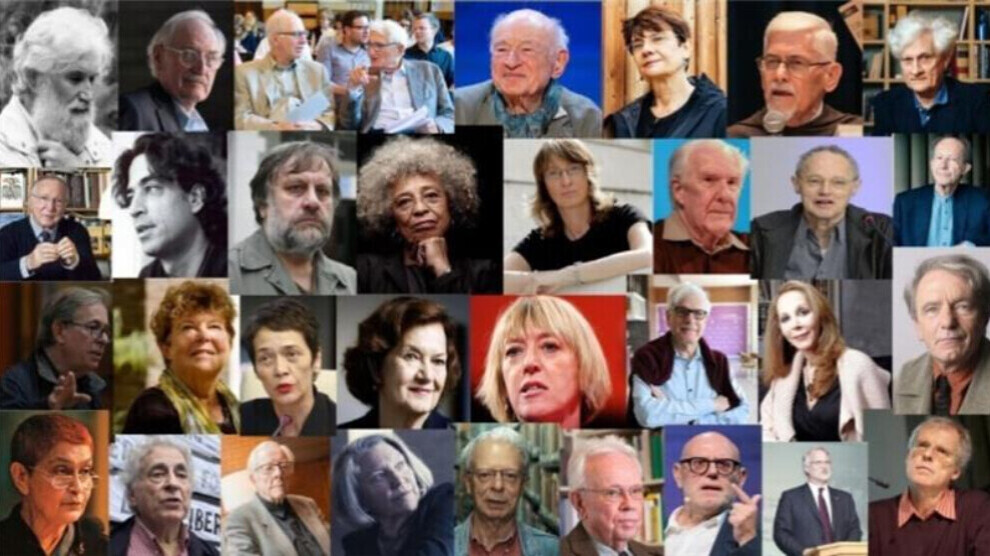
News Center — International reactions regarding the status of leader Abdullah Öcalan and the "Right to Hope" file have increased recently, with a growing circle of voices demanding a review of the conditions of his isolation and enabling him to communicate. The human rights and political arena has witnessed a new wave of statements and positions issued by academic figures and civil organizations.
33 figures, including international academics and intellectuals, called on the international community to activate the "Right to Hope" for leader Abdullah Öcalan. In a statement titled "The International Right to Hope for Abdullah Öcalan," it was stated that Öcalan's vision for a peaceful and democratic solution deserves support, and that European institutions and democratic forces in the world must assume their responsibilities regarding his cause.
The statement, signed by 33 thinkers, including figures with an international presence, said, "We call upon all democratic, secular, and progressive forces in the world to listen to Öcalan," and was sent to the Imrali delegation as well as to the relevant representatives of the Council of Europe Commissioner for Human Rights, the European Commission, and the European Parliament.
Listen to Abdullah Öcalan
The statement pointed out that Abdullah Öcalan proposed a peaceful and democratic national liberation that draws its strength from the historical unity of the Turkish, Kurdish, Arab, and Persian peoples. "Öcalan's call, which firmly rejects violence, transcends borders and echoes around the world."
The statement affirmed that the PKK has halted its armed struggle, and that the conflict in Syria has come to an end in response to Abdullah Öcalan's call, which paved the way for the beginning of a phase of political and social integration. The signatories indicated that the current moment represents, in their view, the right time to activate the "Right to Hope."
The statement emphasized the necessity for Öcalan to be granted freedom of action and communication, and for the Kurdish people to be able to hear their leader's voice without restrictions. The signatories also renewed their call to all democratic, secular, and progressive forces in the world to give importance to Öcalan's visions and listen to his positions as, according to the statement, part of the path to a peaceful solution.
Among the signatories of the statement were a large number of prominent academics and activists in the fields of philosophy, political theory, sociology, and human rights, including French thinker Edgar Morin, Alain Badiou known for his works on ontology and political philosophy, Jacques Rancière known for his theory of democracy and aesthetics, Axel Honneth representative of critical theory, post-colonial theorist Gayatri Spivak, icon of the Black liberation movement Angela Davis, political philosopher Nancy Fraser, Slovenian thinker Slavoj Žižek, historian Enzo Traverso, sociologist Craig Calhoun, and Nobel Peace Prize laureate and activist Jody Williams.