
Abdullah Öcalan: Kurdish Issue Tied to Peace and Democracy in the Middle East
Abdullah Öcalan affirmed that democratic national unity is based on voluntarism, pluralism, and the free will of peoples, and that it cannot be imposed by force but is built on equality, mutual recognition, and coexistence.
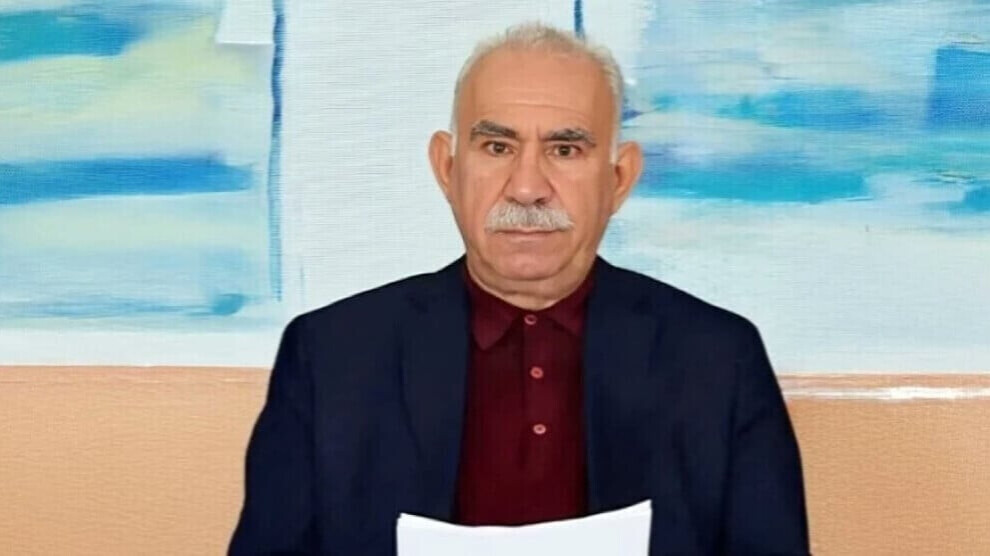
News Center – The Democratic Unity Initiative held its second ordinary general assembly under the slogan "We Will Succeed in the Spirit of Unity" on Saturday, January 17, at the Ali Amiri Conference Hall of the Amed Metropolitan Municipality. On this occasion, Abdullah Öcalan addressed the conference, emphasizing that democratic national unity is a voluntary and pluralistic project based on the free will of peoples and communities. He pointed out that this unity does not embody the model of a homogeneous, centralized nation-state, but rather represents a form of social organization that derives its strength from the local level and is based on active democratic participation.
In his message, Öcalan affirmed that the division of Kurdistan into four parts is a historical reality, and that different methods and forms of unity can be developed, taking into account the unique circumstances of each part. Unity between the parts should be built not with the aim of establishing a centralized power structure, but on the basis of the concept of a democratic nation-state.
He pointed out that the solution to the Kurdish issue and democratic unity is only logical when viewed alongside the pursuit of freedom and peace by all peoples in Turkey, Iran, Iraq and Syria. “Permanent unity cannot be achieved by force, but rather by equality, mutual recognition and the shared will to live together. Therefore, I see it as necessary to emphasize the democratic character of unity, and there is no doubt that democratic politics and democratic social organization are essential to this endeavor. I believe that this conference will be an important step in strengthening the principles and goals of democratic unity.”