
A Year After the Jaafari Code... A Seminar in Baghdad Examines Its Legal and Social Effects
The "Mother and Child" Forum and Iraqi Women's League seminar examined the Jaafari Code's practical effects, criticizing laws affecting custody, alimony, and visitation, and their direct impact on Iraqi families.
RAJAA HAMID RASHID
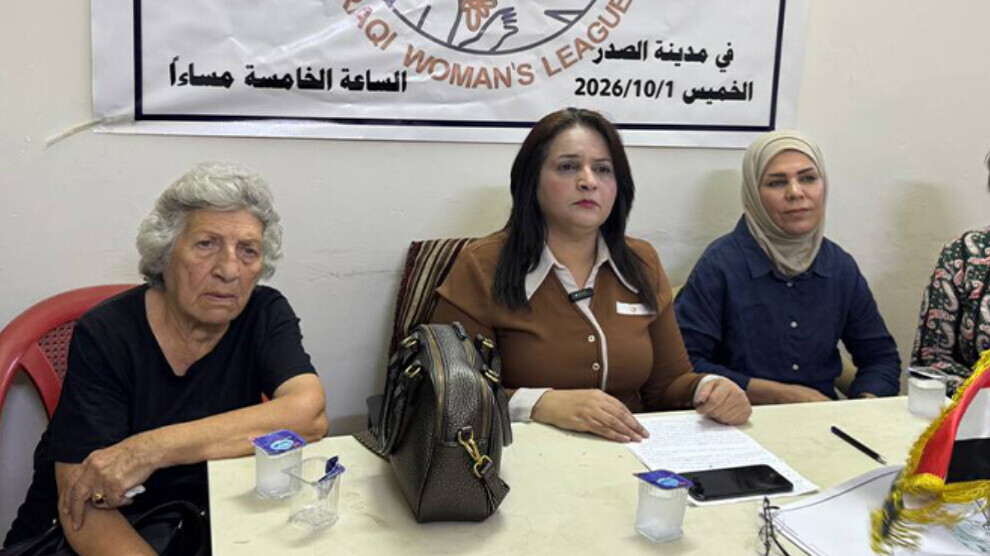
BAGHDAD – Participants in the seminar held by the "Mother and Child" Forum in Baghdad confirmed that the provisions contained in the Jaafari Code raise concerns about the rights of women and children, especially in cases of custody, alimony, and marriage. They warned that the application of these provisions may increase the vulnerability of women and children and turn family disputes into legal conflicts whose most severe repercussions fall on the future of children.
After approximately one year since the publication of the Code of Sharia Rulings in Personal Status Matters according to the Jaafari Shia School No. (10) of 2025, it has become possible to move from the stage of theoretical debate about the law to a more important stage, represented in assessing its practical effects as they have appeared in courts and in family and social life.
Talk about the Code is no longer talk about a mere legislative text, but about rules that have come to intervene directly in the most sensitive files in the life of the Iraqi family, including marriage, dowry, alimony, divorce, custody, visitation, housing, furniture, guardianship over marriage, and inheritance.
To clarify the details of the law, its provisions, and its impact on Iraqi women, the "Mother and Child" Forum, in coordination with the Iraqi Women's League, Baghdad Branch, held an awareness seminar titled "A Year After the Amendment of the Personal Status Law No. (188) and Women's Rights: A Reading of the Legal and Social Effects of the Jaafari Code," presented by legal expert Hind Karim yesterday, Thursday, the first of October, in Sadr City, Baghdad.
Lawyer Hind Karim explained in the seminar the differences between the Personal Status Law No. (188) of 1959 and the Code of Sharia Rulings in Personal Status Matters according to the Jaafari Shia School.
She said that the Personal Status Law No. (188) of 1959 established unified rules for organizing the Iraqi family, and was subjected to amendments in subsequent years, while Law No. (1) of 2025 opened the field for choosing the application of Sharia rulings of the Jaafari school, and the Code No. (10) became the reference in the matters covered by the choice.
Alimony, Dowry, and Custody: Differences Affecting Daily Life
She also explained the subject of the dowry, its conditions of entitlement, its provisions, and claiming it, and the difference between the prompt and deferred dowry, in addition to the issue of arbitrary divorce, the subject of gold and furniture, and the differences in dealing with them under the laws.
She explained in detail the subject of child custody and the interest of the custodial child, confirming that the disagreement of the father and mother may sometimes turn custody into a "battle," while the child is not spoils, and should not turn into a means of revenge between the two parties.
Hind Karim directed the attendees to the necessity of knowing the law to which the marriage is subject and how to choose the legal system, saying that marriage is not a one-night party, but a relationship that may last for decades, and that the signature made within minutes may have effects extending for years. She called on women not to sign before reading the provisions, understanding them, and asking questions about them, confirming the importance of legal awareness among women.
She concluded her speech by emphasizing that the law regulates these matters, but the family also needs awareness, and the necessity of a woman's knowledge of the most important laws and issues related to her family life, helping her preserve her life and her family's life and live with dignity and safety.
Alimony and Custody Between the Legal Text and Reality
For her part, Hana Hassan Kadhim, a mother affected by the application of the law, a divorcee and mother of three children, two sons and a daughter, spoke about her experience and what she described as the harm that befell her as a result of the alimony issue. She said that after her divorce she was forced to reside with her family in exchange for rent, while her ex-husband does not want to take the boys but is demanding her daughter, who has not exceeded fourteen years of age, by sending two summonses from police stations and notifying her of the necessity of the girl's return to live with her father.
She added that her daughter used to cry and did not know her father, because he left her when she was in the sixth month of her life. She noted that her older brother pledged before the judge to hand her over to her father every week, but she went with him twice, and on one occasion she ran away and returned to her mother, explaining that she did not feel comfortable living in her father's house.
Hana Hassan Kadhim confirmed that this situation is still ongoing, and that it has greatly affected the psychological state of her daughter, leaving the issue of custody, visitation, and alimony among the most prominent files facing families after divorce.
On the other hand, many mothers refrained from media appearance or presenting their problems and experiences before the media, for fear that their former husbands would exploit this appearance or the information contained in it to their advantage in cases pending before courts, which reflects the sensitivity of family files related to divorce, alimony, custody, and visitation.
It is worth noting that the Code was published in Issue (4843) of the Iraqi Gazette, on the sixth of October 2025, and became an annex to Law No. (1) of 2025, amending the Personal Status Law No. (188) of 1959. The Code sparked widespread criticism in the Iraqi street, especially regarding the reflection of its provisions on the rights of women and children.