
A Mother Awaiting Her Son’s Freedom After 11 Years in Prison: We Hope the Path Concludes with an honorable Peace
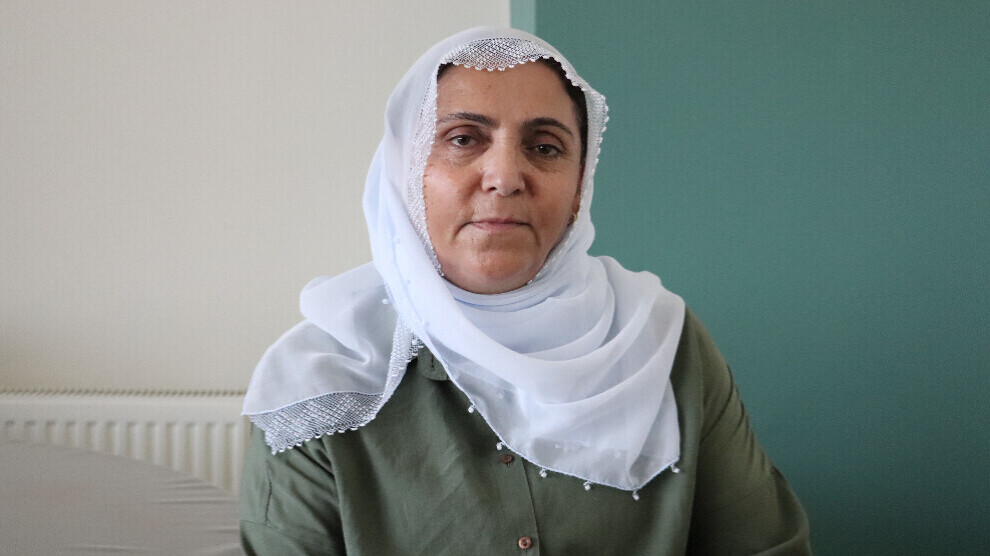
Remsiya Jan Bagh, awaiting her son Herkul Asu's release after 11 years, recalls years of pressure and affirms her continued struggle, hoping for an honorable peace to reunite mothers with their children.
MEMEHAN HELBIN ZEYDAN
Bitlis — The peace and democratic society path, initiated by a call from leader Abdullah Öcalan, has gained a new dimension following the approval of the "Strengthening National Solidarity and Social Integration" law in the Turkish parliament's general assembly. Under the law, approximately 3,900 political prisoners are expected to gain their freedom, which has created hope among the Kurdish community and families of prisoners. However, the limited scope of the law has simultaneously raised new questions and debates.
Among the mothers awaiting their children's freedom is Remsiya Jan Bagh, whose son Herkul Asu Jan Bagh has been imprisoned for 11 years. Like other families of detainees, she waits eagerly for the day she will meet her son. She says: "When my son is freed, the struggle will not end for me; we will continue the struggle together, but this time outside the bars."
Her son's first name is Mesut, but after his arrest, through a court ruling issued in prison, he no longer wished to use that name and changed it to Herkul Asu.
Speaking of her son, whom she has been deprived of seeing for years, she said: "Herkul was a very hardworking and honest child. When he was fourteen, he went to Istanbul. We thought he would work there, and he had left school at that time. After going to Istanbul, he participated in youth activities, and in 2005 he joined the freedom movement, but we did not know about it. We received no news of him for four years. I searched for him throughout those four years, and later we learned that he had joined the movement, and we were, of course, happy. He was in North Kurdistan."
11 Years in Prison and Forcibly Transferred Between Several Prisons
Remsiya Jan Bagh recounted the details of her son's arrest: "During the Syrian war, we learned that he, along with two of his friends, participated in the resistance of Sur (Diyarbakır). In 2016, he was arrested in Pirsûs (Suruç). Despite being subjected to severe torture during his detention, he did not accept the 'law of remorse.' My son was sentenced to life imprisonment and spent three months in Urfa prison, then four years in Alanya, after which he was forcibly transferred again. He is currently held in an S-type prison in Antalya, and I have not been able to visit him for about eight months."
She explained why she added the name "Asu" to her son's name: "My daughter Kilistan joined the Women's Protection Units (YPJ) in Rojava in 2012, and her nom de guerre was Asu. After her sister's martyrdom, he added her name to his identity."
"We Are Certain We Will Achieve Great Gains Thanks to Our Children's Struggle"
She says she is proud of her son: "My son has struggled for his people, and we are proud of his struggle. My head is held high, but ultimately I am a mother, and my heart burns with longing and pain. When we went to the prison to visit him, we formed relationships and communication with the families of his comrades. When I saw their struggle within the four walls, their discipline toward life, and the camaraderie among them, I felt great happiness."
She added: "They are also struggling for their leader, and we too will continue our resistance for our leader. Our eyes are on the road, and we hope he and his comrades will be released and gain their freedom. We are optimistic and certain that we will achieve great gains thanks to our children's efforts. We trust our leader until the end, and we hope that all mothers will be able to meet their children."
"The Struggle of Other Mothers Has Given Me Strength"
Remsiya Jan Bagh explained that state pressure has continued for years, and it still tries from time to time to continue this pressure by summoning us for interrogation. "They would raid our house every day and torture us. Our life was very difficult."
She noted that with Asu's (Kilistan Jan Bagh) joining, violence and pressure intensified. "As a mother, I know there are thousands of mothers waging this struggle, and this gives me strength and determination. We must remain strong and not make our children worry about us. I have made this a principle in my life."
"We Do Not Expect Them to Sit at Our Feet"
Remsiya Jan Bagh affirms her full confidence in the success of the peace and democratic society path: "After Herkul Asu gains his freedom, I do not expect him to sit idle. We also want to continue the struggle with our children within the framework of the new phase. Our only demand is for a field of struggle to be opened where we can meet our children."
She believes that "the path has reached a stage where retreat is no longer possible, and we hope it will end in victory. Thanks to the path led by our leader, we have not received news of casualties for a long time, and mothers have not wept. We hope this path will become an honorable peace."
She says that the methods of war have not succeeded in breaking their will: "All methods of war have been tried on us, yet they could not break our will. At every moment, our eyes and ears are directed toward our leader, and we follow what is happening. We believe in our leader, and this path will inevitably reach victory."
"My Daughter's Death Burned My Heart"
The mother speaks of her other daughter, whom she misses: "Asu was not like the other girls in the village. She was more enthusiastic about work and activity, and when she saw young people, she longed to participate in their activities. She was always reading books about the leader and the movement."
She recounts that her daughter later lost her life in Kefr (Yüksekova): "After Asu joined the movement, soldiers and police would come to our door every day and say: 'Go and bring your daughter back.' And I would answer them: 'If you can, you go and bring her.' Later, we learned that Asu had been martyred."
She added: "The Palace of Justice in Van summoned us. They said she was martyred in a clash alongside one of her comrades. After that, we applied to receive her body, but they delayed us for a long time. Finally, we received her body, and the police tried to prevent people from participating in the funeral ceremony, but hundreds of people took part."
"I Washed Her Body and Applied Henna to Her Hands"
She recounts how her pain turned into strength to continue the struggle: "The police prevented the body from being taken to the mosque. I took my daughter's body, and we washed her in our home bathroom. I applied henna to her hands and adorned her body with yellow, green, and red colors."
Remsiya Jan Bagh concluded her remarks by saying: "I made a vow to myself that, no matter what happens, I will hold on to the struggle and continue to support it. I believe that Kurdistan will be liberated through this struggle, and that this struggle will reach its outcome. I have lost two of my children, and I have raised my other children to hold on to this struggle."