
A Festival in Saqqez Reflects the Restrictions Imposed on Women
Saqqez's "Zewiya" Theater Festival hosts performances narrating diverse Iranian rituals and cultures, reflecting both cultural diversity and the obstacles and restrictions facing women in theater.
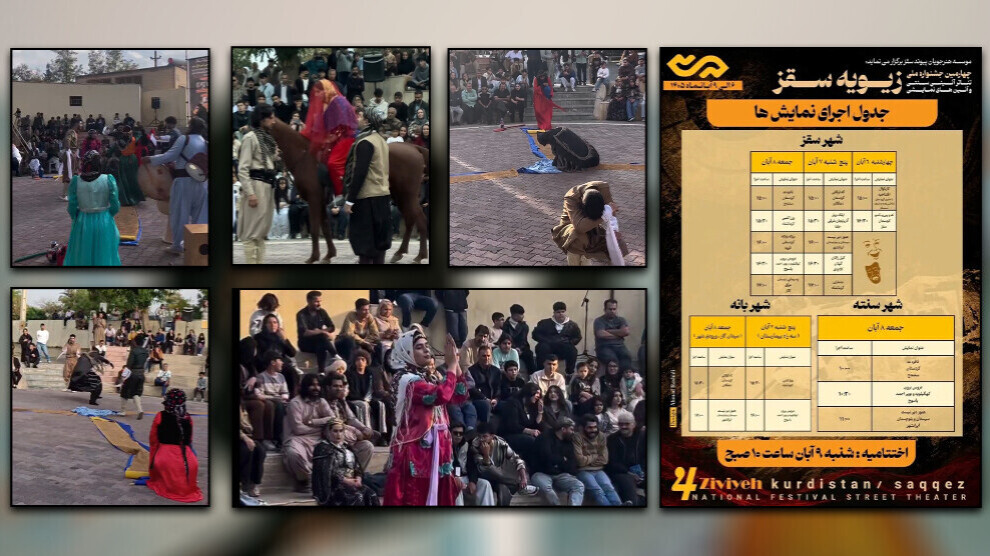
NOVA KARIRMIAN
SAQQEZ – The art of theater has always been a narrator of history and a reflector of peoples' beliefs, traditions, and lifestyle, and the city of Saqqez in eastern Kurdistan is considered one of the main centers of this art.
In the heart of eastern Kurdistan, the Zewiya area hosts, from 28 to 31 October, narratives from various Iranian cultures and rituals; from a dance that reminds the audience of "Khodanur" from Sistan and Baluchestan, to the songs of women who delight the ears of the earth seeking joy and blessing. From the legend of "Shahmaran" to the melodies of the Azerbaijani "Ashiq," and the bride who sings to Kurdistan and chants for the rain.
The fourth festival of ritual, traditional, and ceremonial theater in Zewiya in Saqqez city is these days giving a distinctive atmosphere to eastern Kurdistan. The festival hosts 12 theater groups from various regions of Iran, alongside artists from the Kurdistan Region.
Among the works participating in the festival, we mention the play "Afarat" (Woman) from Sanandaj, the two plays "Vazira Keshi" and "Shahmaran" from Kermanshah, "Buke Barane" (Rain Bride) from Qorveh, "Arous Boroun" from Kohgiluyeh and Boyer-Ahmad and Yasuj, and the play "Peymani Dostan" (Pledge of Friends) from Kilar. The festival schedule also includes the theatrical performances "Galokani" from Dehgolan, "Ilik Bahar" from Jolfa, "It Is Not Too Late Yet" from Iranshahr in Sistan and Baluchestan, and the play "Jil Zakan" from Kuchesfahan in Gilan.
Cultural differences and the passion for learning about other cultures have made this festival an event that attracts great public interest. The themes of most performances revolve around embodying beliefs, traditions, narratives, and less visible aspects of the lives of peoples living in the Iranian geography.
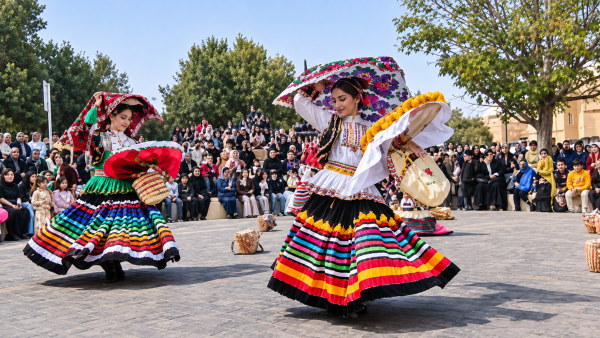
Although Saqqez is the main host of the festival, some performances were also presented in the cities of "Sente" (the center of Imam district in Saqqez city) and Baneh, in order to give the largest possible number of audiences the opportunity to watch these works.
At the heart of these narratives, women enjoy an undeniable status. Most local rituals, from songs and collective dances to fertility, rain, and blessing rituals, were formed thanks to women's presence and active role, and were inherited by generations after generation. In fact, an important part of the cultural heritage that is embodied today on the stage cannot be imagined without the role of women; however, women's status in narrating these rituals does not necessarily mean that they enjoy equal opportunities in the artistic and theatrical space.
Actress and playwright Sheida K. spoke about the restrictions and the marginalization of women's role, saying: "Images of women do not appear on the festival poster, and the formation of the judging committee is devoid of any female names. Traditional dance in its official and executive framework is monopolized by men, at a time when women play the main role in many ritual narratives, and part of the cultural identity of these performances is linked to their presence and voices. Social and legal restrictions imposed on clothing, movement, voice, and freedom to work on stage are also among the most prominent challenges."
Despite these restrictions, women's presence in the theater arena continues, and the "Zewiya" festival can be considered a point of strength for reflecting their historical role in authentic narratives and traditions; however, embodying their role in theatrical narratives will not be complete until space is available for them not only as a character in a ritual or as part of the heritage of the past, but as artists who possess a voice, the right to choose, and the ability to make decisions in the present.
According to Sheida K., changing this situation requires a reconsideration of cultural and artistic structures and a different management of festivals. Nevertheless, female artists are still hopeful of attaining a higher status in this field, and they consider this festival an important opportunity to introduce different cultures and rituals.
It is worth noting that the fourth edition of this festival concludes its work today, Saturday, 31 October, with the holding of the closing ceremony after four days of performances and hosting of theater groups.