
141,000 Children Out of the Education Process in Iran
New school year data shows Iran's education gap widening: 16 million students enrolled, 950,000 dropouts, and over 141,000 children out of school
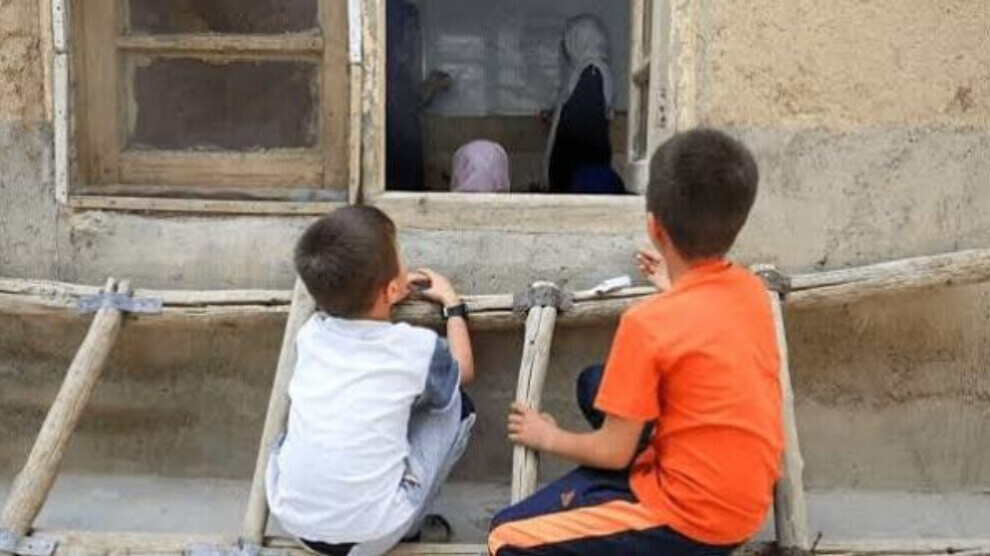
News Center_ In recent years, the phenomenon of children dropping out of school has worsened in Iran, amid indicators showing a widening educational gap and a rising number of school dropouts due to the absence of government plans to ensure the continuation of education during crises—entrenching a crisis that portends a broader collapse in educational justice within the country.
With the start of the new school year, official educational data shows the continued gap in enrollment and the exclusion of wide numbers of children and adolescents from schools. While about 16 million students enroll in Iranian schools, statistics indicate that the number of dropouts during the past year reached about 950,000 students across different age groups. In the same context, the Deputy Minister of Primary Education announced the documentation of 141,837 children aged between 6 and 11 outside the educational process during the past school year.
Competent authorities explain that the two figures cannot be directly compared, as the first represents the total dropouts in the primary age group subject to direct follow‑up, while the larger figure reflects a more comprehensive estimate of dropout cases across different educational stages. Reports agree that poverty remains the most influential factor in depriving children of education, and the resulting widening circle of school dropout in the most vulnerable areas.
According to the Deputy Minister of Primary Education at the Ministry of Education, economic, social, and cultural factors are among the most important reasons for children dropping out of school. Among these factors are: poverty, child labor, family relocation, lack of care or ill‑treatment, and some cultural factors.
The rise in living costs and the decline in purchasing power have increased pressure on low‑income families. Buying bags, shoes, clothes, and stationery, and paying transportation costs—even to public schools—have become difficult for many families. Under these circumstances, education may become less important than providing food, housing, and other basic needs. The continuation of this situation can increase the risk of children dropping out of school and entering the labor market early, especially in low‑income families.
New Pressure on Education
The recent war contributed to deepening existing pressures on the education sector, as many educational institutions were damaged or temporarily closed, families were displaced, transportation was disrupted, and income declined alongside rising living costs—factors that together make it more difficult for children to continue their education.
Despite this, no independent statistics are available showing the number of dropouts as a direct result of the war's effects, making it impossible to link the rise in dropout rates to the war alone. However, the worsening economic and social conditions that education officials classify as main reasons for dropout raise the likelihood of more children leaving school.
The educational gap is not limited to dropout alone; it extends to include children who were never enrolled in school, along with other manifestations such as severe overcrowding inside classrooms, lack of educational spaces, and unequal facilities between different regions, deepening inequality in opportunities to obtain equitable education.
In Tehran, despite the concentration of facilities, more than 2.1 million students study there. Recent reports indicate overcrowded classrooms and the adoption of a double‑shift system in some areas, while the shortage of schools and educational facilities continues in deprived areas.
Various reports have shed light on cities such as Sistan and Baluchestan, West Azerbaijan, Khuzestan, and North Khorasan, due to poverty, population dispersion, lack of infrastructure, and difficulty accessing schools.
The Number of School Dropouts Has Risen
Official statistics for the new school year do not yet provide a clear picture of the economic and social effects of the war on school enrollment and continuation, so it cannot be asserted with certainty that there has been a confirmed increase in the number of dropouts.
However, the combination of factors—the rising number of children not enrolled in schools, rising living and education costs, declining purchasing power of families, and the repercussions of war—increases the risk of this crisis worsening. Among these, children of low‑income families, working children, and residents of deprived areas are the most at risk. But confirming this possibility requires the publication of new official statistics.
The figure previously announced by officials—about 950,000—gives a general picture of the scale of the crisis. Whether this figure has increased after the economic developments and the recent war depends on the publication of official statistics related to school enrollment and dropout for the 2026‑2027 school year