
“Wadi Kerse”… when the mountain becomes the Yazidis’ memory and their last refuge
When ISIS attacked Shingal, many Yazidis tool refuge in Mount Shingal and Wadi Kerse. This bond between the Yazidis and the mountain is not a recent development; it has always been part of their memory and safety.
Gulstan Aziz
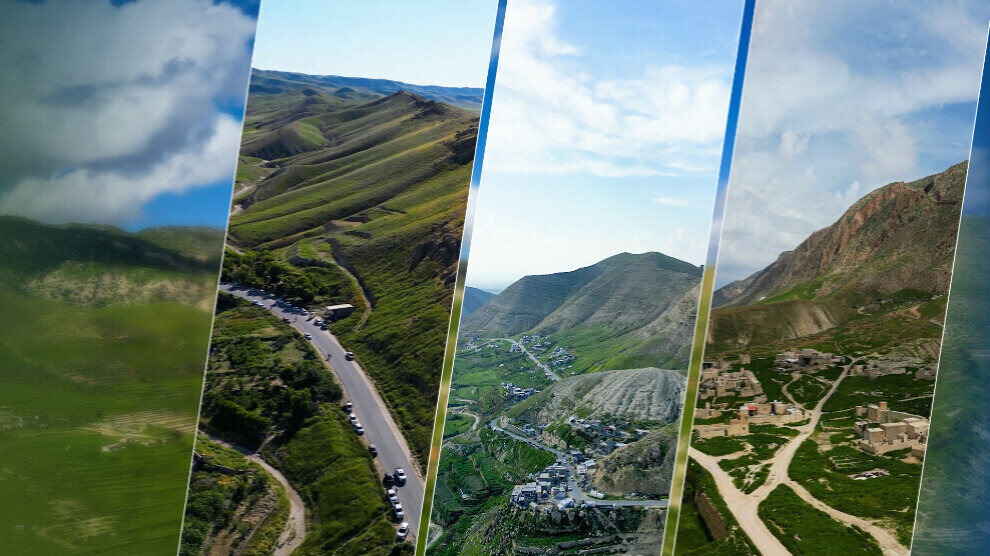
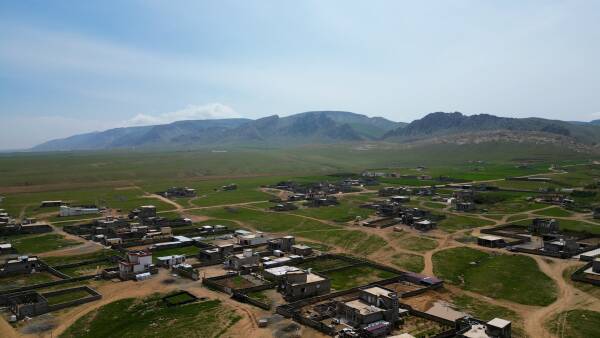
Shingal – In the north of Mount Shingal, where quiet slopes stretch and nature meets the memory of pain, lies Wadi Kerse – a place that was not merely a passing geography but turned into a living witness to the history of the Yazidis.
In this valley, new stories began to be written after August 3, 2014, when Yazidi families took refuge in the mountain fleeing the attacks of ISIS. Among these, Mother Adoul from the Khalta clan, originally from the village of Rambusi, speaks of her displacement journey that ended at the foot of the mountain, where she has lived for years in Wadi Kerse, trying to reorganize a life that was suddenly interrupted.
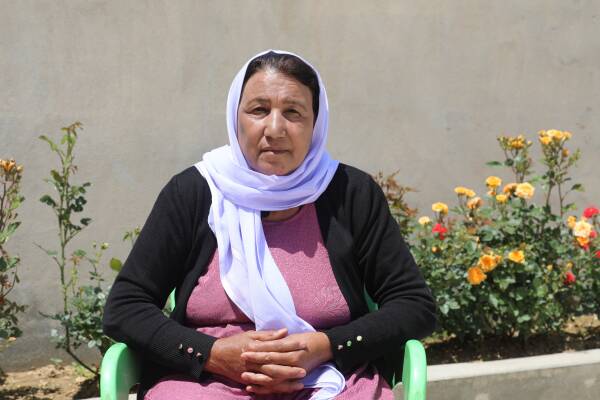
Mother Adoul says that the Yazidis' presence in this place was not a recent development but an extension of an ancient historical relationship with the mountains – a relationship that, according to the elders, constituted a condition for survival. She adds: "If the Yazidis are to have any existence, it will be in Mount Shingal," pointing to a deeply rooted belief that the mountain is not just a shelter but part of identity.
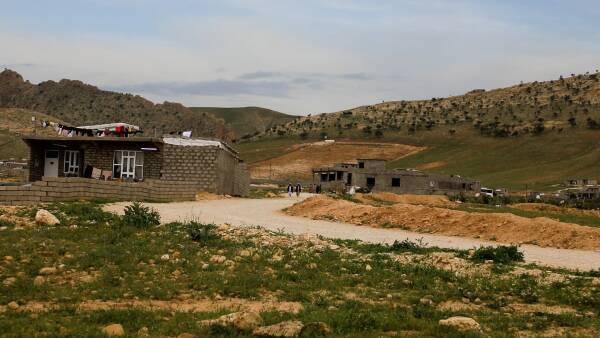
Centuries ago, Wadi Kerse was an open area for several clans, such as Mala Mikh from the Koshadi tribe. Over time, it turned into a wide space containing multiple settlements and villages. The area of Malak Kadenka also holds another layer of memory, as local narratives indicate that it was established during World War I to shelter Armenians fleeing Ottoman massacres, after the Yazidis opened their doors to them and shared food and shelter. However, this humanitarian stance later ended with attacks in 1918 that brought the scene of violence back to the region.
Mother Adoul recalls those stories, saying that whenever the Yazidis faced fatwas and threats, they found protection in the mountain that the plains could not provide, so they returned to its slopes and built their homes near it. "Whenever we were in danger, the mountain was what protected us." Over the years, Wadi Kerse filled with houses again, after residents from Rambusi, Tal Aziz, and other areas returned to it, in a reverse displacement movement that reshaped the population map of the place.
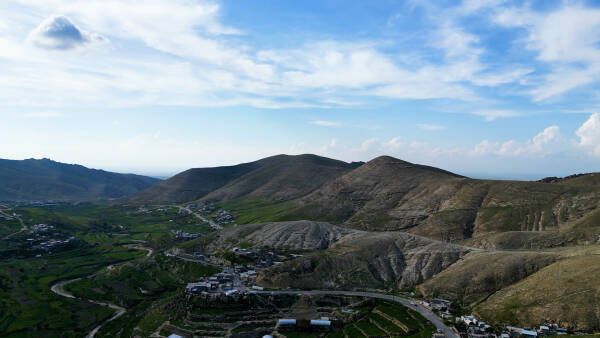
Mother Adoul points out that the Yazidis were historically linked to the mountains, before large numbers of them were pushed to the plains, where they lived in areas that, in her description, were not suitable for their lives. But she believes that returning to the mountain today is not merely a choice but a recovery of part of the self.
In Wadi Kerse, different clans coexist, such as Faqir, Aldakhi, Karkurk, Hababi, Pir, Sheikh, Zandini, Jilka, Khalta, Qirani, and Walati. The residents depend on natural springs such as Bira Khay, Dadush, and Ali Bek, living a simple life between farming and herding.
Under an open sky and a calm where nature blends with memory, shepherds live their days, while residents continue to hold onto the idea that the mountain is the last guarantee for survival in an increasingly turbulent world.
Mother Adoul concludes her speech with a tone mixing worry and certainty: "Other places are not for us. Our children who grow up far away do not know who we are. Our culture, our faith, and our lives are all here, on this mountain."