
“Visual Silence”: An exhibition that opens the door to contemplation through image and emptiness
Photofrapher Amel Dekkar presented ‘Visual Silence’ in Algiers, displaying few large images based on contemplation and emptiness, affirming image’s role in creating human impact that re-reads women’s presence in art.
Najwa Rahm
Algeria – Artist Amal Dekkar, during her exhibition "Visual Silence", stressed the importance of the image as a contemplative discourse that gives the viewer space for self‑reading, affirming that photographic art is capable of highlighting women's presence and the transformation of their vision within society.
In the world of photography, the power of an image is not measured by the number of displayed shots, but by its ability to create a visual and human impact on the viewer. From this perspective, photographer Amal Dekkar chose to present her works within an artistic vision based on "visual silence," where emptiness becomes part of the story, and the image turns into a space for reflection and internal reading.
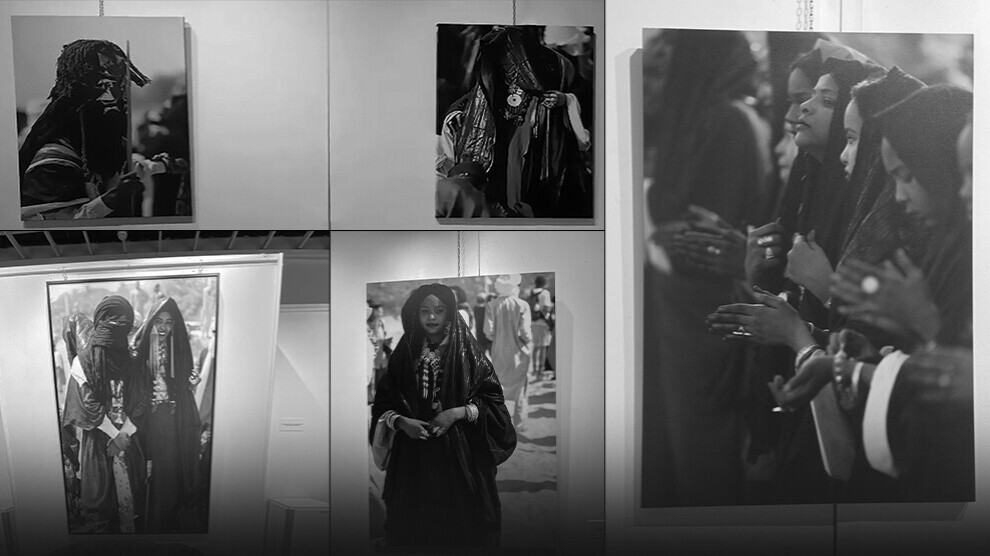
The "Az-Zouar" art gallery in Algiers is presenting part of her works in an exhibition that opened on May 9 and continues until June 4, offering the public the opportunity to discover a different visual experience based on the symbolic dimension of the image and the precise interplay between light and shadow, presence and absence.
This exhibition is an extension of a previous experience by the artist at the "Alamat" library, but her new project "Visual Silence" appears more mature in terms of artistic vision and aesthetic approach. She chose to display a limited number of large‑format images, a deliberate approach that gives each work its own space for contemplation and reading.
Through "Visual Silence," Amal Dekkar presents a collection of works that reflect her vision based on giving each image its symbolic value and depth, away from randomness, in harmony with her style that blends visual sensitivity and aesthetic exploration.
"Art begins from silent spaces"
Amal Dekkar explained in an interview with our agency that her choice to display a limited number of images was not a random decision but stemmed from an artistic conviction that the image should not be consumed quickly within the exhibition space; rather, the viewer should be given the opportunity to pause, reflect, and interact internally with it.
She affirms that the image is not just a static shot, but an open visual discourse that each viewer reads according to their own feelings and experience, away from any direct guidance. "The viewer must leave the exhibition carrying an impact or a message left by the image within them." She noted that "Visual Silence" is a wide space for interpretation, and she believes that this approach has become necessary in an era dominated by fast images and consumer content.
Speaking about women's presence in the artistic field, she pointed out that female creators have gradually begun to assert their presence, despite the limited number of women photographers who exhibit their works in art spaces. In her view, these first steps represent an important beginning toward a broader female presence in the world of photography, expressing her hope that these experiences will encourage other women to present their works and share their artistic visions with the public.
Regarding her choice of black and white, she explains that it is not merely a technical choice but "an aesthetic and philosophical choice" at the same time. Black and white allow focusing on human essence and emotional details. She relies in her works on the play of shadow and light, on the contrast between darkness and clarity, and they also give the image a temporal and contemplative dimension that makes it more capable of touching memory.
The Tuareg woman appears in her works as a visual element loaded with symbolism. Amal Dekkar sees her as an embodiment of identity and collective memory, a symbol of authenticity, strength, and rooted identity. The traditional clothing that Tuareg women have preserved for centuries represents a unique model of loyalty to cultural belonging.
Amal Dekkar connects the long struggle of women throughout history to prove their presence with the reality of contemporary women, who have become more influential, confident, and capable of asserting themselves. She believes that art plays an important role in highlighting this transformation and in re‑presenting the image of women within society in a more conscious and profound way.
Amal Dekkar's experience does not stop at the aesthetic dimension of the image; it goes beyond that to re‑pose questions of identity, women, memory, and humanity, within a vision that makes the camera a means of contemplation and dialogue, not merely a tool for documentation. Through her project "Visual Silence," the artist affirms that the image is capable of saying a lot without noise, and that true art sometimes begins from those silent spaces that allow the soul the freedom to feel and interpret.