
Spring in Kobani revives women's hopes and their crops
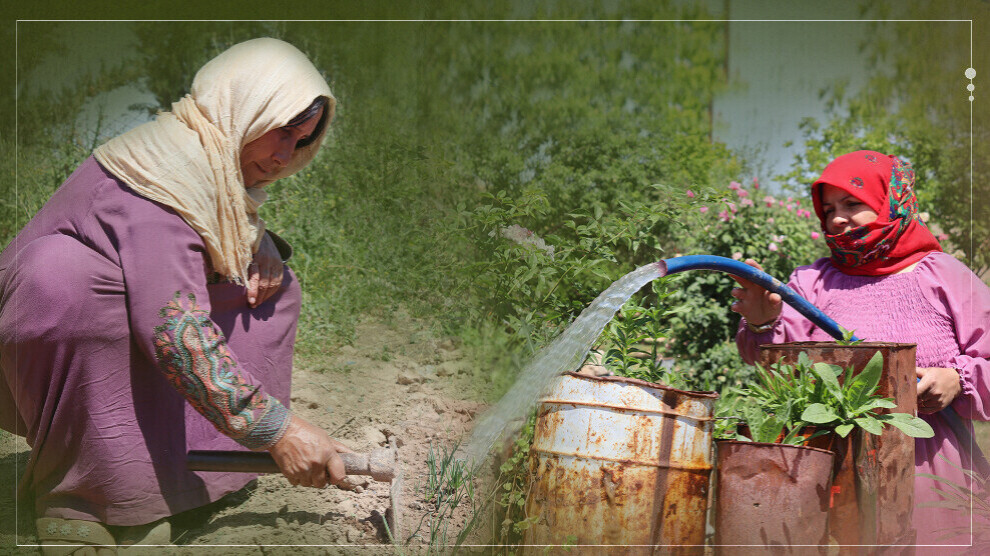
With spring’s abundant rain this year, Kobani’s villages in Rojava regained vitality;nature greened, and women returned to fields and daily work full of hope and optimism.
Nurshan Abdi
Kobani – In the rural areas that still preserve their simplicity and agricultural culture, women continue to make life through farming, livestock breeding, and food production, affirming that work and connection to the land are not merely a means of living but part of identity and life itself.
Woman, life, and work – three words embodied in all the scenes that reflect the reality of life. This image appears most clearly in the rural areas that still preserve the culture of the mother to this day. In the countryside of Kobani city in Rojava, adorned this year with spring colors in every corner, women's effort and production add further richness to the spring of the homeland.
Amineh Sheikho from the village of Kabalk says that for several years, rainfall was very scarce, and all areas became dry and barren, but this year the rains have been very good and are still continuing.
She explains that with the rainfall, "we planted various flowers and roses around the house and decorated it with them. I also planted a small garden in front of my house. It adds beauty to the place, and we also benefit from it. This makes us very happy. We planted something different in every part of the land."
Work and production give meaning to life
Amineh Sheikho says that every woman is busy with different work. "This year's spring has also renewed our hopes. The events we went through weighed on our hearts and robbed us of joy, but with the arrival of spring, our feelings blossomed like flowers, and we felt happiness again. Therefore, every herb for us represents hope."
She explains that each family in the village is busy with some work; some women work in livestock breeding, others in farming, and others take care of trees. "As for me, besides tending to the gardens, I have trees that I care for as I care for my children. It is true that being busy with nature and livestock requires great effort, but at the same time it gives our lives meaning."
Varied products from sheep breeding
The rainfall also affects livestock and their production, says Wahida Amin, a woman in her sixties from the village of Zakari. "Most of the people in our village raise sheep and make many varied products from their milk. I am now making cheese; this is its season. We make it for our homes and also for our relatives."
She explains that it is tiring work, but "eating from the produce of one's own hands and from the fruit of one's effort feels very different. Therefore, I feel very happy because I am doing this work."
She added that the livestock this year are in good condition due to abundant rainfall. "This year our sheep are in excellent condition. Because of the rains, grass has become very abundant, which achieves self‑sufficiency without buying fodder and increases their production. For this reason as well, our sheep produce more milk, which has encouraged many families to own a larger number of livestock."