
Growing fears over the execution of Kurdish activist Bakhshan Azizi
At a time when concern is escalating over the judiciary's use of the death penalty as a tool to silence political opponents and critics, the death sentence against Kurdish civil activist and political prisoner Bakhshan Azizi has been reaffirmed.
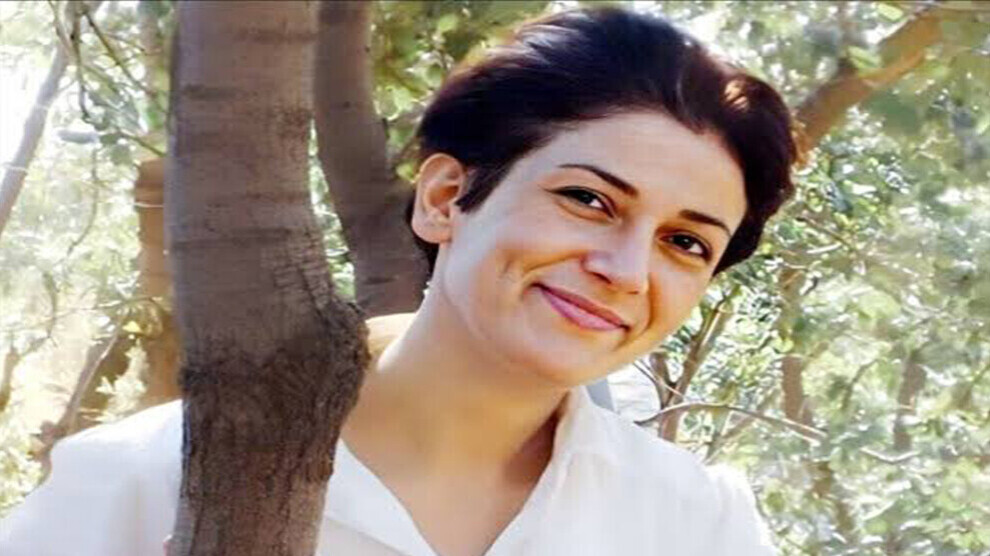
News Center _ Kurdish activist Bakhshan Azizi faces the risk of execution after reports of her torture and denial of a fair trial, sparking widespread concern over escalating repression against political prisoners in Iran.
Human rights concerns are growing inside and outside Iran after reports confirmed that Kurdish civil activist and political prisoner Bakhshan Azizi has been subjected to torture, solitary confinement, and denial of a fair trial, as the execution of the death sentence issued against her approaches. This development has sparked a new wave of concern and anger over the escalating pace of repression against political opponents in the country.
Available information indicates that Bakhshan Azizi, detained since 2023, has spent months in solitary confinement _ which human rights organizations described as a form of psychological pressure and “white torture.”
Information also indicates that she faced severe restrictions on access to a lawyer and the right to defense, while the death sentence was issued against her in a closed security atmosphere that does not meet the standards of a fair trial.
Human rights activists believe that this case reflects the continued reliance of the Iranian judiciary on security files to silence dissenting voices, affirming that such procedures have become a recurring pattern in dealing with political prisoners.
Bakhshan Azizi has been charged with “corruption on earth” (Mofsed-e-filarz), a broadly defined charge that has been used in recent years against political activists, protesters, and Kurdish prisoners.
Human rights activists affirm that the vagueness of this charge gives security and judicial authorities wide room to criminalize civil and political activity, away from clear legal standards. Human rights organizations also warn that the expanded use of these charges is not aimed at achieving justice but rather constitutes a tool for intimidation, suppression of society, and prevention of the spread of protests.
Bakhshan Azizi’s case comes within a broader context of tightening security measures in East Kurdistan, where recent years have witnessed waves of mass arrests, harsh sentences and executions of Kurdish political prisoners.
These developments have provoked angry reaction from local and international human rights organizations, which see that Iranian authorities are seeking to stifle any protest activity or social demands in the region. Activists warn that the continuation of this approach will deepen anger and mistrust between the Kurdish community and the central authorities.
The “Political Prisoners’ Freedom Committee” condemned the confirmation of the death sentence against Bakhshan Azizi, considering it a flagrant example of human rights violations and the continuation of the intimidation policy. It called on human rights organizations, the media, and international bodies to take urgent action to stop the execution and demand the abolition of the death penalty in Iran.