
Delal Osman: The Syrian crisis will continue unless the vision of society and women is considered
Delal Osman warned that recent SDF -interim deal could risk Rojava’s gains if not precisely implemented, affirming women’s role and society’s vision must be central to any new Syria political project.
Nagham Jajan
Qamishlo-After the recent attacks on Rojava, an agreement was signed on January 29 between the Syrian Democratic Forces and the Syrian interim government. According to this agreement, four brigades of the SDF are to be integrated into the Syrian army formations, and the Autonomous Administration institutions have begun initial steps toward administrative integration according to the announced provisions.
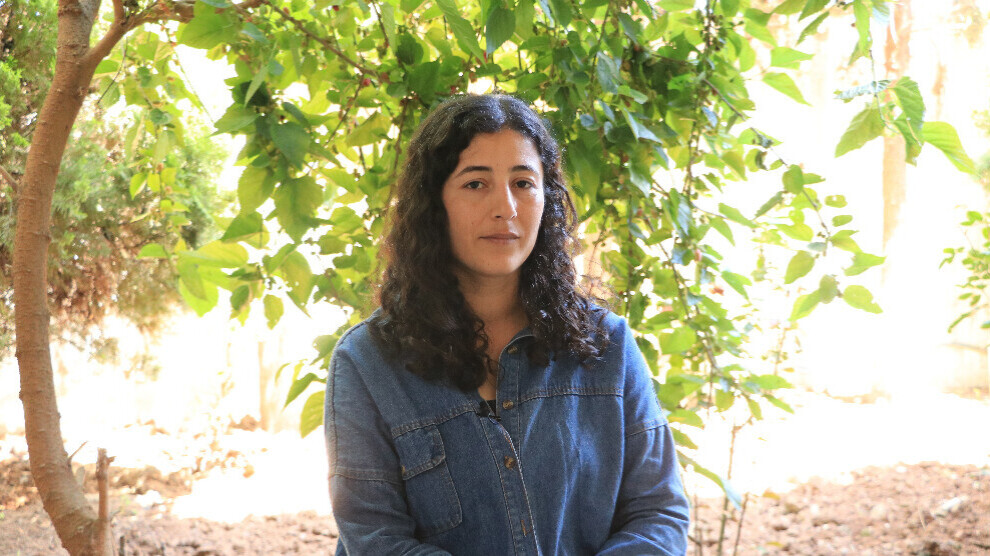
Commenting on the political situation in Syria, Journalist Delal Osman says: “ The political crisis in Syria is still ongoing,” affirming that the people's demands are clear: "having a genuine political will and managing their own society."
She explained that women in Syria seek to play an active role in political life and in drafting the Syrian constitution, at a time when the interim government is working to "exclude broad social groups, especially women, from decision‑making positions, which further complicates the scene and deepens the existing crisis."
"A new political project for Syria"
She pointed out that "a new political project is currently being discussed regarding the future of Syria," explaining that a number of regional countries are trying to impose their own vision on the Syrian scene, amid the formation of a new project for the Middle East in which Syria occupies a pivotal position.
She added that "the Syrian political scene suffers from deep problems that directly affect the course of events," noting that "unless the vision of society and women for Syria's political future is taken into account, the crisis will continue and worsen without end."
"A deep rights crisis"
She touched on the scale of widespread violations inside Syria, explaining that the country faces a "deep‑rooted rights crisis." She added: "The fall of the Ba'ath regime did not lead to the resolution of structural problems; rather, new challenges emerged, including an increase in arrests, displacement, and assaults, along with a rise in femicide."
She noted that the period following the regime's collapse was supposed to open the door for women to safe and peaceful spaces, and to contribute to resolving the Syrian crisis, but the reality moved toward greater complexity. "At the societal level, issues of rights, freedom, and democracy remain unresolved, amid widespread rejection of the interim government due to its exclusion of women from politics and decision‑making positions."
"Popular institutions established through the revolution must be protected"
Regarding the recent agreement and its challenges, she says: "Based on the January 29 agreement, new political, military, and legal steps are being proposed in the region," affirming the need for women to have a clear role in this phase, and for their will to be preserved within the new process. "The institutions established during the years of the revolution must be legally protected."
She pointed to the great efforts made by the Syrian Democratic Forces despite the difficulties imposed by the interim government through creating tensions, affirming that the will of the people will remain the decisive factor, and that women in the region possess a deep‑rooted strength gained through their participation in the women's revolution, which achieved remarkable gains with women at its core.
Real obstacles facing women in political participation
Delal Osman explained that the interim government still excludes women from the political sphere, even though the women of Rojava possess deep political awareness and extensive experience in community work. She noted that many women are excluded from political participation, but the women of Rojava have proven their presence in various fields, and they must be able to protect what they have achieved within the framework of the agreement.
Regarding the military field, she said: "The people of the region stood by the Women's Protection Units (YPJ) in the military field, and at the same time, women's institutions with their own social systems emerged." She pointed to the wide campaigns launched in support of the YPJ, and to activities dedicated to protecting the mother tongue, considering that all of this is part of defending society's gains.
She warned that the failure to implement the recent agreement correctly could threaten the gains of the women's revolution achieved through years of struggle, noting that building a democratic system requires protecting the institutions and achievements established through long years of work and struggle.
"Syria must be built with all its colors"
Journalist Delal Osman stressed the need to raise the level of struggle and not remain silent in the face of systems imposed on the people. "Building a secure and free future for Syria requires a shared vision between women and society, an active role within the political system, and the rejection of any authority imposed by force."
She concluded by emphasizing the importance of sitting at one table to discuss how to build the Syria that Syrians want, pointing out that the four years of interim government rule will be decisive in shaping the future of coming generations. "Shared struggle is the path to building a new Syria that can be a model to emulate."