The rugged road of knowledge…from the ban to the master’s degree
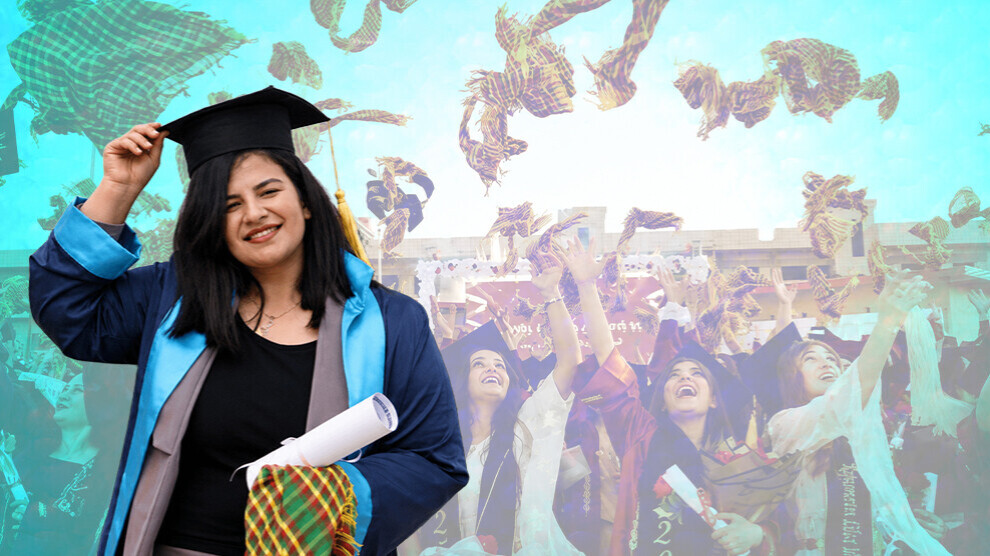
Rabia Etou’s journey from displacement to graduation platforms is a living embodiment of identity’s triumph over attempts at cultural genocide, and a quest for self that began with a child’s curiosity and ended with an academic achievement.
Silva Ibrahim
Kobani – An entire generation of students from the city of Kobani embodies a story of civilizational rebirth, having succeeded in moving from school desks where their mother tongue was banned to platforms of postgraduate studies in Kurdish. This generation, which tasted the bitterness of cultural repression and witnessed the horrors of war, did not surrender to systematic exclusion policies. Instead, it made its language an academic identity and an intellectual weapon, transforming thousands of individual experiences into a comprehensive educational renaissance that restored dignity to roots and history.
Language has always been more than a mere means of communication. It was the last trench of resistance and the fortress that preserved identity from melting away amid decades of systematic exclusion policies. From the strict ban on letters and words in the four parts of Kurdistan, to the policies of forced Arabization and Turkification, Kurdish generations lived a bitter struggle to keep their mother tongue alive behind closed doors. Rojava was no exception, as the memory of its youth encapsulated the details of repression practiced by a teacher against a child who had no weapon other than his language, which he knew no other.
However, 2012 was not just a date for a political revolution; it was the spark of a linguistic revolution that rebuilt the bridges between the people and their history, transforming the Kurdish language from a "crime" punishable by law into an academic curriculum taught in schools and universities.
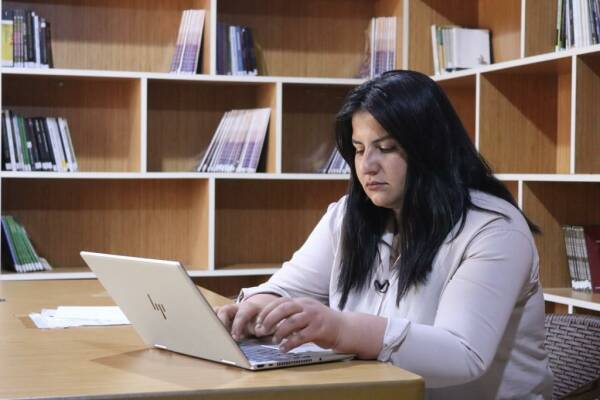
Amid this historic transformation, the story of the young woman Rabia Etou emerges. Born in the alleys of Kobani, she witnessed the birth of language from the womb of suffering. Rabia, who began her education in a language imposed on her, today finds herself not only a graduate of a university department that was once a forbidden dream but also a journalistic voice conveying the truth of her community and a postgraduate student in sociology.
From the alleys of Kobani to the platforms of literature and journalism
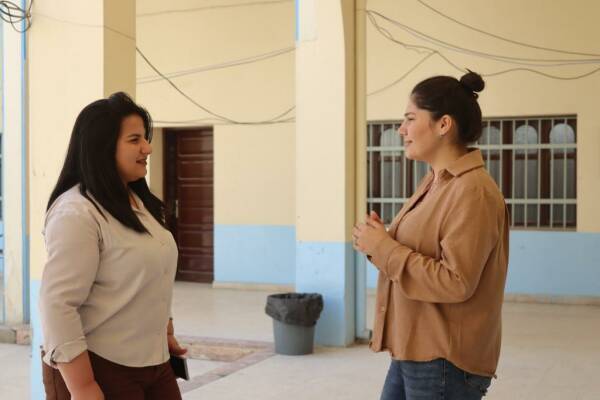
Rabia Etou was born in the city of Kobani and is now 27 years old. She received her primary and middle school education in Arabic in her hometown, but the ISIS attacks in 2014 prevented her from taking her middle school exams that year. She recalls the beginnings of her passion, saying: "The Rojava revolution of 2012 opened the doors for me to enroll in Kurdish language courses at the Martyr Osman School, which gave me curiosity and a strong motivation to learn my mother tongue academically." The ban on speaking Kurdish in public facilities and schools during the Ba'ath regime's rule meant that the people of Kobani were only proficient in spoken Kurdish in their daily lives, lacking reading and writing skills due to the prevailing repressive policies at the time.
She explains that the Rojava revolution was a turning point for the Kurdish people because it brought about a linguistic revolution within society. She points out that imposing a language other than the community's language, such as Arabic, on students who do not master it weakens their academic level and deprives them of the ability to express themselves, in addition to the psychological effects resulting from punishing students simply for speaking their mother tongue. In contrast, she affirms that adopting the Kurdish curriculum created a stimulating educational environment that helped students achieve tangible successes.
Challenges and return to roots
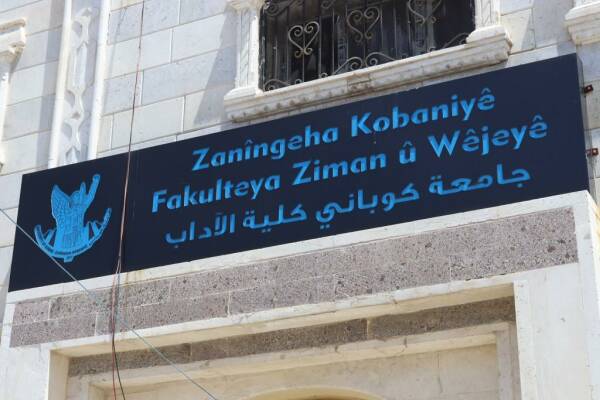
The fierce battles and the ISIS attack led to the closure of schools and forced the people of Kobani to flee. Rabia Etou and her family were among those displaced. After the city was liberated in 2015, she returned to school, but the major change was in the language of the curriculum, which became entirely Kurdish. "I passed my middle school exams in Kurdish and continued my educational journey on the same path until Kobani University opened its doors in 2017, becoming my destination for the Department of Kurdish Literature."
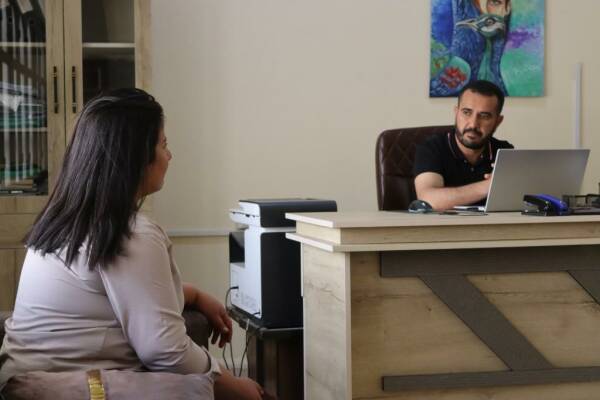
Rabia Etou did not limit herself to the academic side; she also entered the field of journalism in 2015, drawing inspiration from the sacrifices of her colleagues who were killed in the pursuit of conveying the truth. She succeeded in carefully balancing her media work and university studies, culminating in her graduation in 2021 as part of the first cohort.
A message of loyalty to the mother tongue and the challenges of reality
On Kurdish Language Day, which falls on May 15, Rabia Etou affirmed her determinatioin to use her academic knowledge in service of her community and to represent a generation worthy of the Kurdish language’s richness and its rich history.
She stressed that "the systematic oppression our language faces places on us the responsibility to revive and protect it by all available means," pointing to the contradiction in the current Syrian scene, where the Arabic language is imposed despite previous promises made by the Syrian interim government to respect diversity. She considered that what is happening today, even if not an official declared ban, is that practices on the ground reveal exclusionary tendencies that are rejected by the components that were previously promised the protection of their own cultures and languages.