
Protests escalate in Al‑Hasakah rejecting the interim government's policies toward the Kurdish language
Protests renewed in Al‑Hasakah after Kurdish inscriptions removed from Justice Palace; Kurdish teachers held a vigil, affirming Kurdish language is a red line representing Kurdish identity.
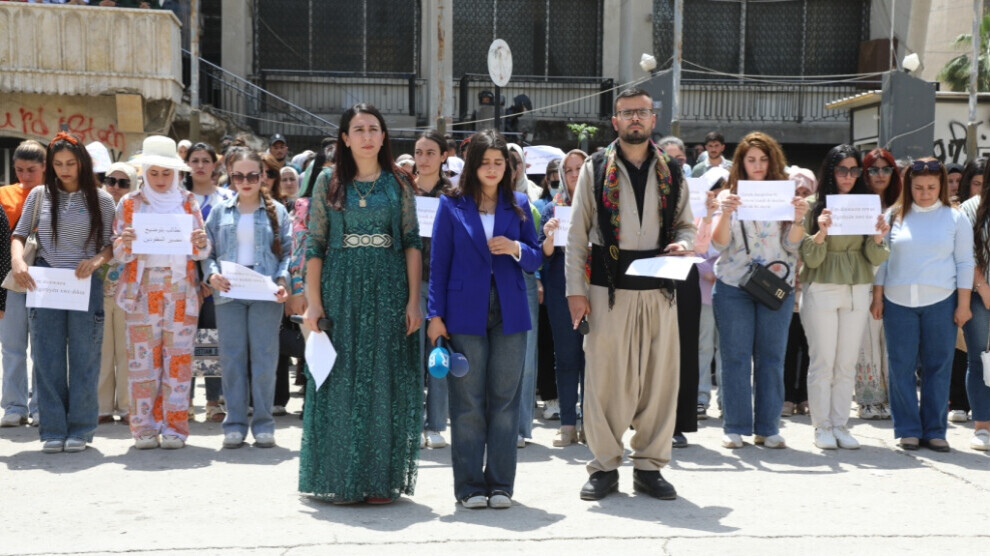
Al‑Hasakah – The city of Al‑Hasakah and Rojava areas in general are witnessing a growing wave of popular reactions and protests, against what residents describe as the Syrian interim government's "anti‑Kurdish language" policies.
Tensions have intensified in recent days following the removal of Kurdish inscriptions from the sign of the Justice Palace building in Al‑Hasakah, which sparked widespread discontent in educational and cultural circles.
Kurdish language teachers organized a protest vigil today, Tuesday, May 11, in front of the Justice Palace building, raising banners affirming the right to education in the mother tongue and demanding the inclusion of the Kurdish language in the Syrian constitution, while stressing that "language is an identity that cannot be compromised."
The organizing committee of the vigil issued an official statement, read by Kurdish language teacher Jinda Ahmed, stressing the rejection of what she described as attempts to "erase the Kurdish language" or diminish its status in Syrian society.
The statement said that "every individual has the right to preserve their history and identity, and respect for the Kurdish language is part of respect for social diversity in Syria." It also described the removal of Kurdish writings from the courthouse sign as a "painful and insulting incident for the Kurdish people," noting that the Kurdish language has become an essential part of social and educational life in the region over the past fifteen years.
The statement affirmed that "the Kurdish language is a red line for the Kurdish people," and that it represents "the history, existence, and identity of this people," calling on all residents and institutions to unite and stand together in the face of policies targeting cultural identity. The statement concluded with the slogan "No life without language," referring to the centrality of language in preserving cultural and national existence.