
How does special education change the future of children with special needs?
Teacher Media Omar Issa affirmed that developing special education is not an option but a necessity, and that the responsibility of embracing children with special needs falls not only on centers but on society as a whole.
Haifi Salah
Sulaymaniyah — Throughout history, the path for children with special needs has not been easy. They lived in narrow spaces between isolation and marginalization, subjected to harsh societal looks that saw them as a burden or incapable of participation. This misconception deprived them of basic rights and confined their existence within family walls, away from school and society.
But the world has changed, and with it, awareness has changed. With the emergence of the concept of special education and the spread of inclusive education, a new phase began to take shape, both globally and within the Kurdistan Region. Every child has a full right to education, regardless of their physical or psychological differences. The question is no longer "Can this child learn?" but rather "How do we prepare the environment that enables them to learn?"
This transformation was not merely a modification of curricula but a revolution in human perspective. Today, special education seeks to move the child from isolation to integration, from dependence to independence, enabling them to build their economic and social future like any other individual.
The groups that need this type of education vary. There are children with autism, Down syndrome, and children with hearing, vision, or speech problems. There is also an equally important group: gifted children or those with high intellectual abilities, who need special programs because traditional curricula do not keep pace with their mental growth rate.
Special education also includes children with learning difficulties, such as dyslexia, a disorder that affects reading and writing and requires specialized supervision to ensure the child's progress.
Because each child has a unique condition, special education relies on an individualized education plan built specifically for them. The teacher, family, and psychologist come together to form a team working to empower the child with life skills, enhance their self-confidence, and help them fully integrate with their peers in educational institutions.
The suffering of families and society's view of different children
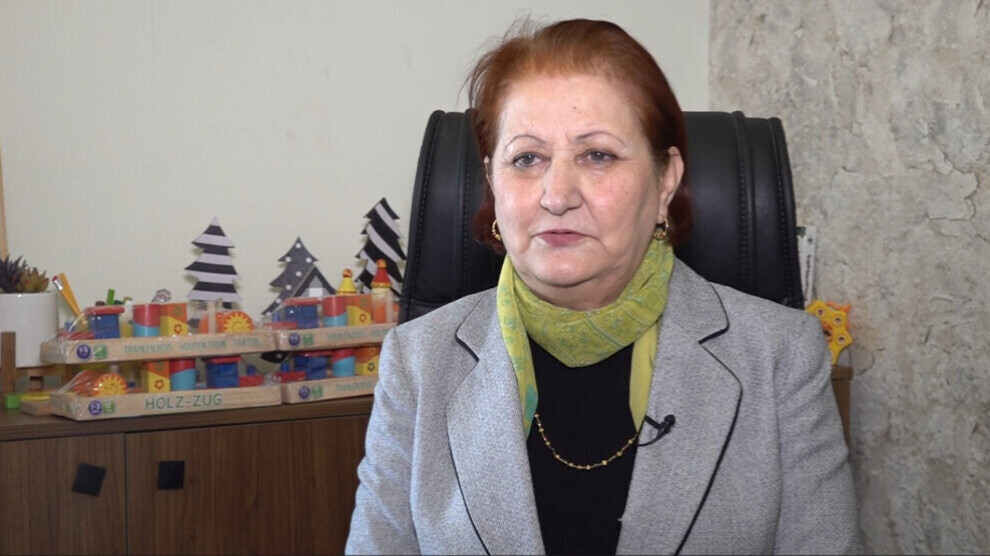
Teacher Media Omar Hussein, a supervisor specialized in special education, explained that children with autism possess full rights to life and social integration, and that it is society's duty to embrace them rather than isolate or ignore them. At the "Mercy Mary" center, various cases are received and worked with according to approved international programs and curricula.
Media Omar Hussein pointed out that many children are brought to the center diagnosed with "autism," but upon close follow-up, it becomes clear that some do not have autism but rather other conditions such as "Attention Deficit Hyperactivity Disorder" (ADHD), one of the most common neurodevelopmental disorders, which often appears in childhood and may continue into later stages of life.
In Kurdish society, popular terms such as "makhôlan" or lack of concentration are used to describe these behaviors, sometimes leading to confusion with autism symptoms and incorrect diagnosis.
She noted that diagnosis cannot rely on just two or three questions, such as: Does the child spin around? Does he walk on his toes? Answering yes does not necessarily mean he has autism. Accurate diagnosis requires follow-up sessions, observation of the child's behavior, and direct work with them. Only then can it be determined whether they suffer from autism or a completely different condition.
The center's main tasks focus on rehabilitating the child to be ready to study again, as Media Hussein explained. Many children who come to them suffer from learning difficulties, so the center adopts an intensive program to help them acquire reading and writing skills. She noted that she trains and follows up with the child daily for a month until it becomes possible to accurately determine the nature of the problem and develop an appropriate plan to address it.
The center accepts children from age three up to fifteen years. Although fifteen may seem old, the learning level of some children may be close to that of a five-year-old, so work is based on the child's ability to learn, not their age.
The center also includes a large number of children classified as having special needs. These children appear normal in their behavior and appearance, but when learning begins, significant difficulties become apparent. These problems often appear after the fourth grade.
She noted that in the summer, the center organizes special courses for them without any discrimination, to help them develop according to their different abilities. She gives an example of a child who cannot distinguish between hot and cold; he is trained practically by touching a cold glass of water and a hot one to acquire the ability to differentiate between them. She noted that this group needs special teaching methods that cannot be provided in a class of forty students, so it is necessary to provide an appropriate educational environment for them.
She pointed out that communication with families is an essential part of the work, but many families suffer from economic, political, and social pressures, making them exhausted and unable to provide the required support. Worse still, society often blames mothers for their children's differences, making them feel guilty instead of receiving support. "Mothers are heroes who provide great upbringing for their children despite harsh conditions, and they embrace them with strength and courage that deserves appreciation."
Teacher Media Omar Hussein affirmed the necessity of continuously developing the special education system. The system is not a fixed text that cannot be changed but a system that can be updated according to the evolution of science and technology. She says change must also include society, and people must stop holding the child responsible for their difference. When education develops, the child grows within a more aware and capable society. She stressed the importance of society's awareness towards children with special needs, just as it has become aware of environmental issues. When a child screams in a public place or asks for something in their own way, people should not stare or look at them with questioning looks that make parents feel ashamed or guilty.