
After years of displacement... The second convoy of Afrin displaced persons departs from Qamishlo
Finally, after years of forced displacement and moving between cities and camps, 200 displaced families from Afrin left Qamishlo, a symbolic step reflecting their adherence to the right to return to their long-deprived homes.
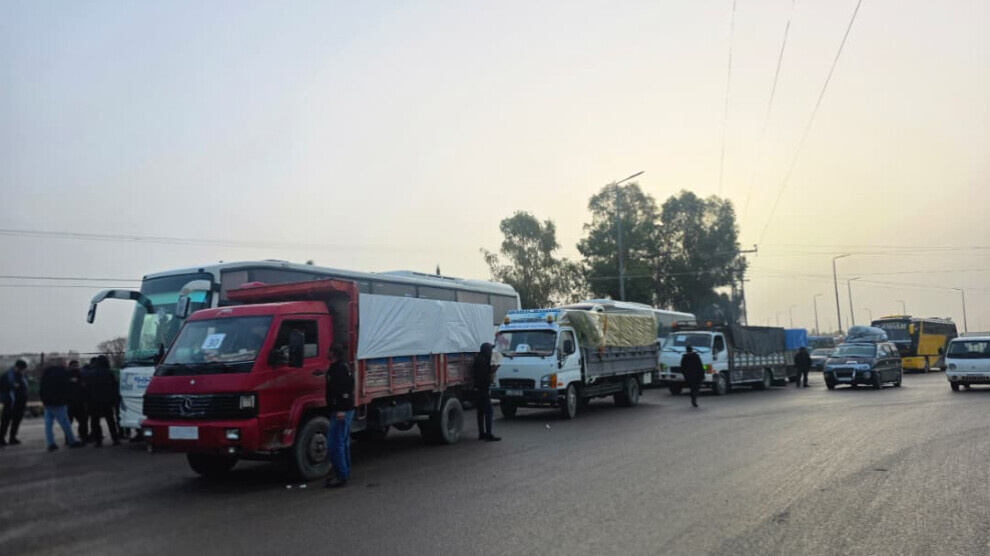
Qamishlo — Displaced persons from the city of Afrin affirmed their commitment to the right to return to their homes, as the second convoy of returnees set off from displacement areas. They consider this step aims to preserve community identity and contribute actively to the reconstruction of their original areas after years of displacement.
In a scene that redraws the features of hope after years of uprooting and deprivation, the return convoys have begun to break the long silence of displacement experienced by the people of Afrin, reaffirming their attachment to their land and their right to return to it, no matter how long the absence.
This return is not taking place under ordinary circumstances, but rather within a complex reality where security and humanitarian challenges continue to intersect, making every step towards home a clear stance and unwavering determination. In this context, the second convoy of displaced persons from Afrin set off on Saturday, April 4, from the city of Qamishlo in Rojava, with the participation of about 200 families, beginning the journey back to their original areas after years of forced displacement.
This return carries in its details the pain of absence and the weight of memories, but at the same time expresses a strong will among the people to rebuild their lives and recover what they have lost. This step coincides with rising voices demanding an end to the suffering of the displaced, as many see these convoys as the beginning of a gradual path towards a wider return, despite the surrounding difficulties and ongoing challenges. This return also reflects the people's adherence to their identity and deep connection to their land, and their rejection of the reality imposed upon them for years.