
"Isqat" Exhibition: A Psychological Art Experience in the City of Taiz
The activities of the "Isqat" exhibition, which combines visual art and clinical psychology, have launched in the city of Taiz in southwestern Yemen, presenting an interactive experience based on black-and-white images to stimulate self-reflection and exp
Rania Abdullah
YEMEN — Female participants in the exhibition affirmed that the "Isqat" exhibition experience carried a different character from what they are accustomed to in traditional art events, considering that holding such events reflects the beginning of a cultural and artistic movement that restores hope to the city of Taiz.
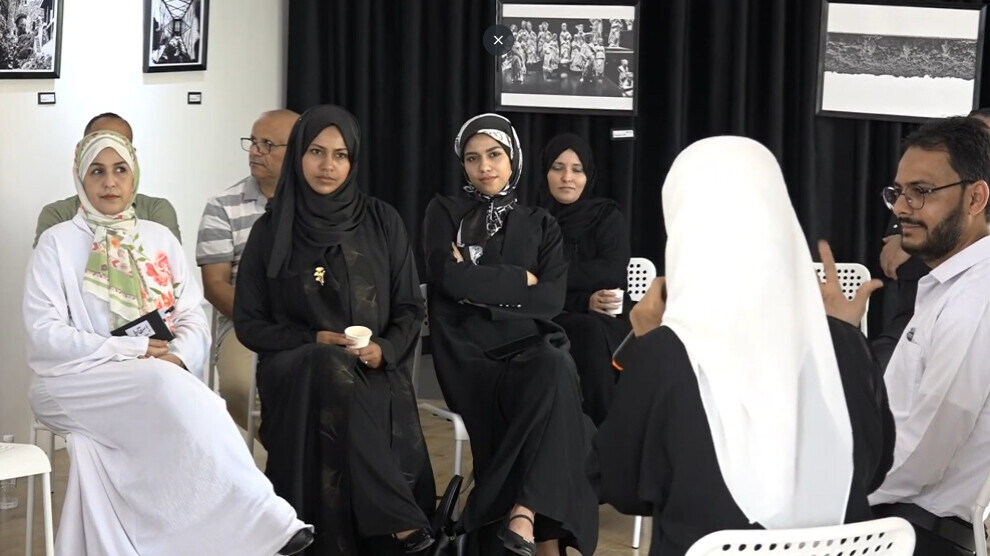
Yesterday, Wednesday, April 1st, the city of Taiz in southwestern Yemen witnessed the opening of the "Isqat" exhibition as a unique experience blending art and human consciousness. The exhibition presented an interactive visual vision based on clinical psychology, successfully transforming black-and-white photographs into platforms for deep contemplation and stimulating visitors to explore spaces of self-expression through the contrast of light and shadow.
This exhibition, which continues for two days, comes as a different artistic experience that brought together the creative space of Al-Saqiya (Bun Kast Cultural Foundation) and artist Mona Al-Dhabhani. The exhibition's atmosphere was marked by remarkable visual harmony, as attendees responded to the organizers' invitation to wear shades of black and white, making the audience a living part of the artistic state that dominated the exhibition space.
A Safe Space
Project director Alaa Hafez explained that the core idea of the exhibition stems from the concept of "projection" in psychology, which is the human tendency to project internal feelings and experiences onto the external environment. Artist Mona Al-Dhabhani worked to transform this abstract concept into a tangible visual experience, giving visitors the opportunity to see themselves and their personal reflections within the images, rather than merely being silent observers. "We deliberately chose black-and-white images to reduce any visual distraction and open a wider space for deep contemplation. This choice allows each visitor to read the work in their own way and imbue the displayed images with their personal meanings."
Regarding the design of the experience and audience interaction, Alaa Hafez explained that artist Mona Al-Dhabhani designed a comprehensive experience that goes beyond the frame of the painting to include the overall atmosphere of the exhibition, from the soft lighting to the invitation to adhere to a unified black-and-white dress code. All these elements were carefully designed to create a state of stillness and focus, ensuring that visitors feel they are inside a safe space that allows them to slow down their fast pace and interact with the artwork on a deep emotional and psychological level.
Challenges
Regarding the challenges accompanying implementation, she affirmed that "the biggest challenge we faced was the fear of how the audience would receive the exhibition's concept, as it is based on an unconventional psychological approach that may not be familiar to everyone. But the result was completely opposite to our expectations. We witnessed genuine interaction and an amazing ability of the audience to connect the works with their personal experiences. This turnout and this level of awareness gave us great confidence that the audience is eager and ready to enter into deeper artistic experiences, whenever presented to them in an honest and thoughtful manner."
A Unique Human Experience
For her part, artist Mona Al-Dhabhani, specialized in clinical psychology, explained that the problems people face in their lives are many, most of which result from errors or cognitive distortions. These cognitive distortions are a set of incorrect thoughts that lead people to judge others or interpret things incorrectly. "The process of projection helps a person realize that what they see in others is often a reflection of their own internal thoughts and feelings. The exhibition is based on this concept. It is a psychological art exhibition that explores the depths of visitors and presents cognitive distortions in an indirect way. It also displays images in a different style using Indian ink, which adds a contemplative dimension that deepens the experience of interacting with the works."
Regarding the exhibition's distinction and departure from the usual mold of holding exhibitions, she pointed out that the images in the exhibition come from three continents, several countries, and several cities in Yemen, all highlighting aesthetics and a different visual experience.
"Participating in the exhibition was an exceptional and unique human experience. It provided participants with a space resembling meditative or psychological sessions, allowing them to interact deeply with the displayed works. We set a set of guidelines to organize visitors' attendance and participation, alongside displaying the photographs. We also provided notebooks and pens for attendees to write down what the artwork stirs within them," according to her statement.
She noted that "the visitor interacts with the painting, enters into a personal dialogue with it, and writes down their thoughts and feelings in the notebook. At a later stage, we will hold a discussion session to present and share these experiences."
The Beginning of Genuine Recovery
As for the participants in the exhibition, their impressions carried the wonder of the experience and the joy of emotional release. Amira Al-Sharjabi, one of the attendees at the exhibition, said: "I am very happy to hold such psychological art exhibitions. The feeling that overcomes a person upon entering is a feeling of psychological well-being. There is a glimmer of hope for an artistic and cultural movement in the city of Taiz, and I hope this will be the beginning of genuine recovery."