
UN Report: Taliban Deprive Women of Their Rights and Impose Extensive Restrictions on Freedoms.
The United Nations Human Rights Office has revealed that a series of laws issued by the Afghan authorities have had devastating effects on the population, as pressures escalate on women, journalists, and various groups, while executions continue unabated.
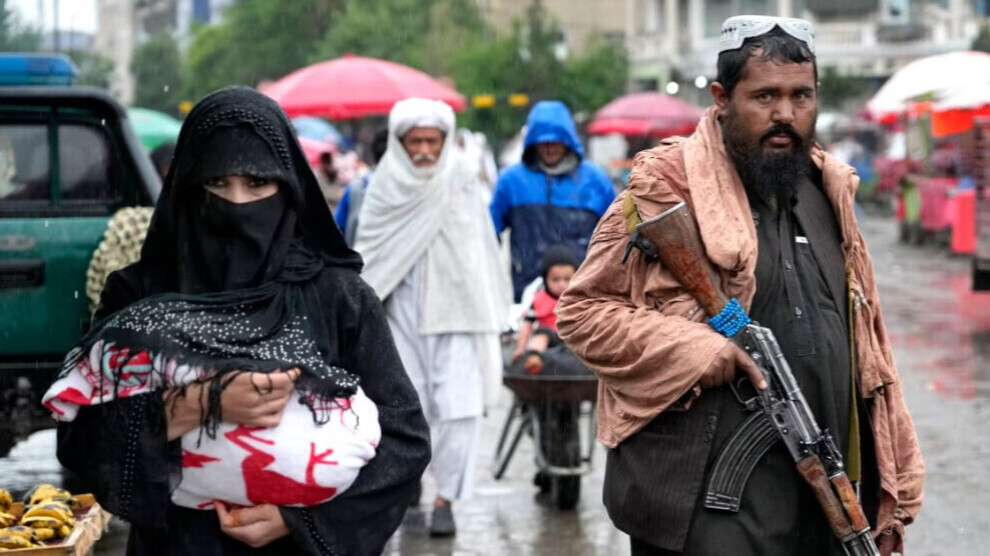
News Center — Since the Taliban took control of governance in Afghanistan, the authorities have issued numerous laws that restricted women's movement, prevented them from participating in public life, and ultimately deprived them of their right to education.
The United Nations Human Rights Office has issued a deeply concerning report on the situation in Afghanistan, warning that the lives of ordinary people—particularly women—have deteriorated significantly under the de facto rule of the Taliban. The report, covering the period from August 2025 to January 2026, was presented at a meeting of the Human Rights Council in Geneva.
The UN High Commissioner for Human Rights stated that a series of laws issued by the ruling authorities since 2021 have had a "devastating impact" on the population, especially women.
The report showed that women have been almost completely excluded from public life: they have been prevented from continuing their education beyond the sixth grade and deprived of higher education, and have been subjected to extensive restrictions on employment and movement in public spaces. At the same time, female government employees—who had been forced to remain in their homes since the Taliban takeover in August 2021 and received reduced salaries of no more than 5,000 Afghanis per month—were informed that, as of January 2026, their salaries would be suspended entirely, effectively dismissing them from service.
In another restriction on knowledge and freedom of expression, the report noted that the Taliban removed books authored by women from library shelves, including university libraries in some provinces, regardless of the subject or the author's nationality. The teaching of human rights and gender studies has also been explicitly prohibited.
The report stated that this measure was implemented with minimal transparency, without due process, and without any compensatory measures. It added that punishments such as public executions and flogging continue, with at least 12 public executions having been carried out in Afghanistan since 2021.
According to the organization, restrictions on the media are also ongoing, with journalists facing arbitrary arrests and limitations on their activities. It confirmed that approximately 21.9 million people in Afghanistan are in need of humanitarian assistance—a situation exacerbated by drought, reduced international aid, and the large‑scale return of refugees.
Describing the current situation, the UN official said, "Afghanistan has become a graveyard for human rights." The UN Human Rights Office called on the authorities to repeal all discriminatory decrees, restore women's right to education and work, and halt the implementation of the death penalty.