
The Women’s City in Jizir (Cizre): A City Built in the Colour of Women
Women's institutions closed during Turkish state trusteeship in northern Kurdistan have reopened. Work continues Jizir's Women's City project to build an equal society on the women's struggle and resistance.
AKIN STERK
Amed — In the city of Jizir (Cizre), in northern Kurdistan, the "Women's City" project stands out as one of the most prominent local experiences linking self‑administration with social and cultural work, aiming to reshape the public space from a feminist perspective based on equality and participation.
The Women's Body of Democratic Local Administrations, affiliated with the Equality and Democracy of Peoples Party (DEM Party), launched over the past months a series of conferences under the slogan: "We transform into communes through the will of women, and we build a free society through local administrations."
These conferences concluded on June 6 and 7 in Amed, northern Kurdistan, while the general conference held on June 8 and 9 of this month was dedicated to discussing the outcomes of municipalities' work over the past two years, the aspects that have not been accomplished, and action plans for the coming phase.
Güler Tunç Yarbaşan, Co‑Mayor of the Jizir (Cizre) Municipality, presented the details of this project within a series of activities and programmes that have revived the women's institutions closed during the period of trusteeship, alongside launching economic, cultural, and social initiatives aimed at enhancing women's presence in public life and confronting forms of marginalisation and violence.
During the conference held under the slogan "The municipality is the commune, and the commune is the municipality," Güler Tunç Yarbaşan explained that they discussed the work accomplished over the past two years, that the women's institutions closed during the period of government‑appointed trustees had been reopened, and that the Women's City projects continue.
She stated that the participants gathered to evaluate the work carried out, to discuss ways of addressing problems and finding appropriate solutions, and that two days of the conference were dedicated to women and two days to mixed participation. "We gathered here to discuss the work we have carried out over the past two years, the areas in which we have not achieved the required level, as well as future projects and plans, and to work on finding solutions to existing problems."
"Women Were Left Without Alternatives"
Our interlocutor pointed out that the period of government trusteeship caused great damage to women's institutions, affirming that after the 2024 local elections, municipalities began working again to reopen women‑centred spaces and centres. "There are many co‑mayors of municipalities and elected council members here as delegates."
She explained that important work for women took place between 2009 and 2014, but "unfortunately, the government trusteeship period began in 2016 and lasted nearly ten years. During this period, municipalities were stripped of their elected administrations, and all women's institutions were closed, transferred to other bodies, or completely demolished. Thus, women were left without any alternatives. However, after the 2024 local elections and our assumption of municipal administration, most municipalities began reopening these institutions and rebuilding them from scratch."
"Women's Cities Carry a Message"
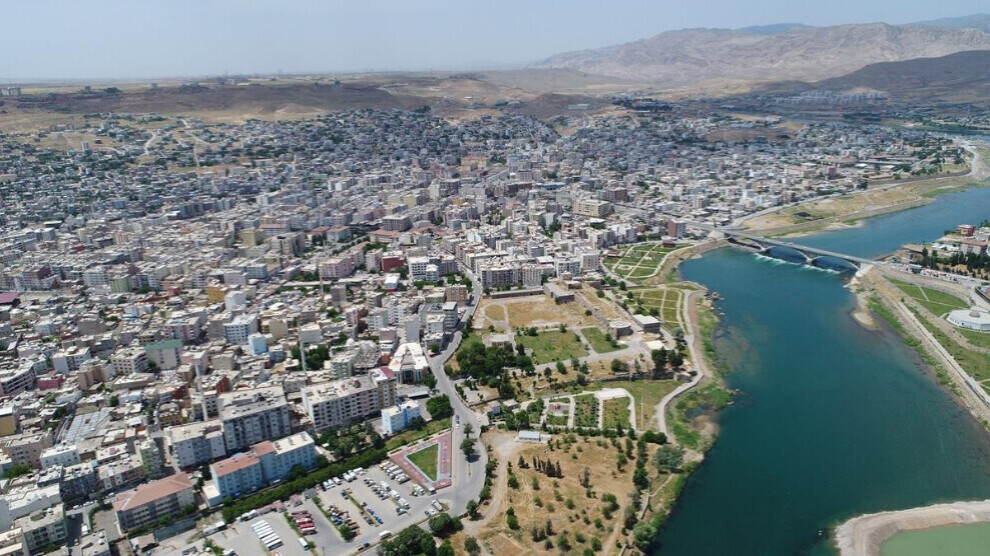
Güler Tunç Yarbaşan explained that the city of Jizir (Cizre) is one of the model areas declared a "Women's City," noting that the aim of this project is to strengthen women's struggle in cities that experience intensive policies of pressure and targeting against women. "At the level of local administrations, five cities have been declared Women's Cities and selected as model areas: Amed, Nisêbîn (Nusaybin), Cizre, Kaur (Yüksekova), and the İpekyolu district of Van province."
She added, "When we declare a city a Women's City, we also speak about the meaning of this designation and the responsibility and importance it carries. Over the past ten or fifteen years, especially since the beginning of the government trusteeship period, a patriarchal mentality and the dominance of authoritarian modes of thinking have become entrenched. Therefore, the selection of these model areas, particularly in northern Kurdistan, simultaneously carries a strong and clear message."
The Importance of the Women's City Project
The Co‑Mayor of Jizir Municipality, Güler Tunç Yarbaşan, addressed the importance of the Women's City project, saying: "Declaring Women's Cities in areas where systematic targeting policies intensify, where femicide is on the rise, and where women are subjected to drug policies and sexual exploitation, contributes to revealing the scale of the burdens and problems women suffer. A Women's City means reshaping the city with women's colours, voices, and perspectives. It does not mean a model where women alone run the city or power is restricted only to women. Rather, the goal is to build a system based on equality and equal representation, and we continue to work today on the basis of this understanding."
Meetings with Women in Different Neighbourhoods
She explained that extensive meetings were held with women before declaring Cizre a Women's City to listen to their demands and suggestions. "About three or four months ago, we launched this project and declared Cizre a Women's City, but before that, we held meetings with women in ten to fifteen residential neighbourhoods. We asked them questions such as: Do you want a Women's City? How do you imagine this city? Why is it needed? And we listened to their demands and suggestions."
During these meetings, recurring complaints emerged that women had been confined to their homes over the last ten years, or perhaps even longer, that spaces dedicated to women were almost non‑existent, and that adequate child‑friendly places were insufficient. Based on these needs, the idea of declaring the city a Women's City took shape.
From the City Centre to the Villages
The work is not limited to the city centre but extends to the surrounding villages, as Güler Tunç Yarbaşan explains: "We also carry these projects to the villages, where we implement a number of different programmes. We have already started work in three or four villages, and this work will continue during the coming phase. We also conduct field visits to neighbourhoods and homes. We seek to reach women in their own homes, talk to them about issues of violence, assess their needs, connect them with psychological support, and record all this data for follow‑up."
Reopening the Directorate of Women's Policies
When they assumed municipal administration, there was no directorate specialised in women's policies; this directorate had been closed during the government trusteeship period. "When we took up our duties, the Directorate of Women's Policies did not exist. It had been closed in 2016 during the government trusteeship period. Therefore, we reopened it from scratch. We also reinstated our colleagues who had worked in the field of women's policies and were dismissed during that period, which helped us accelerate the pace of work."
Continuing the Struggle Against Violence
The Directorate of Women's Policies comprises three basic units: the Economy Unit, the Anti‑Violence Unit, and the Education Unit. All of them continue their activities in their respective fields.
However, declaring Cizre a Women's City or regaining municipal administration does not mean that the problems women face have ended, as Güler Tunç Yarbaşan says: "From time to time, we receive different cases requiring intervention and follow‑up. Declaring the city a Women's City or our assumption of municipal administration does not mean that femicides have stopped. Moreover, policies related to drugs and sexual exploitation continue. Therefore, the municipality's confrontation with these issues is ongoing."
Transforming the Municipality into a People's Commune
The conference also aimed to discuss the building of democratic society and the role of local administrations in this process. Our interlocutor also indicated that the coming phase requires new preparations. "The goal of today's conference is to transform the municipality into a community space based on the concept of the commune, to make it more connected to the people, and through these conferences we seek to highlight the roles of women, children, youth, and society more clearly."
She added, "We are approaching an intensive and important phase. We are witnessing a process of democratic construction alongside a peace process. As this process develops, a new phase will begin in which local administrations play a more active and influential role in society. Indeed, we can describe it as a new phase in every sense of the word."
Projects to Enhance Women's Employment
The Co‑Mayor of Jizir Municipality affirmed that they are working to develop new projects to increase women's participation in economic life. "We established the Women's City Orchard. About ten days ago, we officially opened the Cooperative Women's City Orchard project. Currently, between six and seven women work there, and we continue our field efforts to increase this number. Our goal is to create a workspace that allows women to sell the vegetables and herbs grown in the orchards. Therefore, we launched this project and opened it officially."
A Women's Workshops Centre has also been opened, planned to be a social space dedicated to women and students. "Between six and seven women also work in this centre. It is a place where female and male students and women can come to rest, read books, study, and spend time in a suitable environment."
Another project involves establishing a citrus orchard. "We have about two thousand citrus trees. We will create an orchard on an area of approximately eight donums (about 8,000 square metres). Employment opportunities will also be provided there for women. The lemons and tangerines produced in this orchard will be sold at dedicated points, and women themselves will handle the marketing and selling."
"We Seek to Eliminate Inequalities"
Güler Tunç Yarbaşan confirmed the continuation of several projects and services for women, such as the helpline for combating violence against women, the "Jin Card" project, health programmes, and the social solidarity shop. She said that during the years of government trusteeship, inequalities had worsened in the city, and the municipality is working to address them.
Trusteeship policies over the past ten years led to a significant vacuum at the level of local administrations, and clear forms of inequality emerged in the cities. Therefore, "over the next five years, we are trying to address these imbalances, both at the city level and within civil society space. We are working to create spaces where women can be present with their colours, will, and identity, on the basis of equal representation and fair participation."
"We Draw Inspiration from the Legacy of Women's Resistance"
The city of Cizre is known for its long history of women's resistance and struggle. Our interlocutor affirmed that the Women's City project is based on this historical legacy. "Cizre has always been known for its history and resistance. In the 1990s, the city witnessed an uprising led by women such as Berîvan. When we look at the 2015–2016 period, we also see struggle and resistance led by female figures such as Sevî, Pakîze, Asya, Berçîn, and Ferîde."
A Women's City means building a city in which women can express their particular colour, spirit, resilience, struggle, identity, and free word. With this, the Co‑Mayor of Jizir Municipality, Güler Tunç Yarbaşan, concluded: "When we say Women's City, we do not mean that men have no role or bear no responsibility. On the contrary, we work collectively with the co‑mayors and other colleagues, and with the women of the city, to build a city that manifests women's equality, will, spirit, and active presence. From this standpoint, we declared Cizre a Women's City."